You're publishing consistently, replying to comments, and watching your Instagram reach move up and down. Yet when a sale comes through, you can't confidently say whether it came from a Reel, a Story, a profile visit, or a conversation in your DMs. That uncertainty makes every content decision feel like a guess.
An Instagram account manager solves more than a scheduling problem. The right person turns Instagram into an organised customer-acquisition channel, connecting content, community activity, tracking links, leads, and sales. This guide explains what the role includes, how pricing works, what to look for when hiring, and how to replace vanity reporting with evidence about what drives revenue.
Introduction Why Every Growing Brand Needs an Instagram Account Manager
A founder often starts with a simple routine. Take a few photos, publish a Reel, add a Story, answer comments, and check the numbers at the end of the week. That system can work while the business is small. As offers, campaigns, partnerships, and customer questions multiply, the founder becomes the bottleneck.
The problem isn't usually a lack of effort. It's a lack of ownership. Nobody is responsible for making sure the profile explains the offer, every post has a purpose, DMs receive timely replies, links can be tracked, and reporting connects Instagram activity to commercial results.
The business case has changed
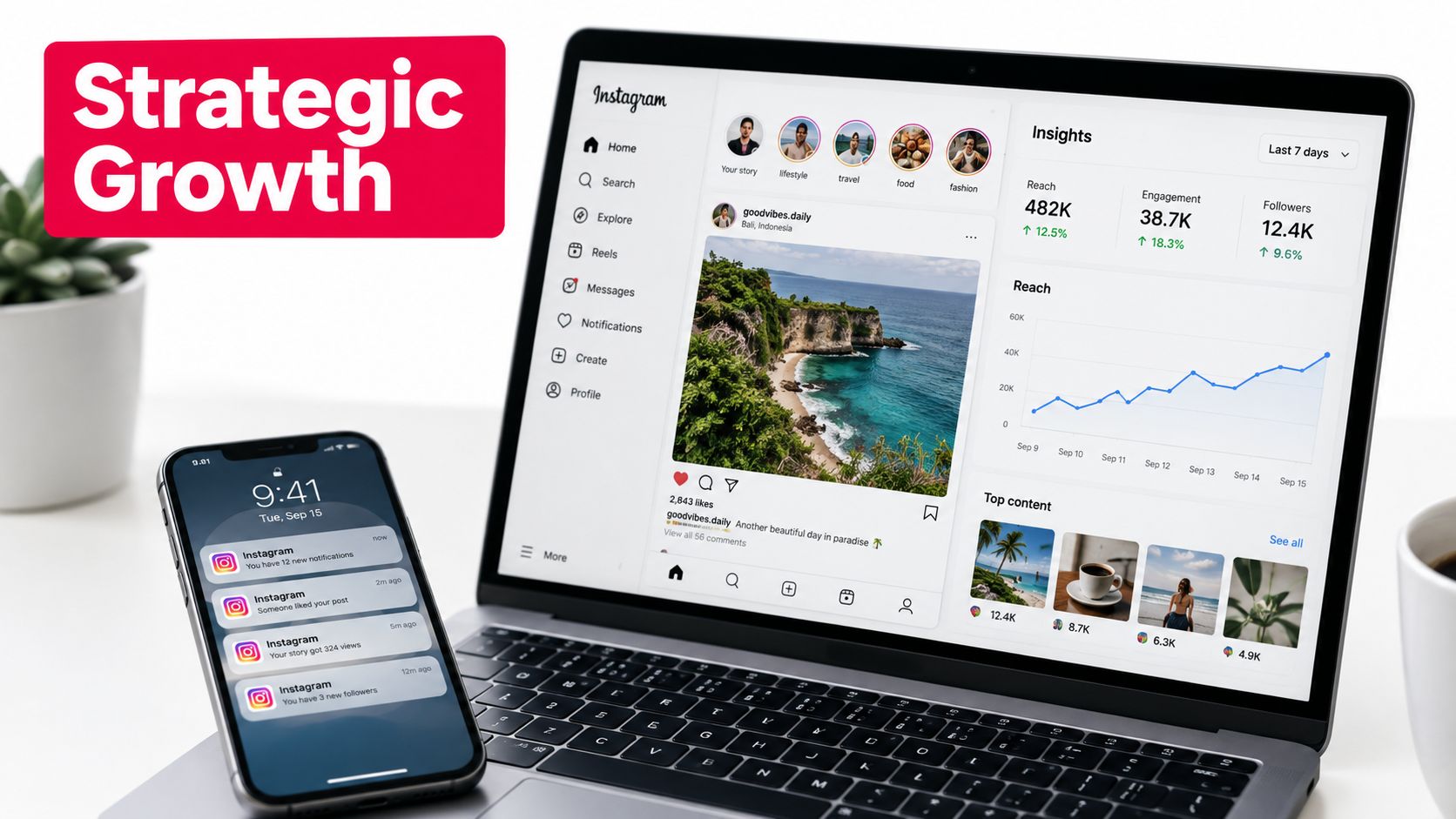
Instagram is no longer only a place for social visibility. By late 2025, the platform had over 350 million business profiles, up 17% year over year, and approximately 90% of users followed at least one business account, according to reported Instagram business statistics. Small and medium businesses represented roughly 65% of business accounts, which shows why professional Instagram management has become a mainstream commercial function rather than a task reserved for large brands.
That scale creates opportunity and competition. Posting randomly can leave a strong offer invisible, while an organised manager can coordinate creative, timing, audience conversations, and conversion paths.
Practical rule: If nobody owns the path from Instagram attention to a business outcome, your team is measuring activity instead of managing a channel.
The manager's value therefore isn't limited to producing more content. It's the ability to answer useful questions: Which content earns qualified clicks? Which Stories prompt enquiries? Which conversations become sales opportunities? Which content themes deserve more investment, and which ones only create surface-level engagement?
For a founder hiring for the first time, that distinction matters. You're not buying posts. You're hiring an operator who can make Instagram more consistent, more responsive, and easier to evaluate.
What an Instagram Account Manager Actually Does
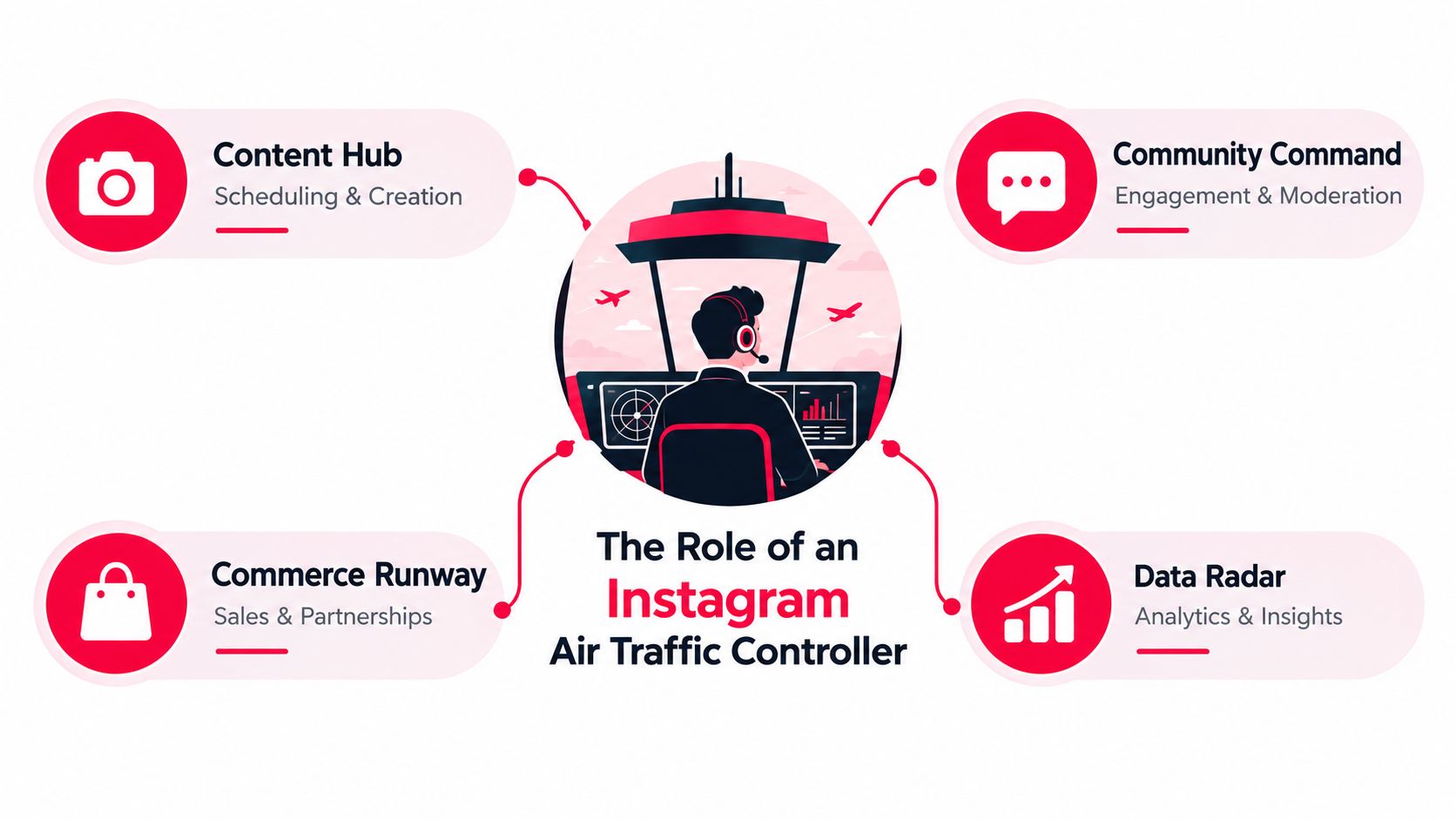
Think of an Instagram account manager as an air traffic controller. The controller doesn't fly every aircraft, design the airport, or sell tickets. Instead, they coordinate movement so that each aircraft reaches the right runway safely and on time.
Instagram has a similar operating system. Content arrives from creators, designers, founders, customers, and partners. Comments and DMs require responses. Campaigns need destinations. Analytics show which routes are working. The manager coordinates these moving parts so the account supports a business objective.
Four operating lanes
Content hub: The manager turns ideas and approved assets into an organised publishing schedule. That may include Reels, feed posts, carousels, and Stories, with captions and calls to action adapted to each format.
Community command: The manager monitors comments, mentions, and DMs, then decides what deserves a quick answer, a sales conversation, escalation, or moderation. A timely response can be more commercially useful than another post.
Commerce runway: The manager maintains the profile's conversion path. That includes the bio, link destination, campaign links, product references, promotional details, and handoffs to sales or customer support.
Data radar: The manager reviews reach, engagement, profile activity, clicks, enquiries, and sales signals. The purpose isn't to collect every available metric. It's to identify what deserves a repeat, revision, or pause.
Instagram's commercial scale makes these lanes inseparable. Around 200 million users interact with shopping posts or visit a business profile on a given day, and more than 150 million people message businesses each month, according to industry reporting on Instagram usage. An account manager is therefore handling a high-frequency customer touchpoint, not just filling a content calendar.
Manager, creator, and strategist
These roles overlap, but they aren't identical. A creator makes the asset. A strategist decides the audience, positioning, campaign idea, and broader channel direction. A manager makes the system operate consistently, often coordinating both people.
If you need a clearer operational reference, manage Instagram posts offers useful context on planning and publishing workflows. The hiring question is simple: do you need someone to make content, someone to define the strategy, or someone to ensure the strategy becomes a reliable daily operation?
Core Responsibilities From Content to Community and Commerce
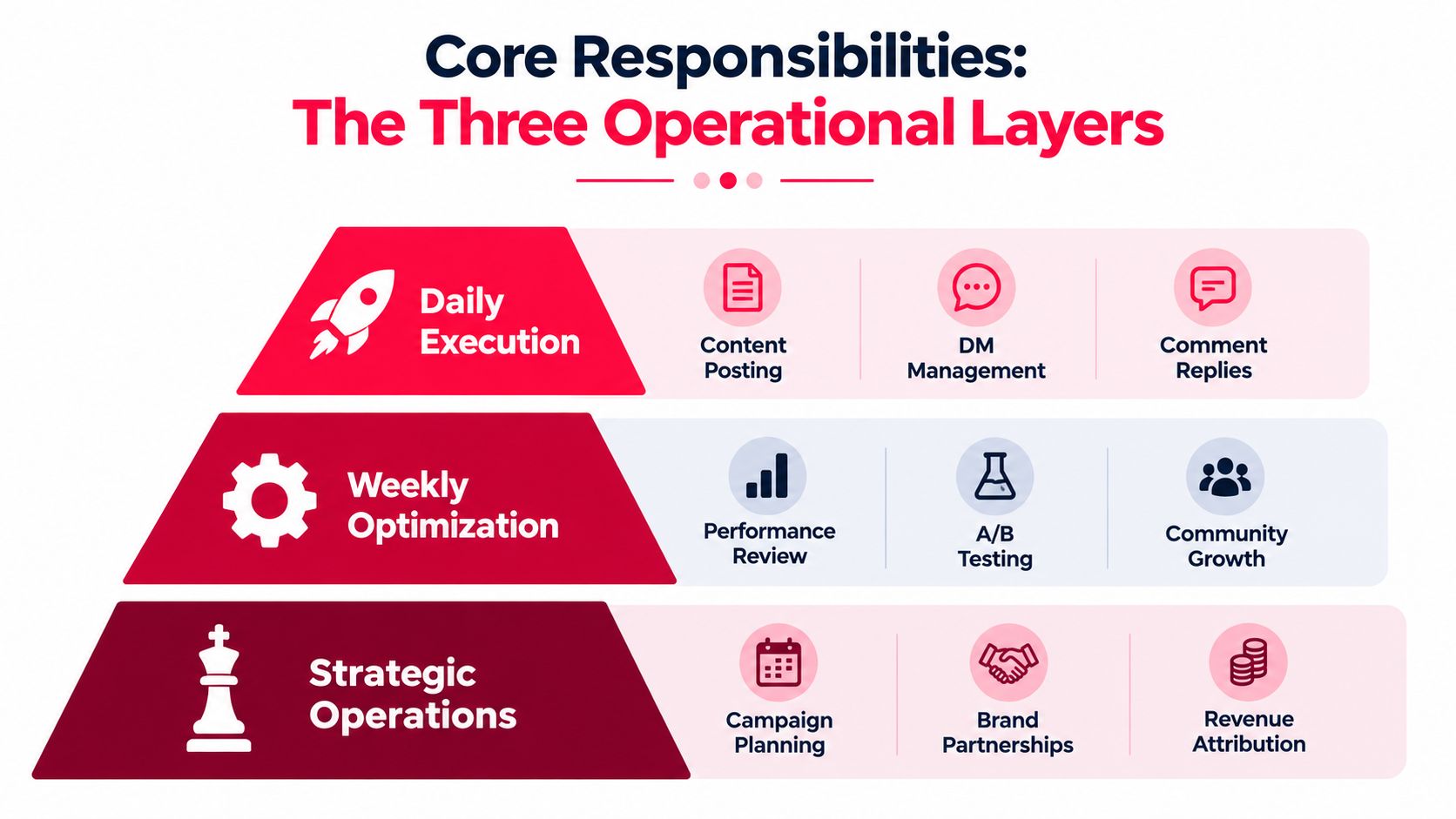
A good job description should describe the work at three levels. Daily execution keeps the account alive, weekly optimisation improves decisions, and strategic operations connect Instagram to the rest of the business.
Daily execution
The manager prepares approved assets, checks captions and calls to action, publishes or schedules content, and confirms that live posts appear correctly. They also monitor comments, mentions, and DMs, using brand guidelines to answer routine questions and escalating sensitive issues.
Profile maintenance belongs here too. A manager should check that the bio explains who the brand serves, the offer is understandable, and the link destination matches the current campaign. A strong post can still lose the visitor if the profile creates confusion at the moment of intent.
Weekly optimisation
Weekly work is less visible but often more valuable. The manager reviews which formats attracted attention, which topics prompted responses, where profile activity increased, and which links generated meaningful traffic. They then turn those observations into decisions, such as revising a hook, changing a call to action, adapting a winning topic into a carousel, or moving a question from the comments into a future Reel.
Repurposing helps the team avoid treating every post as a brand-new production project. A useful internal reference is content repurposing strategies, especially when one strong idea can become several platform-appropriate assets without copying the same caption everywhere.
Strategic operations
Strategic responsibilities include campaign calendars, creator collaborations, brand partnerships, offer launches, approval workflows, and revenue attribution. The manager may also coordinate with sales, customer support, designers, and paid media teams.
Technical access is part of this role. Instagram management workflows require a Professional account, either Business or Creator, linked to a Facebook Page with full-control access in Meta Business Suite, as explained in Instagram channel connection requirements. Personal accounts can't support the same management pipeline, so onboarding should begin with account type, page linking, permissions, and role assignments.
Operational safeguard: Never hand over a business account through shared passwords when role-based access can protect ownership and simplify offboarding.
The manager also needs to plan around platform constraints. One current benchmark reports a publishing cap of 25 posts per 24 hours per Instagram account, while Story insights remain available for only 24 hours after expiry. Broader insights can extend to two years, with delays of up to 48 hours, according to Instagram Graph API guidance. That means a careful manager batches publishing without creating a last-minute queue and exports Story data before it disappears.
For high-volume customer conversations, automation can support triage and routine replies, but it shouldn't replace judgement. Teams exploring automating Instagram support at scale should define which questions are safe to automate and which require a human response.
How Much an Instagram Account Manager Costs
There isn't one correct fee for an Instagram account manager because the scope can vary dramatically. A creator with one account, a small content library, and limited customer volume needs a different arrangement from a brand coordinating campaigns across several accounts.
Before discussing price, define the workload. Include the number of accounts, expected publishing rhythm, whether the manager creates content or only coordinates it, community volume, approval requirements, reporting depth, and attribution setup. If you leave those details vague, both sides may agree to a fee while imagining different jobs.
Instagram account manager pricing models compared
| Pricing Model | Typical Scope | Best For | Watch Out For |
|---|---|---|---|
| Retainer | Ongoing management with an agreed set of deliverables, meetings, and reporting | Brands needing consistent ownership | Vague deliverables can create constant scope disputes |
| Hourly | Time spent on defined tasks such as scheduling, moderation, or reporting | Early-stage teams testing support | The manager may optimise for time spent instead of outcomes |
| Per-project | A launch, campaign, profile rebuild, or content system delivered to a fixed brief | Short-term initiatives | Ongoing community and reporting work may be excluded |
| Performance-tied | A base arrangement connected to agreed commercial indicators | Mature businesses with reliable tracking | Attribution gaps and external sales factors can make incentives unfair |
A retainer suits a brand that needs continuity. It creates space for planning, publishing, community care, optimisation, and reporting without renegotiating every task. The agreement should still specify response expectations, revision limits, approval timelines, and what happens when a campaign creates extra work.
Hourly support can be sensible when you don't yet understand your workload. It lets a founder learn how much time moderation, editing, and reporting require. It's less suitable when the manager is expected to take ownership of performance, because a clock doesn't define the quality of the decisions.
Project pricing works well for an account audit, launch calendar, profile rewrite, or tracking implementation. Performance-tied pricing should come later, after the business has clean conversion events and an agreed method for assigning credit.
Hiring principle: Pay for a clearly defined operating system, not an unlimited promise to “grow the account.”
Ask each candidate to separate management fees from production costs, creator fees, software, paid media, and unexpected campaign work. A lower quote can become expensive if it excludes the reporting and community responsibilities that make the role useful.
How Instagram Managers Should Handle Attribution and Reporting
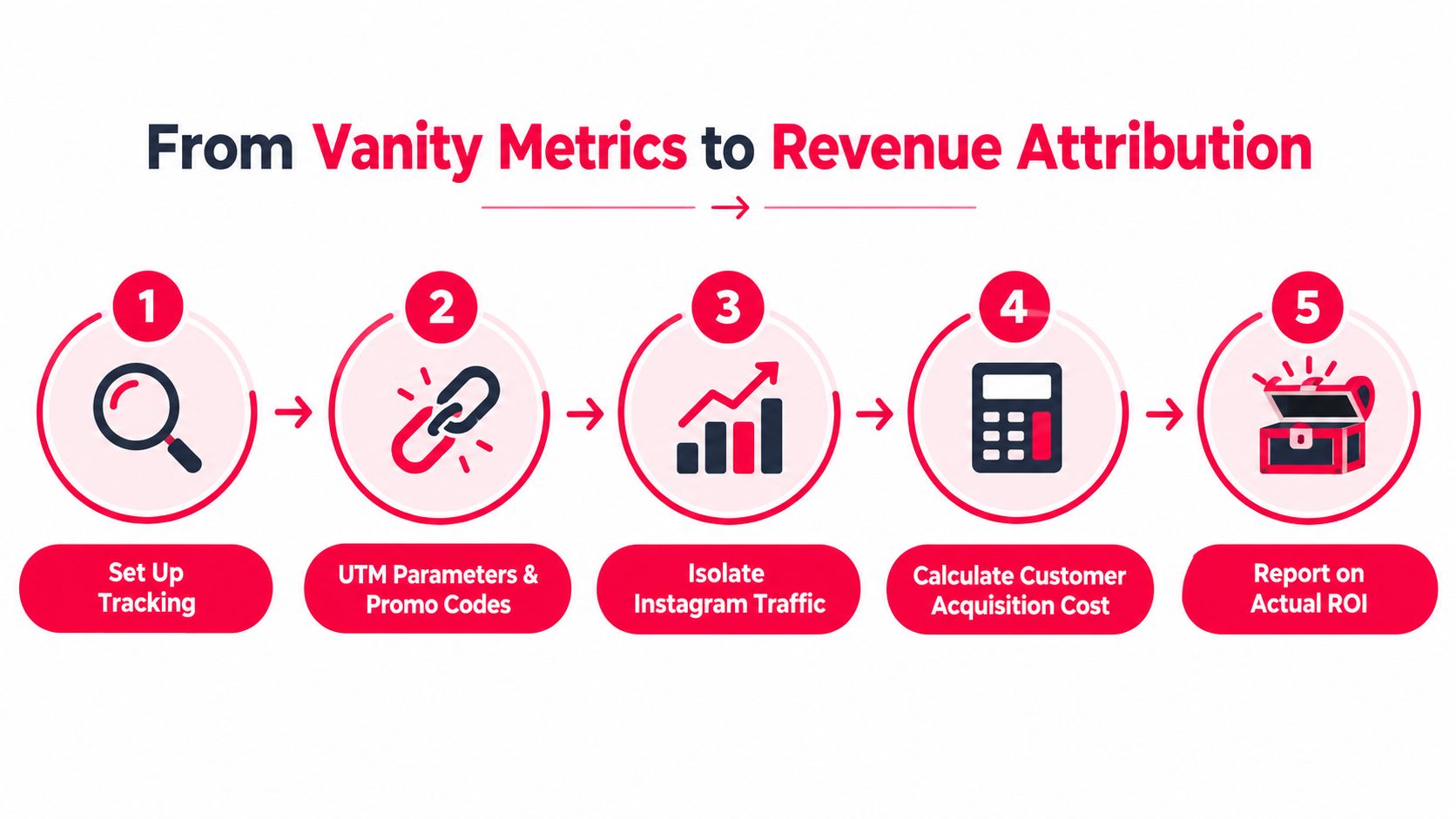
Revenue attribution starts with a basic question: what action should Instagram cause? That could be a product purchase, consultation request, course enrolment, newsletter signup, or qualified conversation. Without a defined conversion, managers tend to report reach and engagement because those numbers are easy to find.
Build the tracking path
Start with a destination for every commercial campaign. Use a trackable link in the bio, a link-in-bio page, or a campaign-specific destination. For content that directs people to the profile, the manager should record which Reel, Story, or post carried the call to action.
Use consistent campaign labels. A practical naming system might identify the platform, format, campaign, and content theme. Promo codes can provide a second signal when links aren't available or when a customer completes the purchase later.
Connect content to outcomes
The manager should maintain a simple content register. Each row can include the content ID, format, publication date, offer, call to action, tracking label, clicks, leads, sales, and attributed revenue. This doesn't make attribution perfect. It makes assumptions visible and gives the team a consistent basis for comparison.
Daily monitoring should focus on signals that require action:
- Content response: Identify posts receiving meaningful comments, shares, saves, profile visits, or DMs.
- Conversion activity: Check clicks, form completions, booked calls, purchases, and code usage tied to current campaigns.
- Customer language: Note recurring objections and questions so the next content can address them.
- Operational health: Confirm scheduled posts, links, permissions, and inbox handoffs are working.
Monthly reporting should answer business questions rather than list platform totals. Which content produced qualified traffic? Which format assisted sales? Which campaign attracted clicks but weak leads? Which message generated conversations that sales could progress?
A social media analytics dashboard can help organise this information, but the tool isn't the strategy. The manager must define the events, label the content, check data quality, and explain what the numbers mean.
Respect data limitations
Instagram reporting isn't a perfect live feed. Story insights are time-sensitive, and broader insight data can arrive with delays, as noted earlier. A manager should capture temporary metrics quickly, retain exports, and avoid presenting incomplete API data as final performance.
ViewsMax fits this workflow as one option for teams that want to plan content, publish across channels, create trackable links, and view clicks, leads, and attributed revenue alongside the content that generated them. The important shift is operational: the manager can discuss not only what received attention, but what moved people toward a commercial result.
Reporting standard: Every monthly report should end with decisions. Repeat, revise, test, or stop.
Hiring Checklist How to Choose the Right Instagram Account Manager
The strongest candidate won't promise consistent posting. They'll ask what you sell, who buys it, how customers currently discover you, what counts as a qualified lead, and where sales data lives.
Start with a practical screening conversation. Ask the candidate to explain how they'd turn a product launch into a content sequence, how they'd respond to a public complaint, and how they'd identify whether a Reel generated business value. Listen for clear decisions rather than a long list of fashionable terms.
Skills to verify
- Editorial judgement: Can the candidate distinguish a useful customer question from a distracting trend?
- Creative coordination: Can they brief a creator, review a hook, and adapt one idea for Reels, Stories, and feed posts?
- Community judgement: Do they know when to answer publicly, move a conversation to DMs, escalate an issue, or avoid a risky reply?
- Technical fluency: Can they handle Professional account setup, Facebook Page linking, permissions, tracking links, and reporting exports?
- Commercial thinking: Can they connect content activity to clicks, leads, sales conversations, and revenue?
- Discovery awareness: Do they understand that current guidance is moving attention toward keywords, original audio, shareable content, and DM signals rather than relying only on legacy hashtag habits?
The hashtag question deserves a careful test. A 2026 study reported that posts using at least one hashtag received 31.70% fewer views and 33.89% fewer interactions than the platform average, according to Metricool's Instagram study. Treat that as a prompt for discussion, not a universal rule. A thoughtful manager should explain how they'd test search-oriented captions, topic clarity, shares, and conversations against the account's own evidence.
Use a trial task
Give finalists a small, paid exercise. Provide a real offer, a few existing assets, and a basic goal. Ask for a short content plan, one rewritten bio, a DM response example, a tracking approach, and a sample report layout.
Watch for red flags:
- Vanity-only reporting: The candidate talks about followers and likes but avoids leads or sales.
- Trend dependence: Every recommendation centres on hashtags, sounds, or posting times without audience reasoning.
- Access shortcuts: They request unnecessary ownership or shared credentials instead of role-based permissions.
- No measurement plan: They can't explain how a link, code, or CRM event would connect content to an outcome.
- No escalation process: They treat every comment as a copywriting task rather than a customer or reputational issue.
For onboarding, define the first month around access, brand guidance, content inventory, offer mapping, tracking conventions, approval rules, and a baseline report. You can also review AI tools for content creators as part of the tooling conversation, but automation should support the manager's judgement rather than replace it.
Conclusion Turning Instagram Management Into Measurable Growth
An Instagram account manager is not the person who keeps the feed busy. The role combines publishing discipline, community judgement, profile management, technical access, campaign coordination, and commercial reporting.
That combination matters because Instagram activity can look healthy while the business remains unclear about what produces customers. Reach can support discovery. Engagement can reveal interest. DMs can uncover objections. But the manager earns strategic trust by connecting those signals to clicks, qualified leads, purchases, and revenue.
Start with an audit. Check the account type, Facebook Page connection, permissions, bio, link destination, active offers, response process, and reporting history. Then define the role in writing, including the accounts covered, content responsibilities, community expectations, approval workflow, reporting cadence, and attribution method.
If you're hiring, ask candidates to demonstrate how they think. If you're keeping the work in-house, build the same operating discipline into your weekly routine. Either way, stop treating every post as an isolated creative event. Give each piece a purpose, a destination, and a way to learn from the result.
The manager who can show which Reels, Stories, and posts create commercial movement becomes far more valuable than one who only reports activity. That's the shift from social posting to revenue operations.
ViewsMax helps creators and marketing teams plan content, publish across channels, and track clicks, leads, and attributed sales back to the content that generated them. Visit ViewsMax to replace guesswork with a clearer content-to-revenue workflow.