ViewsMax
Sign In Sign Up Free

Tag: youtube marketing

  • 10 Powerful Content Repurposing Strategies for YouTube Creators in 2026

    10 Powerful Content Repurposing Strategies for YouTube Creators in 2026

    Creating high-quality YouTube videos is only half the battle. The other half is ensuring your hard work reaches the widest possible audience. In a crowded creator economy, the secret to exponential growth isn't just producing more content—it's strategically multiplying the value of the content you already have. This is where mastering effective content repurposing strategies becomes a non-negotiable skill.

    By transforming a single long-form video into dozens of targeted assets, you can dominate multiple platforms, capture diverse audience segments, and build an unshakable brand presence without burning out. This approach allows you to connect with viewers who prefer reading blog posts, listening to podcasts, or scrolling through quick, impactful social media carousels. It's the ultimate method for working smarter, not harder, and is a foundational component for anyone serious about scaling your content marketing efforts and building a sustainable creative career.

    This guide goes beyond generic advice, offering 10 specific, actionable content repurposing strategies designed explicitly for YouTube creators. We will break down each strategy with step-by-step instructions, performance KPIs to track your success, and insights on how to leverage tools like ViewsMax to streamline your workflow and make data-driven decisions. You will learn precisely how to turn your videos into everything from bite-sized Shorts and audiograms to comprehensive blog posts and engaging email newsletters. Prepare to unlock the hidden potential in your existing video library and turn every upload into a powerful, multi-channel growth engine.

    1. Long-Form to Short-Form Video Conversion

    This foundational strategy involves mining your full-length YouTube videos for gold-nugget moments and repackaging them as compelling short-form content. By converting high-impact segments into vertical clips for YouTube Shorts, TikTok, and Instagram Reels, you create multiple new assets from a single piece of content, dramatically expanding your reach and attracting new audiences who may not have discovered your longer videos.

    Why It Works

    Short-form video algorithms prioritize high engagement and rapid consumption. This content repurposing strategy allows you to serve up the most exciting, informative, or entertaining parts of your content directly to these fast-paced feeds. Think of it as a trailer for your main channel; each Short acts as a low-commitment entry point that can drive viewers back to your primary, monetized content. It’s an efficient way to stay active across multiple platforms without creating entirely new videos from scratch.

    Key Insight: Don't just crop your horizontal video. Reframe and edit it for a vertical viewing experience, adding dynamic captions and focusing on a single, powerful idea to maximize impact in under 60 seconds.

    How to Implement This Strategy

    1. Identify High-Engagement Moments: Use ViewsMax's analytics to pinpoint sections in your long-form videos with the highest audience retention and engagement spikes. These are proven moments that resonate with viewers.
    2. Clip and Reformat: Extract 3-5 of these key moments. Use editing software or YouTube Studio’s "Edit into a Short" feature to reformat them into a 9:16 vertical aspect ratio.
    3. Add Value: Enhance each clip with bold, easy-to-read captions, as most short-form content is viewed without sound. Consider adding a new hook or a concluding call-to-action that’s relevant to the short-form platform.
    4. Optimize and Schedule: Use ViewsMax to generate platform-specific titles, descriptions, and relevant hashtags (#shorts, #youtubeshorts). Schedule the clips to post over several days or weeks following the main video's launch to sustain momentum. For more specific tactics, you can learn how to get more views on YouTube Shorts and apply those principles here.

    2. Video to Blog Article Transcription

    This content repurposing strategy transforms your spoken video content into a powerful, text-based asset that can capture an entirely new audience through search engines. By transcribing your video and expanding it into a comprehensive blog article, you create a resource that is discoverable on Google, driving organic traffic back to your website and, in turn, your YouTube channel.
    A top-down view of a workspace with a laptop, headphones, open book, and plant, featuring the text 'Video To Article'.

    Why It Works

    While YouTube is the world's second-largest search engine, Google remains the first. A blog post allows you to compete for long-tail keywords and capture users who prefer reading over watching. This method doubles your content's visibility, positioning you as an authority in your niche across different platforms. For instance, learning how to turn a webinar into a blog post can effectively convert your video content into valuable written assets. Channels like Wistia use this approach to turn video tutorials into resource articles that rank for key search terms.

    Key Insight: Don’t just copy and paste your transcript. Enhance the article with 20-30% new information, including deeper explanations, additional examples, or related resources, to provide unique value that makes the blog post a standalone piece of content.

    How to Implement This Strategy

    1. Transcribe Your Video: Use an automated service like Otter.ai or Rev for a quick transcription, or use the auto-generated transcript from YouTube. Manually clean up the text for accuracy, grammar, and readability.
    2. Structure and Expand: Organize the transcript into a logical blog post format with H2 and H3 headings. These headings should correspond to the main talking points or chapters from your video. Flesh out each section with more detail.
    3. Optimize for SEO: Use ViewsMax's keyword tools to identify relevant long-tail keywords for your article's title, headers, and meta description. This will help you rank higher in search results. Having a well-structured script from the start makes this process much easier; you can learn more about how to write a script for YouTube videos to streamline this workflow.
    4. Embed and Interlink: Embed the original YouTube video prominently within the blog post, usually near the top. Add timestamps throughout the article that link directly to specific moments in the video, creating a seamless experience for the reader.

    3. Compilation & Behind-the-Scenes Community Repurposing

    This content repurposing strategy serves two powerful functions: bundling your best existing content into high-value compilations and building a deeper connection with your audience through authentic behind-the-scenes material. By creating thematic highlight reels, "best of" videos, or seasonal roundups, you give evergreen content a new lease on life. Simultaneously, sharing outtakes, bloopers, or production insights via Community posts and Shorts fosters a loyal following.
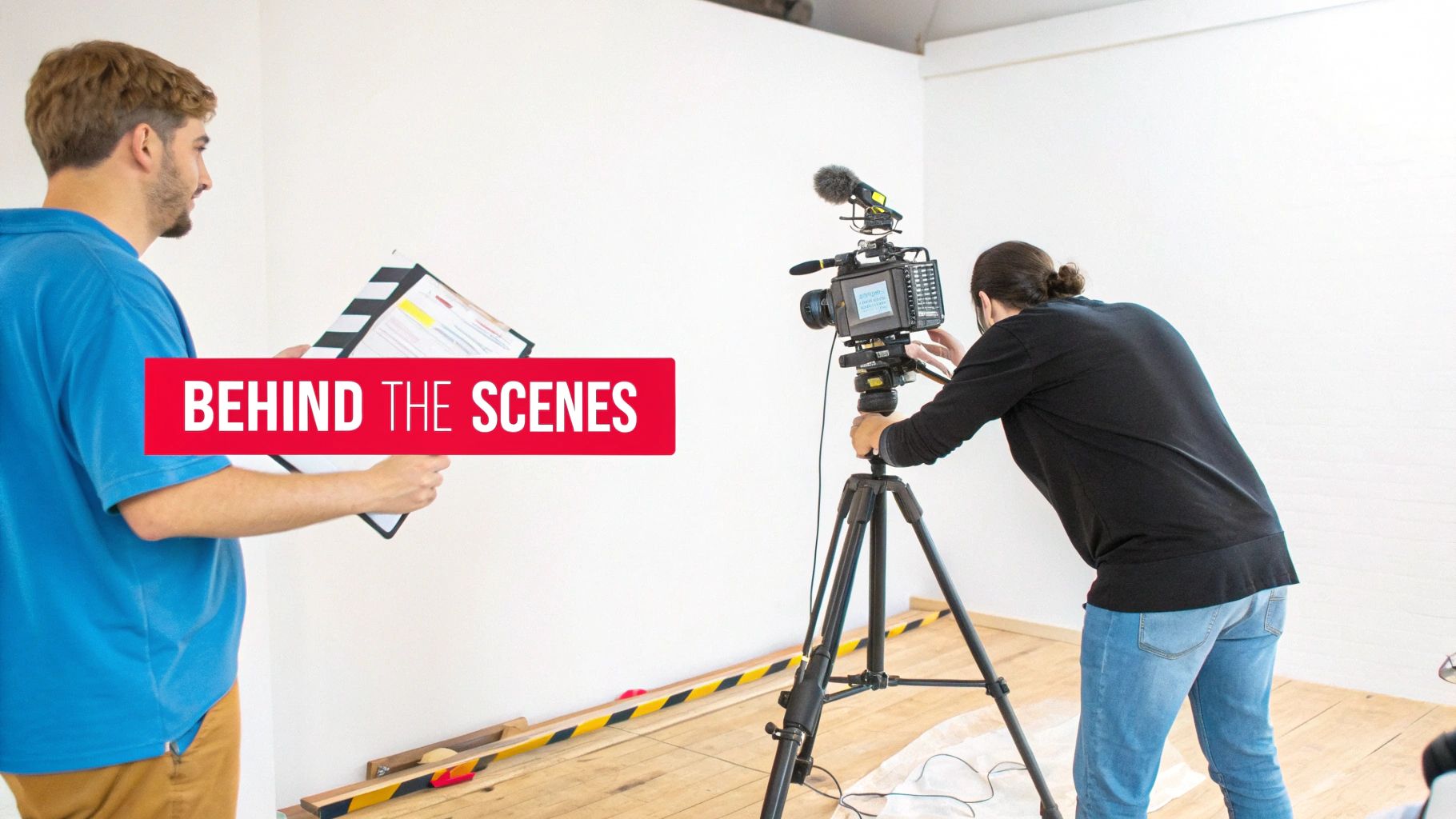
    Two people film a video production, one holding a clapperboard, the other adjusting a professional camera on a tripod, behind the scenes.

    Why It Works

    Compilation videos are incredibly effective because they deliver concentrated value, packaging your most impactful moments into one convenient, binge-worthy format. They appeal to both new viewers looking for a quick overview and existing fans who enjoy reliving highlights. Behind-the-scenes content works by humanizing your brand and making your audience feel like insiders. This exclusive access strengthens community bonds, which is a key driver for long-term channel growth.

    Key Insight: Treat compilations as new, standalone pieces of content. Add unique intros, commentary, and updated graphics to provide fresh value rather than just stitching old clips together.

    How to Implement This Strategy

    1. Identify Compilation Themes: Analyze your top-performing videos in ViewsMax to find common themes, popular topics, or recurring questions. Group 3-5 related videos to form a cohesive compilation like "My Top 5 Tips for…" or "Best Moments of 2024."
    2. Edit and Enhance: Assemble the clips and add a new introduction explaining the compilation's value. Use YouTube Chapters to allow viewers to navigate the video easily. Add new outros with a clear call-to-action.
    3. Capture BTS Content: Make it a habit to record short, raw clips on your phone during every shoot. Create a "footage bank" to pull from for Community posts, Shorts, and Reels. This content doesn't need to be polished; authenticity is the goal.
    4. Engage the Community: Use ViewsMax to schedule Community posts with behind-the-scenes photos, polls, and short video outtakes 3-5 times a week. This consistent engagement keeps your channel active between major uploads and can be a fantastic way to learn how to get more subscribers by turning casual viewers into dedicated fans.

    4. Podcast and Audio Conversion Strategy

    This strategy involves extracting the audio from your YouTube videos to create standalone podcast episodes. By distributing this audio content on platforms like Spotify, Apple Podcasts, and Google Podcasts, you tap into an entirely new audience that prefers to consume content while multitasking, commuting, or exercising. This expands your brand's reach beyond visual media and into the rapidly growing audio-first ecosystem.

    Why It Works

    Many viewers already listen to YouTube videos in the background, treating them like podcasts. This content repurposing strategy formalizes that behavior, offering a dedicated, user-friendly audio experience. It allows you to reach your audience in moments where watching a video isn't possible, such as during a drive or a workout. For content formats like interviews, lectures, or deep-dive discussions, the audio is often the most valuable component, making it a perfect fit for a podcast format without losing significant value.

    Key Insight: Don't just rip the audio and upload. Add a podcast-specific intro and outro to welcome your audio listeners and guide them back to your YouTube channel for supplemental visual content or to join your community.

    How to Implement This Strategy

    1. Select Audio-Friendly Videos: Identify videos where the visual component is not essential. Prime candidates include interviews, expert panels, storytelling videos, educational lectures, and commentary-style content.
    2. Extract and Polish the Audio: Use audio editing software to extract the audio track from your video file. Clean it up by removing visual-specific phrases (e.g., “as you can see on the screen”) and improving sound quality with equalization and compression.
    3. Package for Podcast Platforms: Create podcast-specific assets, including an introduction, an outro, and cover art. The intro should briefly introduce your channel and the episode's topic.
    4. Publish and Promote: Use a podcast hosting service to distribute your episode to major directories like Spotify and Apple Podcasts. In the podcast show notes, include timestamps and a direct link back to the original YouTube video for a complete, cross-platform experience. You can use ViewsMax to identify which video topics have the highest engagement, signaling they would perform well as audio episodes.

    5. Social Media Quote and Carousel Post Creation

    This strategy involves extracting the most potent quotes, statistics, and actionable insights from your video and transforming them into visually appealing graphics. By creating branded quote cards and multi-slide carousel posts for platforms like Instagram, LinkedIn, and Pinterest, you convert spoken words into highly shareable, static content that reinforces your message and drives traffic back to your YouTube channel.
    Flat lay of a wooden desk with a tablet, coffee, and a red speech bubble displaying 'Shareable Quotes'.

    Why It Works

    Static graphics are incredibly versatile and easily consumed, making them perfect for platforms where users scroll quickly. A powerful quote or a compelling statistic can stop a user mid-scroll and deliver immediate value. Carousel posts take this further by creating a mini-narrative, encouraging users to swipe through a series of connected tips or steps. This form of content repurposing establishes you as a thought leader and gives your audience easily digestible, savable, and shareable assets that keep your brand top-of-mind.

    Key Insight: Don't just paste text onto a background. Design templates that reflect your brand's visual identity. A well-designed graphic is not just a piece of information; it’s a brand ambassador that lives on through shares and saves.

    How to Implement This Strategy

    1. Mine for Memorable Moments: Review your video transcript to identify 5-10 key takeaways. Look for motivational statements, surprising statistics, actionable tips, or controversial opinions that can stand alone and spark curiosity.
    2. Design Branded Templates: Use tools like Canva or Adobe Express to create a set of consistent, branded templates for quote cards and carousels. Ensure your YouTube channel handle or logo is subtly included on every graphic.
    3. Create and Contextualize: For carousels, break down a process or list from your video into a step-by-step format across multiple slides. In the post caption, provide context and a clear call-to-action, such as "Watch the full video for a deep dive on this topic! Link in bio."
    4. Optimize for Each Platform: Use ViewsMax to craft compelling captions that tie back to your video's core themes. Tailor your hashtags for each platform (e.g., use #LinkedIn for professional insights, #Instagram for visual appeal) to maximize the reach of these valuable content repurposing strategies. Schedule these graphics to post over several weeks to continuously promote the original video.

    6. Email Newsletter and Lead Magnet Repurposing

    This strategy transforms your video content into valuable assets designed to build and nurture an email list, one of your most important owned marketing channels. By converting your video’s core concepts into downloadable lead magnets like checklists, guides, or templates, you can offer tangible value in exchange for a viewer’s email address. This moves your audience from a rented platform like YouTube to a direct line of communication you control.

    Why It Works

    An email list is a powerful asset, immune to the whims of platform algorithms. This content repurposing strategy creates a direct path for your most engaged viewers to become loyal subscribers. Offering a high-value, downloadable resource that complements your video content incentivizes sign-ups and deepens the relationship. It's an excellent way for educators, coaches, and brands to generate leads, segment their audience by interest, and eventually promote products or services.

    Key Insight: The most effective lead magnets solve a specific problem mentioned in your video. Instead of just summarizing the content, create a practical tool (like a checklist or workbook) that helps viewers implement what they just learned.

    How to Implement This Strategy

    1. Identify Lead Magnet Opportunities: Review your top-performing videos. Look for content that teaches a process, offers a list of tips, or provides a framework. These are perfect candidates for a downloadable PDF checklist, guide, or workbook. For example, a video on "10 Tips for Better Thumbnails" could become a "Thumbnail Design Checklist" PDF.
    2. Create and Gate the Asset: Design a simple, branded PDF. Use a service like ConvertKit or Mailchimp to create a landing page where viewers can enter their email to receive the download automatically. Mention and link to this landing page in your video description, pinned comment, and end screen.
    3. Develop a Nurture Sequence: Set up an automated welcome email series for new subscribers. The first email should deliver the promised lead magnet. Subsequent emails can share links to related videos, offer exclusive tips, or introduce your paid products, adding further value and keeping your audience engaged.
    4. Optimize the Funnel: Use ViewsMax to identify which of your video topics generate the most interest, helping you decide which lead magnets to create next. Track your landing page conversion rates and email open rates to refine your value proposition and subject lines for maximum effectiveness.

    7. Webinar and Live Stream Conversion

    This powerful strategy involves transforming your existing on-demand video library into live, interactive events like webinars or converting past live streams into structured courses. By repurposing high-value video content for a live audience, you create premium, synchronous experiences that drive deeper engagement and open new monetization channels beyond standard ad revenue.

    Why It Works

    Webinars and live workshops create a sense of urgency and exclusivity that pre-recorded videos cannot replicate. This content repurposing strategy allows you to leverage your proven, evergreen content as a foundation for a high-touch, interactive event. It’s perfect for educators, coaches, and brands who want to build a stronger community, generate qualified leads, or sell premium products and services directly to an engaged audience. The live format justifies a higher price point and provides valuable, direct feedback from your most dedicated followers.

    Key Insight: The value of a webinar isn't just the information, which may already exist on your channel, but the live access to you. Focus on interactive elements like Q&A sessions, live polls, and breakout discussions to make the experience unique and justify attendance.

    How to Implement This Strategy

    1. Identify High-Demand Topics: Use ViewsMax analytics to find videos with high watch time, strong engagement, and recurring questions in the comments. These are prime candidates for a deeper, live exploration.
    2. Structure the Live Event: Outline a webinar flow that expands upon your original video. Create new slides, add updated examples, and prepare bonus materials like checklists or templates exclusively for attendees.
    3. Promote and Capture Leads: Create a dedicated registration page that clearly outlines the value of attending live versus just watching the YouTube video. Use your channel and other social platforms to drive sign-ups, treating your original video as a lead magnet for the event.
    4. Repurpose the Recording: After the live event, edit the recording to create new assets. You can offer it as a premium on-demand course, clip the best Q&A moments for YouTube Shorts, or post a condensed version back on your main channel to promote future webinars. This is one of the most effective content repurposing strategies for creating a self-sustaining content ecosystem.

    8. Interactive Quiz and Assessment Content

    This advanced strategy transforms your educational or advice-driven video content into an engaging, two-way experience. By converting key lessons or concepts from your videos into interactive quizzes or assessments, you create a powerful tool that not only educates your audience but also captures valuable insights and drives deeper engagement with your channel.

    Why It Works

    Interactive content shifts the viewer from a passive consumer to an active participant. Quizzes and assessments gamify the learning process, making it more memorable and enjoyable. This approach boosts viewer retention and reinforces your authority on a topic. It also provides a unique opportunity to gather audience data, helping you understand knowledge gaps and interests, which can directly inform your future content calendar. Finance, personal development, and skill-based channels excel with this method.

    Key Insight: Design quizzes where incorrect answers link directly to the specific timestamp in your video that explains the concept. This closes the learning loop and drives viewers back to your content with a clear purpose.

    How to Implement This Strategy

    1. Identify "Testable" Content: Review your top-performing educational videos. Pinpoint core concepts, key takeaways, or step-by-step processes that can be broken down into 5-10 clear questions.
    2. Build the Quiz: Use a third-party tool like Typeform, Google Forms, or a dedicated quiz builder to create your assessment. For each question, craft a clear prompt with multiple-choice answers based on your video's content.
    3. Integrate with Your Video: Promote the quiz within your YouTube video using interactive cards, end screens, or a prominent link in the description. You can embed it on your website and direct traffic there for a more controlled experience.
    4. Personalize the Results: Create a results page that doesn't just show a score. Offer personalized feedback and recommend specific follow-up videos from your channel based on the user's answers, creating a customized content journey. ViewsMax can help you identify related videos with high engagement to recommend.

    9. Affiliate Marketing and Product Round-Up Content

    This strategy transforms your existing product reviews, recommendations, and comparison videos into monetized written content. By creating affiliate-focused articles, detailed round-ups, and dedicated resource pages, you can generate a new revenue stream from the research and opinions you’ve already shared in your videos, capturing audiences who prefer to read and compare products before purchasing.

    Why It Works

    Many viewers watch product reviews as part of their buying journey and often search for written guides to compare features and prices. This content repurposing strategy meets them where they are, providing tangible value while earning you a commission. It establishes your authority beyond video and creates evergreen assets that can generate passive income long after a video is published. It’s a powerful way to monetize your expertise without creating new video content.

    Key Insight: Don't just list products. Structure your round-ups to solve a specific problem or cater to a particular user type (e.g., "Best Vlogging Cameras Under $500," "Top Productivity Tools for Solo Creators"). This targeted approach drives higher-intent traffic and conversions.

    How to Implement This Strategy

    1. Catalog Your Product-Related Videos: Identify all your videos that feature product reviews, recommendations, or tutorials. These are your source materials for creating affiliate content.
    2. Structure the Round-Up or Guide: Outline a blog post or resource page based on a high-intent keyword like "best," "review," or "comparison." Transcribe key points from your videos and organize them into a coherent, easy-to-read format. For example, a tech review channel can compile multiple camera reviews into a "Best Cameras for YouTube in 2024" guide.
    3. Integrate Affiliate Links and Disclosures: Sign up for affiliate programs for the products you recommend. Embed your unique affiliate links naturally within the text and add a clear, prominent disclosure statement at the beginning of the article to comply with FTC guidelines.
    4. Optimize for SEO and Promote: Use ViewsMax to identify high-performing keywords from your video titles and descriptions and incorporate them into your article's headings and body text. Promote the new resource page in the descriptions of your relevant YouTube videos and share it with your email list.

    10. LinkedIn and B2B Professional Content Adaptation

    This strategy involves adapting your YouTube content for a professional B2B audience on LinkedIn. By transforming video insights into polished articles, data-rich carousels, and detailed case studies, you can reposition your expertise to capture high-value professional opportunities, build authority in your niche, and engage with industry decision-makers directly on their preferred platform.

    Why It Works

    LinkedIn is a hub for professional development, industry networking, and B2B lead generation. Unlike entertainment-focused platforms, its users actively seek valuable, data-driven insights to solve business challenges. This content repurposing strategy allows you to meet this demand by presenting your video content in formats native to the platform, such as in-depth articles and digestible carousels. This establishes you as a thought leader, driving relevant traffic not just to your YouTube channel but also to your professional services or products.

    Key Insight: Don't just share a link to your YouTube video. Natively publish the core concepts as a LinkedIn article or carousel, adapting the tone and depth to a professional audience that values actionable frameworks and tangible results over pure entertainment.

    How to Implement This Strategy

    1. Identify B2B-Relevant Videos: Review your YouTube library for content covering business strategies, case studies, tutorials, or professional development topics. Videos with clear frameworks or step-by-step processes are ideal candidates.
    2. Choose the Right Format: For a deep dive, convert your video script into a 1,500-word LinkedIn article, enriching it with data, charts, and professional language. For a scannable, high-impact piece, turn a multi-point framework from your video into a PDF carousel document.
    3. Adapt and Enhance for Professionals: Rewrite the content with a more formal, authoritative tone. Focus on business outcomes, ROI, and actionable takeaways. Remove casual slang and add industry-specific terminology to demonstrate expertise.
    4. Optimize for LinkedIn's Algorithm: Publish your content during peak business hours (Tuesday-Thursday mornings). Tag relevant companies, influencers, and industry groups to expand your reach. End your post with a thought-provoking question to encourage comments and drive engagement.

    10-Strategy Content Repurposing Comparison

    Repurposing Strategy 🔄 Complexity ⚡ Resources & Speed ⭐ Expected Outcomes 📊 Ideal Use Cases 💡 Key Advantages / Tips
    Long-Form to Short-Form Video Conversion Medium — editorial selection + platform-specific edits Low–Medium — simple cuts & templates; fast turnaround ⭐⭐⭐ High reach & posting frequency; potential subs growth Creators with 10–60 min high-engagement videos for Shorts/Reels/TikTok 💡 Test 3–5 clips per video; preserve core branding; stagger releases
    Video to Blog Article Transcription Medium–High — transcription + SEO rewriting Medium — editing and SEO time; slower than clips ⭐⭐⭐ Evergreen organic traffic and SEO authority Tutorials, deep-dive explainers, evergreen educational content 💡 Add 20–30% new value; optimize headers & meta; embed video
    Compilation & Behind-the-Scenes Repurposing Medium — curation and narrative flow editing Medium — leverages unused footage; moderate edit time ⭐⭐⭐ Extended watch time and stronger audience loyalty Gaming, podcasts, vlogs with ample outtakes/BTS 💡 Use chapters/playlists; collect BTS during shoots; add unique intros
    Podcast and Audio Conversion Strategy Low–Medium — audio extraction + metadata creation Low — quick if audio is clean; aggregator distribution simple ⭐⭐⭐ Expands reach to audio-first audiences; new monetization Interviews, commentary, lecture-style videos 💡 Remove visual cues, add intros/outros, include show notes & CTAs
    Social Media Quote & Carousel Post Creation Low — design + selective copywriting High — fast with templates (Canva, etc.) ⭐⭐⭐ Shareable brand touchpoints; traffic drivers to channel Thought leadership, motivational, business, educational creators 💡 Extract 5–10 quotes per video; keep on-brand visuals; include CTA
    Email Newsletter & Lead Magnet Repurposing Medium — content structuring + funnel setup Medium — requires email platform & automation ⭐⭐⭐ High LTV and owned-audience growth; strong conversion paths Course creators, coaches, businesses building funnels 💡 Gate high-value assets, automate delivery, segment lists for relevance
    Webinar & Live Stream Conversion High — live tech, interactivity, registration funnels Low–Medium — prep time and platform costs; intensive per event ⭐⭐⭐ High engagement, lead generation, and premium monetization High-demand training topics, product launches, coaching offers 💡 Offer exclusives, add polls/Q&A, record sessions for on-demand reuse
    Interactive Quiz & Assessment Content High — design, platform integration, testing Low after build — initial heavy lift, reusable assets ⭐⭐⭐ Very strong engagement and first‑party data capture Educational series, diagnostics, lead-generation content 💡 Keep quizzes short (5–10 Q); link incorrect answers to video segments
    Affiliate Marketing & Product Round-Up Content Medium — content creation + link/tracking upkeep Medium — ongoing updates and tracking required ⭐⭐⭐ Passive revenue from purchase-intent traffic if executed well Tech, beauty, gear reviews, productivity/tool recommendations 💡 Disclose affiliates, use tracking UTMs, focus on high-intent keywords
    LinkedIn & B2B Professional Content Adaptation Medium — tone/style adaptation and case-study creation Medium — rewrite + imagery for professional formats ⭐⭐⭐ Builds thought leadership, B2B leads and partnership opportunities Marketing, SaaS, consulting, leadership and HR-focused creators 💡 Publish long-form articles & carousels, use data-driven insights, post weekdays

    From Content Creator to Content Strategist

    The journey from a single, well-crafted YouTube video to a comprehensive, multi-platform content ecosystem is no longer a luxury reserved for large media companies; it's an essential strategy for sustainable growth. Throughout this guide, we've explored ten distinct and powerful content repurposing strategies, moving far beyond the simple act of re-uploading clips. You now have a blueprint to transform your core video assets into everything from engaging blog posts and SEO-rich transcripts to captivating social media carousels, insightful newsletters, and professional B2B articles.

    The fundamental shift is one of mindset. Every video you produce is not a final destination. Instead, think of it as a central hub, a primary asset from which countless other pieces of valuable content can radiate, each tailored to a specific platform and audience segment. This approach shatters the relentless cycle of the content treadmill, where the pressure to constantly create something new from scratch leads to burnout.

    Key Takeaways: From Theory to Actionable Workflow

    Mastering content repurposing means you stop trading time directly for content volume and start investing it in scalable systems. The true value lies not in just doing more, but in making what you've already done work harder and smarter for you.

    Here are the most critical takeaways to integrate into your workflow immediately:

    • Value Maximization: The core principle is to extract every ounce of value from the time, energy, and resources you invest in producing your primary long-form videos. Don't let your hard work have a single, fleeting moment in the spotlight.
    • Audience Expansion: Repurposing allows you to meet your audience where they are. The person who discovers you through a 60-second TikTok might never have watched your 20-minute YouTube deep dive, but now they have a pathway to your channel. Conversely, a professional who finds your article on LinkedIn can be introduced to your more dynamic video content.
    • SEO and Discoverability: By converting video to text (blog posts, transcripts, show notes), you create a wealth of indexable content. This significantly boosts your chances of being discovered through search engines like Google, which remains a massive traffic source for many creators.
    • Reinforced Authority: Consistently appearing across multiple platforms with high-quality, relevant content solidifies your authority. You are no longer just a "YouTuber"; you become a recognized expert in your niche, building trust and credibility that transcends a single channel.

    Your Next Steps: Building a Repurposing Engine

    Feeling overwhelmed by the possibilities is normal. The key is to start small and build momentum. Don't try to implement all ten strategies at once. Instead, take a methodical approach.

    1. Conduct a Content Audit: Use your YouTube Analytics to identify your top-performing videos from the last 6-12 months. Which ones had the highest watch time, engagement, or generated the most subscribers? These are your prime candidates for repurposing.
    2. Select Two Strategies: Choose just two strategies from this list that feel most natural for your content and where you believe your audience spends their time. For a gaming channel, this might be Long-Form to Short-Form Video and Compilation & Behind-the-Scenes. For a business coach, it might be Video to Blog Article and LinkedIn Content Adaptation.
    3. Establish a Simple Workflow: Document the steps. For example: "For every new video published on Tuesday, I will create three short-form clips by Friday and schedule one blog post for the following Monday." Use tools to streamline this process wherever possible.
    4. Measure and Iterate: Track the performance of your repurposed content. Are your audiograms driving podcast listens? Are your blog posts ranking for new keywords? Use this data to refine your approach, doubling down on what works and adjusting what doesn't.

    By embracing these content repurposing strategies, you make a deliberate transition. You move from being a creator who is constantly chasing the next video idea to a savvy content strategist who is building a resilient, interconnected brand. This is how you create a lasting digital footprint that grows, engages, and converts long after you hit "publish."


    Ready to streamline your entire content lifecycle, from ideation to repurposing? ViewsMax is designed to help you manage your YouTube workflow, optimize your metadata for maximum reach, and identify the best videos to use for your content repurposing strategies. Start making smarter content decisions and build your content engine by exploring the tools at ViewsMax today.

  • 10 Actionable YouTube Search Engine Optimization Tips for 2026

    10 Actionable YouTube Search Engine Optimization Tips for 2026

    YouTube is more than a video-sharing site; it's the world's second-largest search engine. Every minute, millions of users search for answers, entertainment, and tutorials. For creators, this presents a massive opportunity for organic growth that isn't dependent on viral luck or paid promotion. Mastering the platform's algorithm through smart optimization is the most reliable path to building a sustainable audience and achieving long-term channel success. This is where a deep understanding of youtube search engine optimization tips becomes your most powerful tool.

    This comprehensive guide moves beyond generic advice to provide a prioritized roundup of actionable strategies you can implement immediately. We will break down the exact methods for turning your channel into a discoverable, high-performing asset. You will learn how to strategically balance keywords and click-through rates in your titles, write compelling descriptions that convert, and design thumbnails that demand attention.

    We’ll also cover advanced tactics for boosting critical ranking signals, such as maximizing average view duration through smart content pacing and leveraging playlists to increase session watch time. The goal is simple: to provide a clear, step-by-step framework for making the YouTube algorithm work for you, not against you. Each tip is designed to improve your video's visibility in search results, suggested videos, and the browse feed, systematically increasing your reach. Get ready to transform your approach and unlock consistent, meaningful growth for your channel.

    1. Optimize Video Titles with Keywords and Click-Through Rate (CTR) Balance

    Your video title is the most crucial piece of metadata for YouTube SEO, acting as the primary signal to both the algorithm and potential viewers. It must achieve a delicate balance: satisfying search engine relevance with targeted keywords while also being compelling enough to earn a human click. An effective title tells YouTube what your video is about and convinces viewers it's worth watching over the competition.

    Person typing on a laptop with a red sign saying 'Click-Worthy Titles' and a green smartphone.

    The YouTube algorithm weighs both keyword matching and user engagement signals like Click-Through Rate (CTR) heavily. A title stuffed with keywords but lacking appeal will fail to attract views, signaling to the algorithm that the content is undesirable. Conversely, a catchy title without relevant keywords may never get discovered through search in the first place. This is a core pillar of any effective YouTube search engine optimization tips strategy.

    How to Create Balanced Titles

    A successful title often places the primary keyword within the first 60 characters to avoid truncation in search results and sidebars. This ensures immediate clarity for both users and the algorithm. From there, the goal is to add a compelling benefit, a curiosity-driven hook, or a clear promise of value. For instance, MrBeast's "I Survived 50 Hours in Antarctica" uses a proven formula, while Ali Abdaal’s "How to Study for Exams – Evidence-Based Revision Tips" combines a core keyword with a value proposition.

    Actionable Tips for Title Optimization

    • Front-Load Your Keyword: Place your main target keyword or phrase as close to the beginning of the title as possible without sounding unnatural.
    • Use Autocomplete for Phrasing: Type your main topic into the YouTube search bar and see what suggestions appear. This reveals how real users are searching for your content.
    • Balance Keywords and Emotion: After your keyword, add emotional triggers like numbers, questions, or powerful adjectives ("Ultimate," "Simple," "Fastest") to spark curiosity.
    • Analyze Competitor Formats: Search for your keyword and identify the title patterns used by the top-ranking videos. Do they use brackets? Are they listicles?
    • Keep It Under 60 Characters: Aim for concise titles that display fully on all devices, ensuring your full message is seen. You can learn more about crafting titles that drive engagement and how to improve click-through rate to master this skill.

    2. Develop Comprehensive Video Descriptions with SEO Keywords and CTAs

    Your video description is a powerful yet often underutilized tool for YouTube SEO. It serves two critical functions: providing contextual information to the YouTube algorithm and guiding your viewers toward specific actions. A well-crafted description helps YouTube understand your video's topic for better ranking while simultaneously acting as a resource hub and engagement driver for your audience.

    The algorithm scans your description to find secondary keywords and confirm the topical relevance established by your title. For viewers, the first few sentences are crucial, as they appear "above the fold" before the "Show more" button. This prime real estate must immediately communicate value and include your most important links, making it a key component of any YouTube search engine optimization tips strategy.

    How to Create Powerful Descriptions

    An effective description strategically front-loads the most important information. The first 1-2 sentences should summarize the video's value proposition and include your primary keyword naturally. The rest of the description can then be structured with clear sections using timestamps, links to resources, and calls-to-action (CTAs). For instance, a creator like Graham Stephan often links to financial tools in the first line, while educational channels like Khan Academy use extensive timestamps to help viewers navigate complex topics.

    Actionable Tips for Description Optimization

    • Front-Load Your Keywords: Write a compelling 1-2 sentence summary of your video, including your main target keyword, to appear before the "Show more" cutoff.
    • Add Timestamps (Chapters): Break your video into logical sections with timestamps. This improves user experience and can result in "key moments" appearing directly in Google search results.
    • Structure for Scannability: Use line breaks, short paragraphs, and clear headings (e.g., "RESOURCES MENTIONED," "CONNECT WITH ME") to make the text easy to read.
    • Include Strategic CTAs: Guide viewers to subscribe, watch a related video or playlist, or visit an external site. Avoid overwhelming them with too many links. To efficiently craft engaging video descriptions, consider utilizing an AI-powered tool like a specialized Youtube Post Generator from OneUp.
    • Use Relevant Hashtags: Add 3-5 relevant hashtags at the very end of your description. YouTube may display these above your video title, aiding discoverability. You can streamline this entire process by referencing a proven YouTube video description template to ensure all SEO elements are covered.

    3. Strategic Keyword Research and Implementation Across Video Metadata

    Keyword research is the foundational blueprint for your YouTube SEO strategy, allowing you to discover the exact terms and phrases your target audience uses to find content. Unlike traditional Google SEO, YouTube research prioritizes user intent, search volume within the platform, and competitive relevance. A solid keyword strategy involves identifying primary (main topic), secondary (related queries), and long-tail (specific, low-competition) keywords to build a comprehensive content plan.

    Effective implementation means strategically placing these keywords across all your video metadata, including your title, description, and tags. This sends strong, consistent relevance signals to the YouTube algorithm, helping it understand what your video is about and who it should be shown to. This process is a non-negotiable part of any list of YouTube search engine optimization tips for creators serious about growth.

    How to Implement a Keyword Strategy

    A successful approach begins with identifying a primary keyword for each video, like "home workouts." You would then support this with long-tail variations like "HIIT cardio no equipment" or "15 minute apartment friendly workout." For instance, a gaming channel might target the broad term "Baldur's Gate 3" but create a specific video focused on the long-tail keyword "best early game warlock build Baldur's Gate 3." This layered strategy captures both broad interest and high-intent niche searches.

    Actionable Tips for Keyword Research

    • Use YouTube Autocomplete: Type your core topic into the YouTube search bar and analyze the suggestions. These are real, popular queries from users, giving you direct insight into audience intent.
    • Analyze Competitor Metadata: Search for your target keyword and examine the top-ranking videos. Use browser extensions like VidIQ or TubeBuddy to see the exact tags and keywords they are using.
    • Target the "Sweet Spot": For medium-sized channels, prioritize keywords with a monthly search volume between 500 and 10,000. These terms have an engaged audience without the overwhelming competition of high-volume keywords.
    • Build Keyword Clusters: Group related keywords together to plan a content series. This builds topical authority, encouraging YouTube to recommend your other videos to viewers.
    • Integrate Audience Insights: To truly grasp audience intent and emerging trends, integrating social listening practices can significantly enhance your keyword research.

    4. Create Compelling Custom Thumbnails with Text, Color Psychology, and Brand Consistency

    Your video thumbnail is arguably more important than the title for attracting initial attention. It's the visual billboard for your content in a crowded feed, and its primary job is to stop the scroll and earn a click. The YouTube algorithm heavily factors Click-Through Rate (CTR) into its ranking and recommendation engine, making a powerful, custom-designed thumbnail a non-negotiable component of any serious YouTube search engine optimization tips strategy.

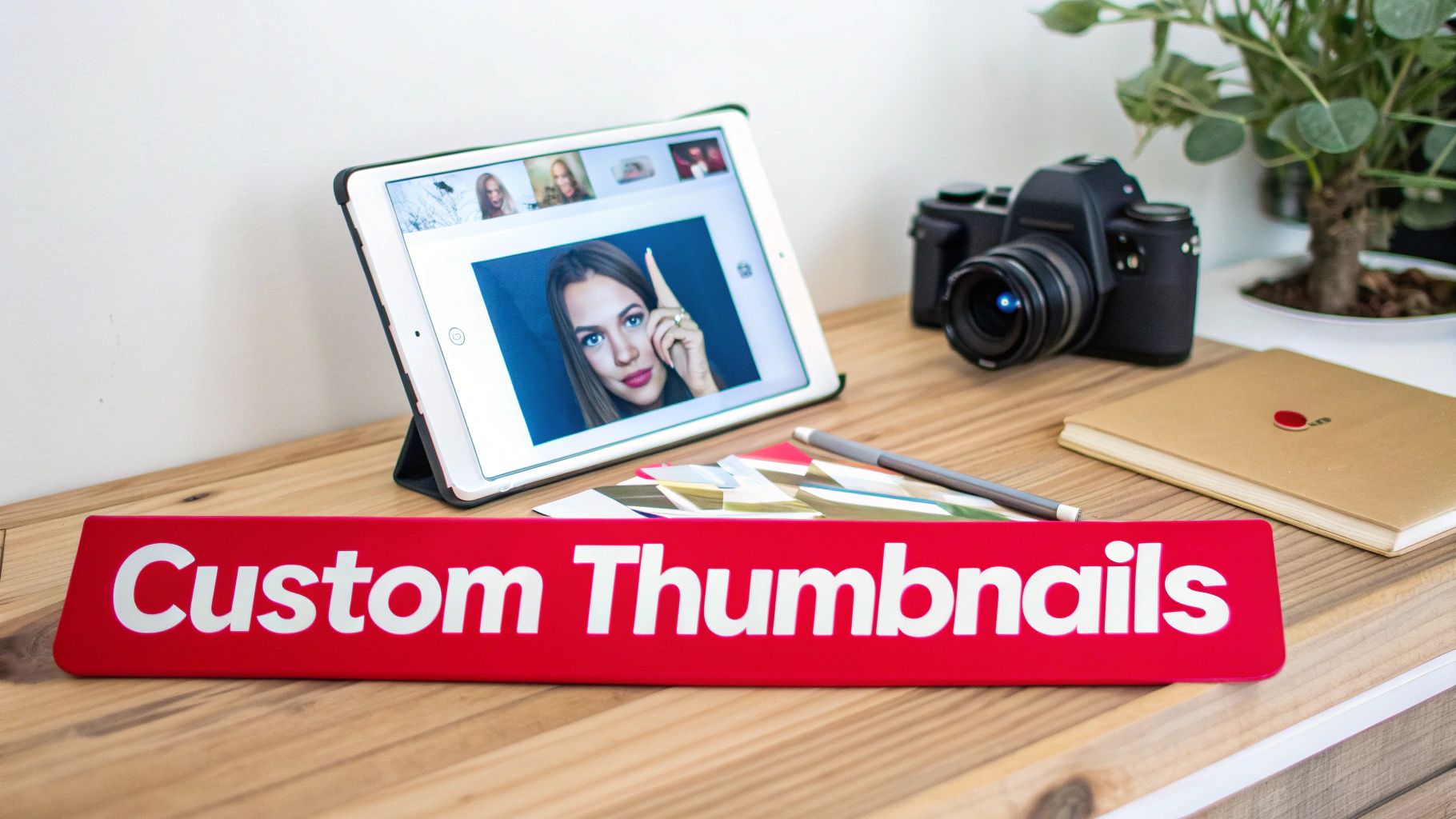
    Workspace with an iPad displaying a custom thumbnail, a camera, and a red "Custom Thumbnails" sign.

    While YouTube can generate automatic thumbnails from your video, they are rarely optimized for performance. A well-designed custom thumbnail can outperform an auto-generated one by a significant margin, directly signaling to the algorithm that your content is engaging viewers from the very first impression. This involves a strategic combination of visual elements designed to communicate value and evoke emotion instantly.

    How to Create High-CTR Thumbnails

    An effective thumbnail blends human psychology with clear design principles. Creators like MrBeast have mastered this by using high-contrast colors, expressive or shocked faces, and minimal, bold text to create an instantly recognizable and intriguing package. Similarly, educational channels like Graham Stephan often use large numbers, arrows, and percentages to clearly communicate the video's value proposition. The goal is to make the thumbnail's core message understandable in under a second, even on a small mobile screen. Brand consistency, through repeated use of fonts, color palettes, or logo placement, also helps build audience recognition and trust over time.

    Actionable Tips for Thumbnail Optimization

    • Prioritize High Contrast: Use powerful color combinations like red and yellow, blue and orange, or stark black and white to make your thumbnail pop in the feed.
    • Limit Text: Keep text to 2-5 impactful words in a large, bold, and easily readable font. Ensure it’s legible even when scaled down on a smartphone.
    • Show Human Emotion: Feature a clear, expressive face whenever possible. Human brains are wired to connect with faces and emotions, which can dramatically increase clicks.
    • Establish Brand Consistency: Develop a consistent style using a specific font, color palette, or layout. This makes your videos instantly recognizable to your subscribers.
    • Test and Analyze: Don't just set it and forget it. Review your CTR in YouTube Analytics. Test different design variations every 10-20 videos to see what resonates most with your audience.
    • Embrace Simplicity: In the visually noisy environment of YouTube, a simple, clean, and uncluttered design often performs best. Avoid overloading the thumbnail with too many elements.

    5. Optimize Video Tags with Primary, Secondary, and Brand Keywords

    Video tags are crucial metadata signals that provide context to YouTube's algorithm about your video's content, category, and overall topic. While not as heavily weighted as titles or descriptions, they play a vital role in associating your video with related content, helping it appear in recommendation feeds and clarifying its subject matter. An effective tag strategy is a fundamental part of any comprehensive YouTube search engine optimization tips arsenal.

    Think of tags as keywords that work behind the scenes. They connect your video to a broader network of similar content, reinforcing the topics mentioned in your title and description. A well-tagged video helps YouTube understand not just what the video is, but who it is for, increasing its chances of being suggested to the right audience.

    How to Create a Balanced Tagging Strategy

    A successful tagging strategy involves a mix of specific and broad keywords. Your primary keyword should always be the first tag, as YouTube gives it the most weight. Follow this with secondary, long-tail variations that potential viewers might use in their searches. For instance, a video about baking sourdough could have a primary tag of "sourdough bread recipe," followed by "how to make a sourdough starter" and "easy beginner sourdough."

    Actionable Tips for Tag Optimization

    • Prioritize Quality Over Quantity: Aim for 5-10 highly relevant tags rather than stuffing the 500-character limit with irrelevant terms. Precision is more effective than volume.
    • Front-Load Your Main Keyword: Always place your most important target keyword as the very first tag in your list to give it maximum SEO weight.
    • Include Brand and Competitor Tags: Add your channel name as a consistent tag on all videos to aid channel discovery. When relevant, you can also add the names of 2-3 competitor channels to appear in their "suggested videos" sidebar.
    • Use Keyword Research Tools: Leverage tools like TubeBuddy or VidIQ to analyze the tags of top-ranking competitor videos and identify high-value keywords you may have missed.
    • Audit and Update Old Tags: Periodically review the tags on your older, evergreen content. Update them with new keywords to ensure they remain relevant and continue to perform well in search. For more ideas, you can explore guides on how to find great tags for YouTube to refine your strategy.

    6. Maximize Average View Duration Through Strategic Content Pacing and Retention Structure

    Average View Duration, the average amount of time each viewer spends watching your video, is one of YouTube's most influential ranking signals. A high duration tells the algorithm that your content is valuable and engaging, prompting it to push your video into search results and recommendation feeds. This metric directly reflects audience satisfaction and is a cornerstone of any sustainable YouTube search engine optimization tips strategy.

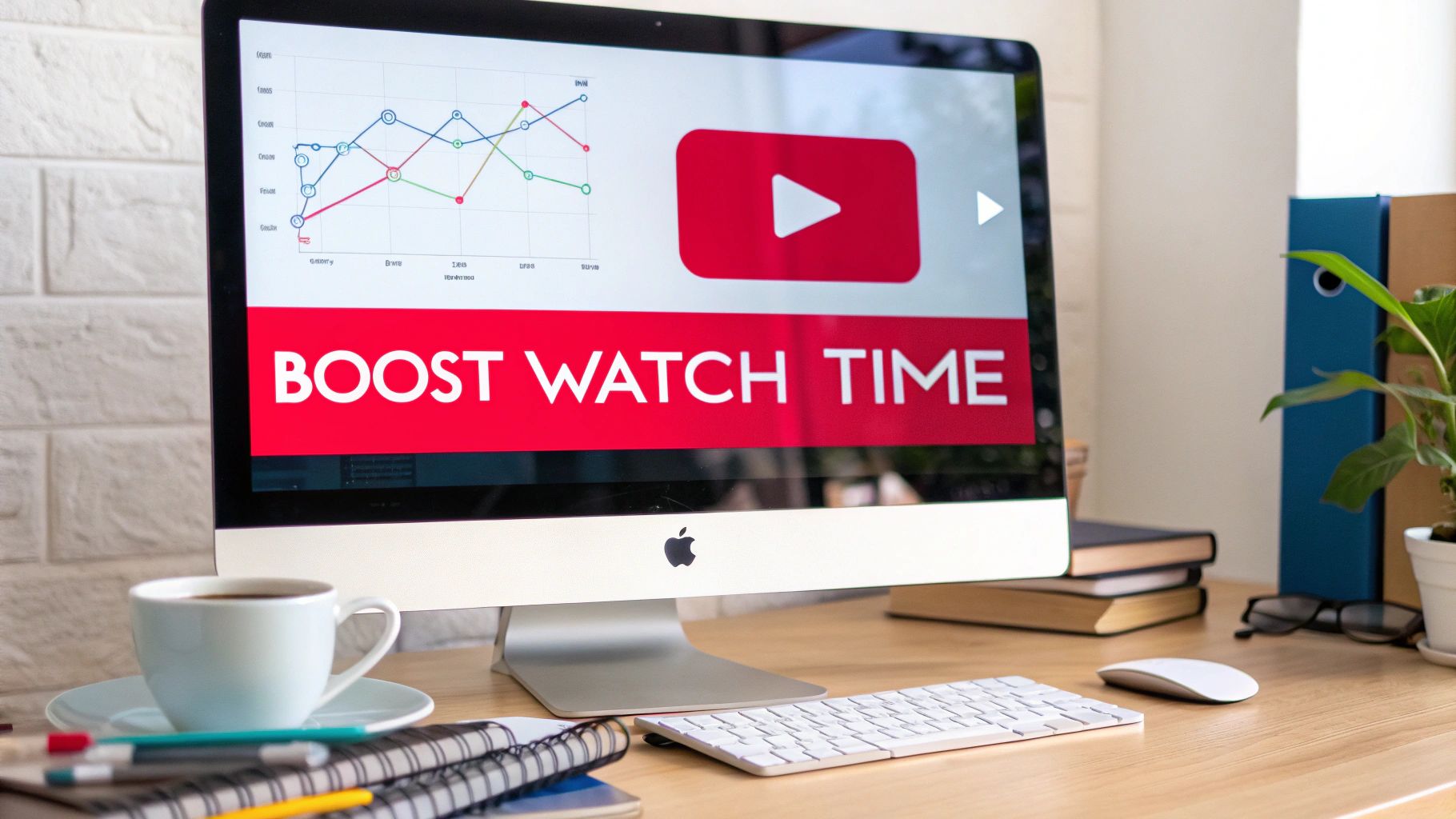
    A desk setup with an Apple monitor displaying a YouTube graph and 'BOOST WATCH TIME' text, along with a coffee cup and notebooks.

    The goal is to design videos that hold attention from the first second to the last. This isn't about just making longer videos; it's about making viewers want to watch for longer. Channels that master this achieve higher retention rates. For example, TED-Ed uses compelling visual storytelling to maintain over 80% retention, while gaming creators use quick cuts and reactive commentary to keep viewers hooked.

    How to Structure for High Retention

    A video structured for high retention starts with a powerful hook, delivers on its promise through well-paced segments, and ends cleanly. The first 5-10 seconds are critical to confirm the viewer's choice and create curiosity. From there, you must consistently re-engage them. This involves using "pattern interrupts" like changing camera angles, adding B-roll, or introducing on-screen graphics to prevent viewer fatigue and maintain a dynamic pace.

    Actionable Tips for Boosting Watch Time

    • Analyze Your Retention Graph: Go to YouTube Studio and study the "Audience retention" graph for your videos. Identify where viewers drop off and analyze what caused it, then adjust future content accordingly.
    • Hook Viewers Immediately: Start your video with a clear value proposition, a compelling question, or a preview of the most exciting part. This secures initial commitment.
    • Use Pattern Interrupts: Intentionally break the visual or auditory pattern every 15-20 seconds. This can be a simple zoom, a graphic overlay, a sound effect, or a cut to a different shot.
    • Segment Your Content: Use visual transitions, chapter markers, or on-screen text to break your video into clear, digestible sections. This helps viewers follow the narrative and feel a sense of progress.
    • End with a Strong Call-to-Action (CTA): Avoid long, rambling outros where viewers typically click away. End your video concisely and immediately after delivering the final piece of value, followed by a clear CTA.

    7. Leverage YouTube's Topic and Content Category Tags for Topical Authority

    Beyond standard tags, YouTube provides powerful classification tools: Topic tags and the Video Category setting. These are crucial for building topical authority, signaling to the algorithm that your channel is an expert in a specific niche. Unlike viewer-added tags, which can be inconsistent, these are official classifications that carry significant weight in how YouTube understands and recommends your content.

    Topic tags are linked to a standardized taxonomy (similar to Wikipedia categories), providing a clear, authoritative signal about your video's subject matter. When you consistently apply relevant topics like "Digital Marketing" or "Physical fitness" across your videos, you create a content cluster. This helps YouTube confidently recommend your videos to users interested in that specific subject, a core component of advanced YouTube search engine optimization tips.

    How to Build Topical Authority

    The goal is to create a strong, consistent thematic signal for your entire channel. A technology channel that consistently uses the "Software" and "Consumer electronics" topics for relevant videos builds a clear profile. When they upload a new video with those same topics, YouTube's algorithm already understands its context and target audience, improving its initial distribution and search ranking potential. This is far more effective than using a scattergun approach with miscellaneous tags.

    Actionable Tips for Topic and Category Optimization

    • Find Official Topics: In the video details editor, scroll down to the "Tags" section and start typing your subject. YouTube will suggest official topics, often accompanied by a small building or globe icon.
    • Apply 1-2 Primary Topics: Choose one or two highly relevant, official Topic tags that accurately define the video's core subject. Avoid adding broad, unrelated topics.
    • Maintain Channel Consistency: Use the same core set of Topic tags across all relevant videos in your library to reinforce your channel's niche authority over time.
    • Set Your Video Category: In the "Advanced settings" tab for your upload, ensure you've selected the correct "Category" (e.g., "Howto & Style," "Science & Technology," "Gaming"). This is a broad but essential classification.
    • Audit Top Competitors: Analyze the video descriptions of top-ranking channels in your niche. Often, YouTube will display the official Topic tags they've used, giving you insight into their strategy.

    8. Build Strategic Playlists to Increase Watch Time and Session Watch Duration

    Playlists are one of the most underutilized tools for YouTube SEO, acting as powerful assets that group related videos and rank independently in search results. When a viewer watches videos sequentially from a playlist, it significantly boosts "session watch time," a key metric signaling to YouTube that your channel provides a high-value, engaging experience. This keeps users on the platform longer, which is a primary goal for the algorithm.

    Strategic playlists guide viewers through a logical journey, transforming a single video view into an extended viewing session. By organizing content around specific topics, series, or skill levels, you create a sticky ecosystem that increases overall channel watch time and improves your ranking potential for both individual videos and the playlist itself. This is a foundational practice within any comprehensive list of youtube search engine optimization tips.

    How to Structure Effective Playlists

    A successful playlist is more than just a random collection of videos; it’s a curated experience. For example, an educational channel might create a "Beginner Python" playlist that naturally leads into an "Intermediate Python" one, guiding a user’s learning path. Similarly, a gaming channel can create a "Sekiro: All Boss Fights" playlist, satisfying a specific search intent and encouraging binge-watching. The key is to organize videos by logical progression, not just by publication date.

    Actionable Tips for Playlist Optimization

    • Create 3-5 Core Playlists: Focus on your primary content pillars or topics. This creates a clear structure for new viewers and the YouTube algorithm.
    • Use SEO-Driven Playlist Titles: Name your playlists with searchable keywords, just as you would with a video title. For example, "Easy Vegan Meal Prep for Beginners."
    • Write Keyword-Rich Descriptions: Add a detailed, keyword-optimized description to each playlist, explaining its value and what viewers will learn.
    • Order Videos Logically: Arrange the videos in a sequence that makes sense to a new viewer. Place your strongest, most engaging video first to hook them.
    • Promote Playlists in Videos: Use end screens and cards to direct viewers to a relevant playlist, encouraging them to continue their viewing session.
    • Analyze Playlist Performance: Use YouTube Analytics to check which playlists have the highest watch time and completion rates. Identify where viewers drop off and consider reordering or removing underperforming videos.

    9. Develop a Consistent Publishing Schedule to Signal Authority and Build Audience Habit

    Consistency is a powerful, yet often overlooked, signal for YouTube SEO. A predictable publishing schedule does more than organize your workflow; it trains both your audience and the algorithm to anticipate your content. When viewers know when to expect a new video, they are more likely to return, engage with notifications, and watch your video shortly after it goes live.

    This initial burst of engagement is a critical ranking factor. A high velocity of early views and interactions signals to YouTube that your content is valuable and relevant, prompting the algorithm to push it to a wider audience through recommendations and search. Channels with erratic schedules miss this opportunity, as they fail to build the viewing habits that generate this crucial early momentum. This makes a consistent schedule a foundational element of any long-term YouTube search engine optimization tips.

    How a Schedule Boosts Your Channel

    A reliable schedule builds trust and transforms casual viewers into a loyal community. When an audience knows you publish every Friday evening, for example, they begin to integrate your content into their weekly routine. This learned behavior leads to higher notification click-through rates and more direct traffic, feeding the algorithm positive signals. For example, Ali Abdaal’s weekly Thursday uploads trained his audience to expect new content on that specific day, while gaming channels often publish on Friday evenings to align with their audience's peak leisure time.

    Actionable Tips for Building a Consistent Schedule

    • Choose a Realistic Cadence: Prioritize consistency over frequency. It is far better to publish one video per week without fail than to aim for three and miss deadlines. Choose a schedule you can maintain for the long term.
    • Create a Content Buffer: Before committing to a schedule, produce and edit 2-4 videos in advance. This buffer protects your schedule from unexpected delays, illness, or creative blocks.
    • Communicate Your Schedule: Announce your publishing days and times in your channel banner, "About" section, and in a pinned comment. This sets clear expectations for your viewers.
    • Use the "Schedule" Feature: Upload your finished videos in advance and use YouTube Studio’s scheduling tool to ensure they go live at the optimal time, even if you are unavailable.
    • Analyze Early Performance: Monitor your video’s performance in the first 24 hours. Pay attention to view velocity to identify the best days and times to publish for your specific audience.
    • Stay Consistent for at Least 3 Months: It takes time to form a new habit. Stick to your chosen schedule for a minimum of three months before making any adjustments to give your audience time to adapt.

    10. Encourage and Respond to Comments to Increase Engagement Signals and Community Growth

    Comments are a powerful, direct signal to the YouTube algorithm that your content is resonating with viewers. A video with a vibrant comment section is often prioritized in search and discovery because it demonstrates high levels of user engagement. Beyond the algorithmic boost, actively managing your comments builds a loyal community, fosters viewer loyalty, and provides invaluable feedback for future content.

    The YouTube algorithm doesn't just count comments; it assesses the quality and velocity of the interaction. A video that quickly accumulates thoughtful comments and creator responses signals relevance and authority. This community-building aspect is a vital component of any sustainable YouTube search engine optimization tips strategy, turning passive viewers into an active, engaged audience.

    How to Foster an Active Comment Section

    Building a thriving comment section starts with proactively inviting interaction. This means going beyond a simple "leave a comment" call-to-action. The goal is to ask specific, open-ended questions within your video, pinned comment, or description that prompt a thoughtful response. For example, educational creators can pin a comment asking, "What was the most surprising fact you learned in this video?" which encourages more than a one-word answer.

    Responding to comments, especially within the first 24 hours of publishing, is equally critical. This not only encourages the original commenter to return but also shows other viewers that you are an active and engaged creator. As seen with creators like Ali Abdaal, who frequently replies to top comments, this simple act makes viewers feel heard and valued, strengthening their connection to the channel.

    Actionable Tips for Comment Engagement

    • Ask Specific Questions: End your video with a direct, engagement-triggering question like, "What topic should I cover next?" or "Share your biggest challenge with X."
    • Respond Promptly: Prioritize replying to the first wave of comments within a few hours of uploading to kickstart the conversation and set a positive tone.
    • Pin High-Quality Comments: Each day, pin a thoughtful or interesting viewer comment. This rewards good contributions and encourages others to participate meaningfully.
    • Use Comments for Content Research: Monitor your comment section for frequently asked questions or recurring themes. These are proven ideas for future videos your audience wants to see.
    • Give Substantive Replies: Avoid generic replies like "Thanks!" Instead, ask a follow-up question or add to their point to deepen the engagement.
    • Encourage Viewer-to-Viewer Interaction: "Heart" comments where viewers are helping each other, and occasionally reply to a thread to encourage the community dialogue.

    10-Point YouTube SEO Comparison

    Strategy Implementation Complexity 🔄 Resource Requirements ⚡ Expected Outcomes 📊 Effectiveness ⭐ Ideal Use Cases 💡
    Optimize Video Titles with Keywords and CTR Balance Low–Medium — iterative testing and monitoring Low — time for research & analytics Higher search CTR and improved discoverability; quick measurable CTR lifts ⭐⭐⭐⭐ Improving organic clicks for search/recommendation traffic
    Develop Comprehensive Video Descriptions with SEO Keywords & CTAs Medium — craft + format + timestamps per video Low–Medium — writing time, templates/tools Better long-tail rankings, clearer viewer actions, more watch-time from timestamps ⭐⭐⭐⭐ Tutorials, long-form videos, driving traffic/subscribers
    Strategic Keyword Research & Metadata Implementation Medium — ongoing audits and mapping Medium–High — keyword tools and analyst time Sustainable search-driven growth; faster ranking on long-tail terms ⭐⭐⭐⭐⭐ Channel content planning, niche targeting, new-channel growth
    Create Compelling Custom Thumbnails (text/color/branding) Low–Medium — design templates + iteration Medium — design tools or freelance time Typically 5–20% CTR improvement; stronger channel recognition ⭐⭐⭐⭐⭐ Channels prioritizing CTR, branding, and high-volume uploads
    Optimize Video Tags (primary/secondary/brand) Low — quick metadata step during upload Low — minimal time; tag tools optional Minor ranking boosts; improved related-video/recommendation signals ⭐⭐⭐ Supplementing metadata for niche discovery and related-video matches
    Maximize Average View Duration (pacing & retention) High — requires content restructure & testing Medium–High — editing, scripting, analytics effort Significant ranking uplift, better recommendations, faster monetization ⭐⭐⭐⭐⭐ Educational, long-form, and monetization-focused channels
    Leverage YouTube Topic & Category Tags for Topical Authority Low — select accurate topics consistently Low — small research effort per video Builds topical authority over time; stronger recommendation clustering ⭐⭐⭐⭐ Channels building subject-matter authority or series content
    Build Strategic Playlists to Increase Session Watch Duration Low–Medium — plan order and descriptions Low — curation time, optional thumbnails Increased session watch duration; playlist-level discovery ⭐⭐⭐⭐ Course-style content, series, or progressive skill playlists
    Develop a Consistent Publishing Schedule Medium — planning, production cadence Medium — content buffer, workflow discipline Better early momentum, higher notification CTR, predictable growth ⭐⭐⭐⭐ Creators wanting habitual audience return and steady growth
    Encourage & Respond to Comments to Boost Engagement Medium — ongoing moderation & replies Medium–High — time or moderators at scale Stronger engagement signals, community growth, content ideas ⭐⭐⭐⭐ Community-driven channels and creators seeking feedback/loyalty

    Putting Your YouTube SEO Strategy into Action

    We've explored a comprehensive roadmap of ten essential youtube search engine optimization tips, moving from foundational metadata to advanced audience retention strategies. The journey from an undiscovered channel to a thriving content hub is not about finding a single secret hack; it's about consistently applying a holistic system of best practices. Each video you publish is a new data point for the YouTube algorithm, a fresh opportunity to signal your value, and another chance to connect with your target audience.

    The true power of this guide lies in its interconnectedness. A fantastic, keyword-rich title is amplified by a compelling thumbnail that boosts CTR. A high-CTR video is then rewarded by the algorithm, but only if its content is structured to maximize watch time and average view duration. That hard-earned watch time can be extended even further through strategic playlists, while consistent publishing schedules build audience anticipation and loyalty. Engagement from comments and likes adds another layer of positive signals, completing a powerful feedback loop.

    From Knowledge to Execution: Your Next Steps

    Merely understanding these concepts is not enough. The key to sustainable growth is turning this knowledge into a repeatable workflow. Avoid feeling overwhelmed by trying to implement everything at once. Instead, adopt a phased approach to integrate these youtube search engine optimization tips into your content creation process.

    Your Action Plan:

    1. Audit Your Last Five Videos: Start with a simple review. Using the principles we discussed, how could you improve the titles, descriptions, and tags of your recent content? What about the thumbnails? This retrospective analysis will make the concepts tangible and reveal your biggest opportunities for immediate improvement.
    2. Focus on Pre-Production SEO: For your very next video, make keyword research the absolute first step. Before you even hit record, know your primary and secondary keywords. Let this research inform your video's title, script, and core talking points, ensuring your content is aligned with audience search intent from the very beginning.
    3. Commit to One Retention Tactic: Select one strategy from the guide aimed at increasing watch time. Whether it's adding a strong hook in the first 15 seconds, using pattern interrupts like B-roll and on-screen graphics, or structuring your content around a compelling narrative arc, focus on mastering just one tactic per video until it becomes second nature.
    4. Schedule a Monthly Analytics Review: Block out time on your calendar each month to dive into your YouTube Analytics. Look specifically at your Traffic Sources to see which keywords are bringing you views. Analyze your Audience Retention graphs to identify where viewers are dropping off. This data-driven approach transforms SEO from guesswork into a precise science.

    The Long-Term Vision: Building a Discovery Engine

    Mastering YouTube SEO is about more than just ranking for a few keywords; it's about building a sustainable, long-term engine for organic discovery. When you consistently apply these principles, you are not just optimizing a single video, you are teaching the YouTube algorithm exactly who your content is for. Over time, YouTube will begin to proactively recommend your videos to new, relevant audiences through Suggested Videos and the Browse Features, creating an exponential growth effect that far surpasses the initial impact of search traffic.

    This strategic approach transforms your channel from a content repository into a valuable asset that works for you 24/7, attracting new subscribers, building a loyal community, and driving your brand's goals. The effort you invest today in mastering these youtube search engine optimization tips is a direct investment in the future visibility and success of your channel. You have the blueprint; now it's time to build.


    Ready to supercharge your workflow and get AI-powered insights for every video? ViewsMax provides the tools you need to research keywords, optimize metadata, and analyze performance faster than ever before. Stop guessing and start growing by leveraging the ultimate toolkit for YouTube creators at ViewsMax.

  • Guide: how to optimize youtube channel for rapid growth

    Guide: how to optimize youtube channel for rapid growth

    Optimizing a YouTube channel is so much more than just uploading videos and hoping for the best. It's a strategic mix of strong branding, smart video SEO, and creating consistent content that truly resonates with a specific audience. When you get it right, your channel stops being a simple video library and transforms into a discovery engine that works for you, signaling to YouTube’s algorithm that your content is valuable and worth pushing to more people.

    Building Your YouTube Growth Blueprint

    Before you even think about tweaking a video title or designing a new thumbnail, you need to lay a solid foundation. So many creators fall into the trap of obsessing over individual video performance, but that's a shortsighted view. YouTube's algorithm looks at your channel as a complete package.

    A well-thought-out, holistic optimization strategy tells YouTube exactly who you are, who you're trying to reach, and why your videos deserve a spot on people's homepages. This big-picture approach is what separates random viral hits from sustainable, long-term growth.

    It all starts with a crystal-clear vision. What value are you offering? Who is your ideal viewer? Answering these questions is non-negotiable because it forces you to define your niche. A well-defined niche is one of the most powerful signals you can send the algorithm, helping it categorize your channel and serve your content to the right people. If you're still figuring this part out, our guide on choosing the best niche for YouTube is packed with actionable advice.

    To give you a clearer picture, here’s a quick breakdown of the core pillars that support a thriving channel.

    Core Pillars of YouTube Channel Optimization

    A quick look at the fundamental areas of channel optimization and how they contribute to growth.

    Optimization Pillar Core Activity Impact on Growth
    Branding & Identity Creating a professional banner, logo, and "About" page. Builds trust and recognizability, encouraging subscriptions.
    Content Strategy Defining your niche and content formats. Signals authority to the algorithm, attracting a loyal audience.
    Video SEO Optimizing titles, descriptions, and tags. Improves discoverability in search results and recommendations.
    Viewer Engagement Crafting compelling thumbnails and engaging content. Boosts key metrics like CTR and Audience Retention.

    As you can see, each pillar supports the others to create a channel that's built for discovery from the ground up.

    Understanding The Metrics That Matter

    If you want to optimize your channel effectively, you have to learn to speak the algorithm's language. It really boils down to two key performance indicators (KPIs) that drive nearly every recommendation on the platform:

    • Click-Through Rate (CTR): This is the percentage of people who click on your video after seeing its thumbnail and title. A high CTR tells YouTube that your packaging is compelling and relevant to what viewers are looking for.
    • Audience Retention: This metric shows you exactly how long people stick around to watch your videos. High retention is a massive signal to YouTube that your content is engaging and delivers on the promise you made.

    Think of these two metrics as a team. A sky-high CTR doesn't mean much if everyone clicks away after 30 seconds. Likewise, an amazing video with high retention won't get seen if the thumbnail and title are too weak to earn the click. The goal is to create a seamless experience where a compelling promise (CTR) is fulfilled by genuinely valuable content (retention).

    Why Channel-Level Optimization Drives Discoverability

    When you optimize your channel as a whole, you create a powerful feedback loop. A viewer watches one of your videos, enjoys it, and clicks over to your channel page. If they find a professional, well-organized space that’s clearly focused on a topic they care about, they’re far more likely to watch another video.

    This behavior massively increases your channel's overall session watch time—a huge ranking factor.

    YouTube’s number one goal is to keep users on the platform for as long as possible. By optimizing everything from your banner art to your playlists, you make it easy for the algorithm to serve up your content back-to-back, creating a binge-worthy experience for viewers.

    This is especially critical when you consider the competition. YouTube has 2.85 billion monthly active users, making it the second most visited website online with a staggering 74.8 billion monthly visits. In an ecosystem that massive, you have to be strategic to stand out. The algorithm rewards channels that consistently demonstrate authority in a specific niche.

    For anyone serious about making progress, this guide on how to grow a YouTube channel fast offers some great complementary tactics. By establishing a clear brand, defining your niche, and zeroing in on CTR and retention from day one, you build a channel that the algorithm can't help but promote. This initial blueprint is the most important asset you have for long-term success.

    Crafting a Memorable Brand Identity

    Your channel's branding is the first handshake you have with a potential subscriber. Long before they watch a single second of your content, they’ve already made a snap judgment based on your profile icon, channel banner, and the overall vibe of your page. A strong brand identity does more than just look good; it instantly builds trust and signals what you're all about to both viewers and the YouTube algorithm.

    Think of your channel page as your digital storefront. If it looks sloppy or thrown together, people are going to click away. But when you present a sharp, cohesive brand, you're telling everyone you're a serious creator worth their time.

    Designing Your Visual Cornerstones

    Your profile icon and channel art (the banner at the top) are the two biggest pieces of your visual real estate. They show up everywhere—from a tiny phone screen to a giant smart TV—so they have to be clean, compelling, and look great at any size.

    Your profile icon needs to be simple and instantly recognizable. If you're a personal brand, a crisp, high-quality headshot is usually the best bet. For a channel with a unique name, a clean logo is the way to go. Just avoid cramming in a bunch of tiny text or a busy image that turns into a blurry mess when it's shrunk down.

    Your channel art is your chance to pitch your channel's value in a single glance. A new visitor should be able to figure out three things almost immediately:

    • Who are you? Put your name or face front and center.
    • What's your channel about? Use images or a short tagline to show your niche (e.g., "Authentic Italian Cooking" or "No-Nonsense Tech Reviews").
    • When do you upload? Adding a simple schedule like "New Videos Every Tuesday" is a pro move that sets expectations and gives people a reason to come back.

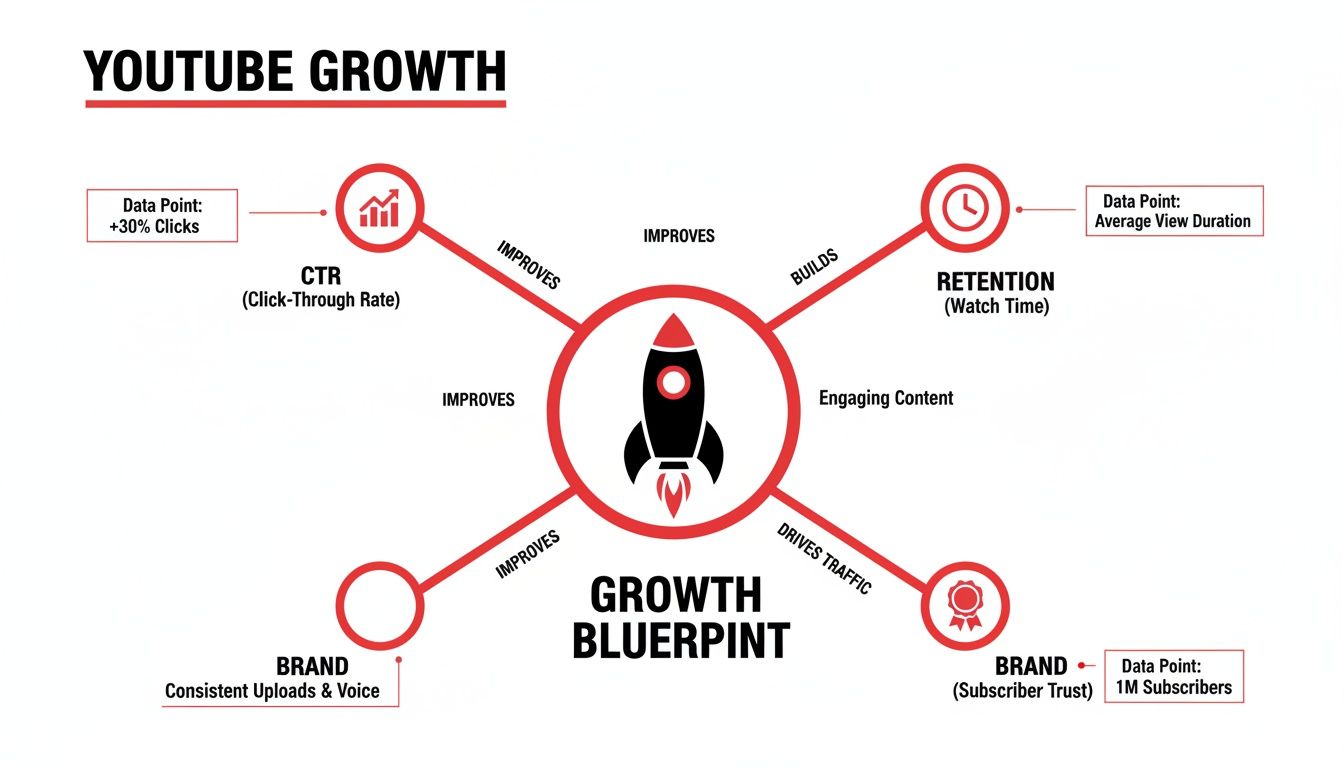
    This blueprint shows how powerful branding works together with click-through rate (CTR) and audience retention to build a successful channel.

    A YouTube growth blueprint infographic showing CTR, retention, and brand pillars, all driven by engaging content.

    As you can see, great branding isn't just window dressing. It's a core pillar that directly impacts whether someone decides to click on your video and stick around.

    Writing an About Page That Converts

    So many creators treat the 'About' page as an afterthought, and it's a huge mistake. This page is a goldmine for YouTube SEO. It’s your chance to tell the algorithm exactly what your channel is about by loading it with the keywords your ideal audience is searching for.

    Even more importantly, it's where you sell your story to potential subscribers and collaborators. A well-written 'About' page should be easy to read, packed with personality, and straight to the point.

    Your 'About' section is your elevator pitch. You need to hook them in the first two sentences, explain the value you bring to the table, and wrap up with a strong call to action telling them why they should subscribe.

    Keep your paragraphs short. Kick things off with a powerful opener that sums up your channel's mission. Use the middle part to talk about the kinds of videos you make and what makes your take on the topic unique. Finally, add links to your social media or website and give them that final nudge to hit the subscribe button.

    The Art of the Channel Trailer

    A channel trailer is that short, punchy video that automatically plays for anyone who lands on your channel but isn't subscribed yet. Its one and only job is to turn those visitors into subscribers. The best ones are tight—usually between 30 and 60 seconds—and follow a tried-and-true formula.

    • Open with a Hook: Grab their attention immediately. Ask a question, make a bold claim, or hit them with a fast-paced montage of your absolute best moments.
    • Introduce Yourself & Your Value: Quickly say who you are and what your channel offers. Frame everything around the viewer—what will they get out of watching?
    • Show, Don't Just Tell: This is key. Use exciting clips from your best videos to showcase your content, your personality, and your production quality.
    • Finish with a Strong Call to Action: Don't be shy. Explicitly ask them to subscribe and tell them what they can expect, maybe by reinforcing your upload schedule one last time.

    By creating a consistent visual theme and a compelling story across your banner, 'About' page, and trailer, you start building brand recognition from the very first impression. This is a crucial part of optimizing your YouTube channel for long-term loyalty and growth. Since visuals are so important, you can get more tips in our guide to YouTube video thumbnail sizes and best practices.

    Mastering YouTube SEO for Discoverability

    Great branding might bring people to your channel page, but it's smart YouTube SEO that gets their eyeballs on your videos in the first place. A lot of creators forget that YouTube is basically the world's second-biggest search engine. If you're not intentionally optimizing your video’s metadata—the title, description, and tags—you're leaving billions of potential viewers in the dark.

    This isn't about gaming the algorithm. It's about giving YouTube clear, strong signals about what your video is and who it’s for. When you nail this, the algorithm thanks you by putting your content in front of the right people, which translates directly into more views, longer watch time, and real channel growth.

    A tablet displaying 'YOUTUBE SEO' and a play button, on a wooden desk with office supplies.

    Uncovering What Your Audience Really Wants

    Solid YouTube SEO starts with knowing what people are actually typing into that search bar. This is way more than just guessing a few keywords. You need to become a detective and figure out the exact questions and problems your audience is trying to solve.

    An easy place to start is right in YouTube's search bar. Type in a broad topic from your niche and watch what the autofill suggestions tell you. Those aren't random guesses; they're real searches from actual users. For example, typing "how to edit video" might reveal popular searches like "how to edit video on iphone" or "how to edit video for beginners."

    Another goldmine? The comments section on popular videos in your niche. Scour them for the questions viewers are asking and the frustrations they're sharing. These comments give you a direct line to content ideas and long-tail keywords you know are in demand. For a deeper dive, our guide on choosing the right YouTube video keywords will help you build a killer strategy.

    Writing Titles That Demand a Click

    Think of your video title as its headline. It has two incredibly important jobs: first, to clearly tell the algorithm what your video is about, and second, to spark enough curiosity to make a real person click. The sweet spot is a title that’s both keyword-rich and genuinely compelling.

    I see so many creators make the mistake of using a bland title like "My Garden Tour." A much stronger, SEO-driven alternative would be something like, "Small Balcony Garden Tour | 10 Must-Have Plants for Urban Gardeners." This version hits multiple keywords ("small balcony garden tour," "urban gardeners") and makes a specific promise of value ("10 Must-Have Plants").

    The best titles often merge a clear benefit with a dash of intrigue. They answer the viewer's first question—"What's this about?"—while making them ask a new one—"What are those ten plants I need?"

    Crafting a Powerful Video Description

    Your video description is probably the most overlooked SEO tool you have. YouTube gives you a massive 5,000 characters to explain your video's context, and you should use every bit of it you can. The algorithm actually reads this text to understand your content, so a thoughtfully written description can give your visibility a serious boost.

    Structure your description to appeal to both people and search algorithms. Here's a framework that works:

    • The Hook (First 2-3 Lines): Start strong. Write a compelling, keyword-rich summary of the video. This is the snippet people see before they click "Show more," so make it grab them.
    • Detailed Summary: Now, elaborate. Write a few natural-sounding paragraphs that weave in your main and secondary keywords. Talk about what viewers will learn or see.
    • Timestamps: Break your video into chapters with clickable timestamps. This not only improves the viewing experience but can also get your video featured as "key moments" in Google search results.
    • Important Links: Add links to your social media profiles, website, affiliate products, or other relevant videos on your channel. This is great for driving traffic and keeping people in your ecosystem.

    For creators really looking to maximize their reach, an advanced tactic is repurposing your video's script. Learning about converting YouTube video to text can help you turn your spoken content into blog posts or show notes, further boosting your SEO footprint.

    Using Tags and Playlists Strategically

    While YouTube themselves have said that tags play a "minimal role in video discovery," they aren't useless. They still help the algorithm with categorization, especially for commonly misspelled keywords related to your topic. A good practice is to use your main target keyword as your very first tag, followed by a mix of broader and more specific tags.

    Finally, don't sleep on playlists. Playlists are one of the most effective ways to increase your channel's session watch time. When one video in a playlist ends, the next one starts automatically, keeping viewers on your channel longer. Grouping related videos into a binge-worthy series sends a powerful signal to the algorithm that your content is engaging and valuable.

    Using Analytics to Fuel Your Growth

    Stop guessing what works and start letting the data drive your strategy. For many creators, YouTube Analytics looks like a confusing mess of charts and numbers, but it’s hands-down the most powerful tool you have for growing your channel. When you learn how to read it, you stop being just a content creator and become a content strategist.

    This isn't about getting obsessed with view counts. It's about digging into the story behind those numbers. When you figure out why a video popped off, you can replicate that magic. And when you see exactly where viewers are dropping off, you can fix what's broken.

    A desk with a computer displaying YouTube Analytics Insights, a keyboard, notebook, and plants.

    Decoding Your Audience Retention Graph

    If you only look at one thing in your analytics, make it the Audience Retention graph. This report is your video's pulse, showing you the exact percentage of viewers still watching at any given second. It's a real-time report card on how engaging your content truly is.

    Keep an eye out for these common patterns:

    • The Steep Intro Drop: See a massive nosedive in the first 10-15 seconds? Your hook isn't working. You're losing people before you even get to the good stuff. Time to make that intro shorter and punchier.
    • Sudden Dips: A sharp drop mid-video is a huge red flag. It points to a specific segment that was boring, confusing, or just dragged on too long. Did you go on a tangent? Did the audio quality suddenly get worse? That’s your cue to be ruthless with your editing next time.
    • Spikes and Bumps: Those little hills in the graph are pure gold. A spike means people are actually rewinding to re-watch a specific part. Whatever you did there was incredibly valuable or entertaining—do more of that!

    Learning to read these graphs gives you a clear blueprint for your next video. This is a core skill when you're learning how to optimize your YouTube channel for what viewers really want.

    Analyzing Your Traffic Sources

    Where are your views actually coming from? The Traffic Sources report answers this question, and the answer tells you where to focus your energy.

    Think of your Traffic Sources report as a map showing you all the different roads people take to find your channel. If 80% of your views are from YouTube Search, you know your SEO is on point. If most come from Suggested Videos, the algorithm trusts your content enough to recommend it after other popular videos.

    Pay close attention to these key sources:

    • YouTube Search: This shows you which keywords are leading viewers to you. It's direct, unfiltered feedback on whether your SEO strategy is hitting the mark.
    • Suggested Videos: This is the holy grail for channel growth. When you see this number climb, it means YouTube is actively promoting your content for you.
    • Browse Features: These are views from the YouTube homepage and subscription feed. Getting traffic here means your thumbnails and titles are compelling enough to win the click in a very crowded space.

    If one source is outperforming the others, double down on it. If another is lagging behind, you've just found a new area to work on.

    Building Your Ideal Viewer Profile

    So, who are you actually talking to? The Audience tab turns your anonymous viewers into real people by showing you their age, gender, and where they're watching from.

    This data is crucial for making your content resonate. For instance, if you find out 75% of your audience is between 18-24 years old, you might want to adjust your editing style, humor, and cultural references to connect with them better. Seeing your top countries can also be a nudge to add translated captions or subtitles.

    Using YouTube Analytics effectively is a game-changer. Newer metrics around Shorts remixes and cross-platform views allow for incredibly precise adjustments. The platform now weighs viewer satisfaction—measured through surveys and replay behavior—just as heavily as traditional signals like watch time. We’ve seen channels boost engagement by up to 35% simply by segmenting their data for subscribers versus non-subscribers and tailoring content accordingly. You can find more deep-dive guides on YouTube analytics and channel growth on Gyre.pro.

    Finally, pull all this data together to shape your content strategy. Go find your top 5 videos by watch time. What do they all have in common? Is it the topic? The format? The way you structured the title? Pinpoint that winning formula and use it as a template for what you create next. This data-backed approach is the secret to real, sustainable growth.

    Advanced Strategies: From Views to a Real Community

    Alright, you've built a solid foundation. Your channel looks great, your videos are optimized, and people are starting to find you. Now, we shift gears from just getting views to building something that lasts: a real, engaged community.

    This is where the magic happens. We're moving beyond basic SEO and into strategies that turn a casual viewer into a loyal fan. This is how you transform a content library into a sustainable, and hopefully profitable, business. The goal is simple: create an experience that keeps people watching, interacting, and coming back for more.

    Let's dive into the specific tools and tactics that get you there.

    Guiding Viewers and Boosting Watch Time

    Your job isn’t done when the video ends. In fact, that's one of the most critical moments. You need to tell your audience exactly what to do next. YouTube gives you some powerful tools to point them in the right direction, which massively boosts your session watch time.

    Two of the most important features here are End Screens and Cards.

    • End Screens: These are the clickable elements that pop up in the final 5-20 seconds of your video. Don't just slap random videos on there. Think like a viewer. If they just finished your video on "beginner camera settings," the most logical next step is a video on "easy lighting setups for beginners." Guide them on a journey.
    • Cards: Think of these as little, non-intrusive pop-ups that can appear during your video. They are perfect for referencing a related video or a specific product you mention. For example, if you say, "I talked all about this in my last video," a card can appear linking directly to it.

    Using these tools thoughtfully sends a huge signal to the YouTube algorithm that your channel offers a binge-worthy experience. The platform loves that.

    It's a Community, Not Just a Comment Section

    True engagement is so much more than view counts and likes. A powerful, loyal community is forged in the trenches of your comment section and on your Community Tab. This is where you connect with your audience on a human level and get priceless feedback to make your next video even better.

    Responding to comments is non-negotiable. I can't stress this enough. That initial flurry of interaction in the first few hours after publishing can give your video a serious boost. But don't just give a generic "thanks!" Ask follow-up questions. Acknowledge their ideas. Use the "heart" feature to show you appreciate the great comments.

    And don't sleep on the Community Tab. It's basically your channel's private social media feed. Use it!

    • Run polls to see what video topic your audience is most excited about.
    • Share behind-the-scenes photos to make your channel feel more personal.
    • Post quick updates, ask questions, or share interesting thoughts.

    A channel with a lively Community Tab feels like it has a pulse. It shows you genuinely care about your audience beyond their watch time, and that's the secret sauce for turning a casual viewer into a dedicated subscriber who feels like they're part of something special.

    Getting Your Channel Ready for Monetization

    For many creators, making money is a key goal. But before you can join the YouTube Partner Program (YPP), you have to hit a few key milestones and play by the rules.

    Here are the current thresholds you need to meet:

    1. Subscribers: You'll need at least 1,000 subscribers.
    2. Watch Time: This is a big one. You need either 4,000 valid public watch hours over the last 12 months OR 10 million valid public Shorts views in the last 90 days.
    3. Compliance: Your channel must strictly adhere to all YouTube monetization policies. No shortcuts here—avoid spam, scams, and harmful content.

    But don't just stop at ad revenue. The most successful creators build multiple streams of income right on the platform. As you grow, start thinking about:

    • Channel Memberships: Let your biggest fans support you with a monthly fee for exclusive perks like custom badges, emojis, and members-only videos.
    • Super Chat & Super Stickers: During live streams, viewers can pay to have their comments pinned and highlighted. It's a great way to interact directly with your most engaged fans.
    • Merch Shelf: Sell your own products—t-shirts, mugs, you name it—directly below your videos by integrating with a supported merch provider.

    By mastering these on-platform engagement tools and planning your monetization strategy from the get-go, you're setting yourself up for real, long-term success on YouTube.

    Answering Your Top Channel Optimization Questions

    Diving into YouTube optimization can feel like a maze, and it's natural to have a ton of questions. Getting clear answers is the first step toward building a real strategy that works. Let's walk through some of the most common things creators wonder about when they're trying to grow their channel.

    How Often Should I Refresh the SEO on My Old Videos?

    You definitely don't need to be constantly tinkering with every single video you've ever uploaded. That's a recipe for burnout. Instead, be strategic and focus your efforts on your evergreen content—those solid videos that reliably pull in views week after week, month after month.

    A good practice is to give your top-performing older videos a quick check-up every 6 to 12 months. Dive into your YouTube Analytics and look specifically at their click-through rate (CTR). If you spot a gradual but steady decline, that’s your cue. A simple refresh—like a more modern thumbnail or a rephrased title—can often breathe new life into a video and get it picked up again by the algorithm.

    Will YouTube Penalize Me for Keyword Stuffing?

    Yes, they will, and it's not worth the risk. YouTube’s algorithm is smarter than ever and is laser-focused on viewer experience. Jamming keywords unnaturally into your titles and descriptions is a huge red flag that screams "spam." This almost always backfires, pushing your content down in the rankings instead of up.

    Your mantra should be: write for people first, search engines second. Keywords should fit seamlessly into your sentences, providing context for both viewers and the algorithm. For instance, a clunky title like "DIY Desk Build, Woodworking Desk, Computer Desk" is awful. A much more natural and compelling title is "Building My Dream DIY Desk | A Beginner's Woodworking Guide."

    Think of keywords as signposts, not filler. They're there to help the algorithm understand what your video is about, but the language you use needs to grab a real person who's just scrolling by.

    What's More Important for Growth: Thumbnails or Titles?

    This is like asking what's more important on a car, the engine or the wheels. They're a team, and one is useless without the other.

    Your thumbnail is the visual hook. It's the billboard that has to stop someone mid-scroll and create an instant emotional connection. But once you have their attention, the title seals the deal by providing context and a clear promise of what they'll get by clicking.

    A mind-blowing thumbnail with a lazy, boring title won't get the click. And a fantastic, intriguing title paired with a dull thumbnail will just get ignored. You have to nail both. The only way to figure out what works for your audience is to constantly experiment with different combinations and see what gets you the best CTR.

    How Long Until I Actually See Results from All This?

    YouTube is a marathon, not a sprint, so patience is absolutely essential. The time it takes to see results really hinges on what you’re changing.

    Some tweaks can show an impact almost immediately. Swapping out an underperforming thumbnail for a better one, for example, can boost a video's CTR in as little as 24 to 48 hours.

    But the bigger-picture changes—like overhauling your channel's branding, refining your content niche, or building out thoughtful playlists—are long-term plays. If you stick with it, consistently applying these optimization principles and uploading quality videos, you should start seeing a noticeable upward trend in your views and subscribers within one to three months.


    Ready to stop guessing and start growing? ViewsMax provides the AI-powered tools and actionable insights you need to optimize your content, improve discoverability, and build a thriving channel. Take the next step in your YouTube journey by visiting us at ViewsMax.

  • 10 Actionable YouTube SEO Optimization Tips for Massive Growth in 2025

    10 Actionable YouTube SEO Optimization Tips for Massive Growth in 2025

    YouTube is no longer just a video platform; it’s the world's second-largest search engine. With over 500 hours of content uploaded every single minute, simply creating great videos is not a guarantee of success. To stand out and attract a dedicated audience, you need a deep, tactical understanding of YouTube SEO, the specific science of making your content discoverable to the millions of users actively searching for it. Getting this right means your videos are found by the right people at the right time, creating a sustainable engine for channel growth.

    This guide cuts directly through the noise, providing ten proven, data-driven YouTube SEO optimization tips that move beyond the surface-level basics. We'll bypass generic advice and dive straight into actionable strategies you can implement today. From advanced keyword research and thumbnail psychology to leveraging powerful engagement signals and building lasting channel authority, each tip is designed to deliver a measurable impact on your channel's performance. For a foundational understanding of the principles guiding video discoverability, delve into what video SEO is and how it works. This will provide essential context before we explore the advanced tactics that follow.

    Whether you are launching your first video or looking to scale an established channel, this comprehensive roundup will equip you with the frameworks needed to turn your creative efforts into consistent, predictable growth. We will cover how to optimize everything from titles and descriptions to transcripts and playlists, ensuring every piece of content you produce is fully aligned with YouTube’s discovery algorithm. Let’s begin building your blueprint for success.

    1. Keyword Research and Strategic Placement in Titles

    Effective YouTube SEO begins before you even hit record. It starts with understanding what your target audience is actively searching for. This process, known as keyword research, is the foundation of discoverability. By identifying high-volume, low-competition search terms, you can create content that directly answers your audience's questions and needs. The most critical place to leverage this research is in your video title.

    YouTube's algorithm heavily weighs the words in your title to understand your video's topic and match it with user queries. A well-optimized title acts as a direct signal to both the algorithm and potential viewers, clarifying your video's value and relevance. This is a cornerstone of any effective list of youtube seo optimization tips because a great video with a poor title will almost certainly underperform.

    How to Implement Strategic Title Keywords

    Start by using tools like TubeBuddy, VidIQ, or even YouTube's own search bar autocomplete feature to find relevant keywords. Look for phrases that are specific enough to attract a dedicated audience but broad enough to have search volume.

    Once you have your primary keyword, place it as close to the beginning of your title as possible. This front-loading strategy ensures it's immediately visible to users and prioritized by the algorithm.

    Pro Tip: Analyze the top-ranking videos for your target keyword. Notice their title structures, the power words they use (e.g., "Ultimate," "Step-by-Step," "Revealed"), and how they incorporate numbers or years. This reveals a proven formula for that specific search query.

    For instance, a title like "My New Camera" is vague. A much stronger, keyword-focused title would be "Sony A7IV Review: Is It Still the Best Hybrid Camera in 2024?" This version includes the product name, the intent (review), and a time-sensitive element to boost click-through rate (CTR).

    To dive deeper into identifying and using the right search terms, you can find a comprehensive guide on how to choose the best YouTube video keywords. Remember, your title is your video's first impression; make it count.

    2. Comprehensive Video Description Optimization

    While the title grabs attention, the video description provides the necessary context for both viewers and YouTube's algorithm. It's a critical metadata field that tells YouTube what your video is about in detail, helping it rank for primary and secondary keywords. A well-crafted description can significantly improve your discoverability in search results and suggested video feeds, making it an essential part of any list of youtube seo optimization tips.

    An optimized description acts as a sales pitch and a table of contents. It confirms to the viewer that your video will solve their problem and provides valuable resources, which in turn boosts engagement signals. Channels like TED-Ed and Crash Course master this by including detailed summaries, chapter markers, and links to further learning, turning their descriptions into valuable content hubs.

    A laptop showing a social media platform, a notebook, pen, and plant on a wooden desk with an 'Optimize Description' banner.

    How to Implement Optimized Video Descriptions

    Your description is a prime opportunity to expand on your title and include related keywords naturally. The first 160 characters are crucial as they often appear in search result snippets, so craft a compelling hook that includes your main keyword and encourages a click.

    To structure your description for maximum impact, start with a concise summary of the video's content. Then, use timestamps to create chapters, which helps viewers navigate your content and allows Google to show specific video segments directly in search results.

    Pro Tip: Don't just list keywords. Write 2-3 natural-sounding paragraphs that explain the video's value. Include your main keyword within the first two sentences and sprinkle 5-10 related LSI (Latent Semantic Indexing) keywords throughout the text to give the algorithm more context.

    For example, a description for a video on camera reviews could include chapters like "0:00 – Introduction to the Sony A7IV," "2:35 – Low-Light Performance Test," and "5:10 – Final Verdict & Alternatives." Below this, link to your other camera reviews or a relevant gear playlist to keep viewers within your content ecosystem. Conclude with a few relevant hashtags to further categorize your video.

    3. Strategic Tag Implementation and Management

    While YouTube has stated that tags play a minimal role compared to titles, thumbnails, and descriptions, they remain a valuable piece of metadata for providing context to the algorithm. Strategic tag implementation helps YouTube understand your video’s topic, category, and nuances, which can influence its placement in search results and, more importantly, as a "suggested video" next to similar content. This is a crucial part of a holistic list of youtube seo optimization tips because it helps the algorithm connect your video with a broader, relevant content ecosystem.

    Tags serve as a backend signal, reinforcing the keywords used in your title and description. They act as a guide, telling YouTube, "This video is about X, is related to Y, and would be of interest to viewers watching Z." When used correctly, tags can give your content an edge, especially in competitive or nuanced niches where precise categorization makes all the difference in discoverability.

    How to Implement Strategic Tagging

    Your goal is to create a focused list of tags that move from broad to specific. Start with your primary keyword and expand from there, thinking about related concepts, synonyms, and long-tail variations that your target audience might use to find content like yours.

    A balanced approach is key. Use tools like VidIQ or TubeBuddy to analyze the tags of top-performing videos in your niche. This provides insight into the metadata that is already working for a specific audience.

    Pro Tip: Structure your tags in order of importance. Place your most critical, specific tags first (e.g., "Sony A7IV Review"), followed by broader category tags (e.g., "camera review," "mirrorless cameras"), and finally your branded channel tag (e.g., "YourChannelName"). This prioritizes the most relevant information for the algorithm.

    For instance, a gaming channel publishing a Fortnite video might use tags like "Fortnite Chapter 5," "Fortnite Gameplay," "Battle Royale," and "Pro Fortnite Player." This combination covers the specific topic, the game genre, and the viewer's potential search intent, creating a strong contextual signal for YouTube's recommendation engine.

    For a deeper look into crafting the perfect tag strategy, you can find an in-depth guide on how to select the best tags for YouTube. Remember, tags are about relevance and context, not just keyword stuffing.

    4. Thumbnail Optimization for Click-Through Rate (CTR)

    While your title draws viewers in with keywords, your thumbnail is what truly captures their attention. A thumbnail is your video's billboard, and optimizing it for a high click-through rate (CTR) is a critical, albeit indirect, SEO tactic. YouTube's algorithm interprets a high CTR as a strong signal that your video is relevant and engaging, leading it to promote your content to a wider audience.

    A desk with a computer displaying 'BOOST CTR', a camera, notebooks, a keyboard, and a mouse.

    A visually compelling thumbnail stands out in a crowded feed, enticing users to click your video over a competitor's, even if yours ranks slightly lower. This is a vital part of any list of youtube seo optimization tips because a high CTR directly impacts your video’s initial velocity and long-term discoverability. A professional thumbnail can increase your CTR from the 2-3% industry average to as high as 8-10%, which translates directly into more views and watch time.

    How to Implement Strategic Thumbnail Design

    Start by using a design tool like Canva or Photoshop to create a custom 1280×720 pixel thumbnail. The goal is to create a design that is clear, eye-catching, and consistent with your channel's branding. Analyze what top creators in your niche are doing. For instance, MrBeast uses bright colors and shocked facial expressions, while educational channels often use bold text and high-contrast icons to signal value.

    Your thumbnail should visually communicate the core promise of your video in a split second. Use minimal, bold text (3-4 words max) that is readable even on small mobile screens. Incorporating a human face with a strong, relevant emotion has been proven to significantly boost engagement.

    Pro Tip: Don't set it and forget it. If a video with high impressions has a low CTR, update the thumbnail. Go into your YouTube Studio analytics and test a new design. A simple thumbnail swap on an underperforming video can reignite its performance in the algorithm.

    For example, a gaming video thumbnail is more effective with a clear image of an in-game achievement and a player's reaction than a generic screenshot. A cooking tutorial benefits from a vibrant, close-up shot of the finished dish rather than a wide shot of the kitchen.

    To master the art of creating thumbnails that get clicks, you can explore a complete breakdown on how to improve your YouTube click-through rate. Remember, your thumbnail works hand-in-hand with your title to win the click.

    5. Video Transcripts and Closed Captions (CC) Implementation

    One of the most underutilized YouTube SEO strategies is leveraging the power of text through video transcripts and closed captions (CC). While YouTube automatically generates captions, they are often inaccurate. Uploading a precise, manually edited transcript provides a rich source of text-based data that YouTube’s algorithm can crawl and index, helping it understand your video's content on a deeper level. This text is a goldmine for ranking on spoken keywords.

    This practice dramatically improves accessibility for deaf, hard-of-hearing, and non-native speaking viewers. It also caters to the massive audience watching videos in sound-off environments. This enhanced user experience directly contributes to increased watch time, a critical ranking signal. Implementing accurate captions is a powerful part of any list of youtube seo optimization tips because it benefits both search algorithms and human viewers simultaneously.

    How to Implement Transcripts and Closed Captions

    The goal is to move beyond YouTube's often-flawed auto-captions. Start by either transcribing the video yourself or using a service like Rev or GoTranscript to generate an accurate SRT file. You can then upload this file directly to your video in the YouTube Studio under the "Subtitles" section.

    Always review and edit the transcript for accuracy, paying close attention to technical terms, brand names, and proper nouns. Correcting these details ensures the algorithm correctly indexes your content for relevant, specific search queries.

    Pro Tip: For interviews or multi-speaker videos, include speaker names in your captions (e.g., "[John]:"). This enhances clarity for the viewer and provides additional contextual data for the algorithm. Channels like WIRED do this effectively in their interview segments, making complex dialogues easy to follow.

    For example, a podcast-style channel can rank for dozens of long-tail keywords spoken during an hour-long interview, simply by providing an accurate transcript. Educational channels like Crash Course use detailed captions to reinforce learning and rank for academic terms. For creators looking for more control and customization, you might even consider options to build a YouTube transcript AI from scratch. This level of detail makes your content more discoverable and accessible.

    6. Playlist Organization and Internal Linking Strategy

    Individual video optimization is crucial, but a channel-level strategy is what separates good channels from great ones. Playlists are a powerful tool for this, allowing you to group related videos to guide viewers on a curated journey. This strategy dramatically increases session watch time, a key ranking signal for YouTube's algorithm. By keeping viewers engaged with your content for longer, you reduce the chances they'll click away to a competitor.

    A well-organized playlist structure signals to YouTube that your channel is an authority on specific topics. This is a vital component of any guide on youtube seo optimization tips because it boosts not just individual videos but the visibility of your entire channel for related searches. It transforms scattered videos into a cohesive content library, enhancing both user experience and algorithmic favor.

    How to Implement a Playlist and Linking Strategy

    Begin by identifying your channel's core content pillars or themes. Create 5-10 dedicated playlists around these topics, ensuring each has a clear, keyword-optimized title like "Beginner's Guide to Digital Photography" instead of a generic "Photography Vlogs." This helps your playlists appear in search results.

    Write detailed, keyword-rich descriptions for each playlist, explaining the value and what viewers will learn. This provides additional context for the algorithm. Also, create custom, branded thumbnails for your playlists to maintain a professional look on your channel page.

    Pro Tip: Strategically order the videos within your playlists. For tutorials or series-based content, arrange them sequentially to create a logical learning path. For other topics, place your highest-performing video first to hook viewers and let autoplay take care of the rest.

    For example, a gaming channel could create specific playlists for "Elden Ring Boss Guides," "Cyberpunk 2077 Lore," and "Starfield Ship Builds." This organizes content for dedicated fans and helps new viewers discover deep cuts. Channels like Crash Course master this by organizing entire subjects like "World History" into comprehensive, sequential playlists that function as full courses.

    To complete your internal linking web, consistently promote relevant playlists in your video descriptions, pinned comments, and end screens. This creates a self-sustaining ecosystem that keeps viewers on your channel.

    7. Audience Retention and Watch Time Optimization

    Beyond clicks and initial views, YouTube's algorithm intensely values how long viewers stay engaged with your content. This is measured by two key metrics: Watch Time (the total minutes viewers spend watching your videos) and Audience Retention (the percentage of your video that people watch on average). High retention signals to YouTube that your content is valuable and satisfying, leading the algorithm to promote it more widely in search results and recommendations. This is one of the most powerful youtube seo optimization tips because it directly influences your channel's authority and visibility.

    A video that keeps viewers captivated from start to finish is a clear winner in the eyes of the algorithm. It indicates quality content that fulfills the promise made in the title and thumbnail. Conversely, a high drop-off rate tells YouTube that your video may be clickbait or fails to deliver, which can suppress its reach. Optimizing for retention is about structuring your content to maintain interest and deliver value throughout the entire viewing experience.

    A desktop computer displays 'WATCH TIME' on a red screen with headphones, coffee, and a plant on a desk.

    How to Implement Watch Time Optimization

    Start by grabbing your audience's attention within the first 15 seconds. This "hook" can be a compelling question, a preview of the final result, or a bold statement that piques curiosity. Immediately after the hook, clearly signal the video's structure, such as, "In this video, we'll cover the three main reasons why…" to set expectations and encourage viewers to stick around for the payoff.

    Throughout your video, use "pattern interrupts" like new graphics, camera angle changes, or sound effects to keep the viewing experience dynamic. Structure your content with a clear narrative arc that builds towards a climax or conclusion, rather than giving away all the best information at the beginning.

    Pro Tip: Dive into your YouTube Analytics for each video and study the "Audience retention" graph. Pay close attention to where viewers drop off. Are they leaving at a specific segment? Is your intro too long? Use this data to identify weak points and experiment with different editing styles, pacing, or content structures in your future videos.

    For example, a gaming channel might maintain retention by building tension during a difficult challenge that culminates in a victory. An educational channel can use chapter markers to help viewers navigate long tutorials, improving the user experience and encouraging longer watch sessions. By analyzing and improving your retention, you're directly telling YouTube your content is worth watching and promoting.

    8. Metadata Optimization (Categories, Language, Content Rating)

    Beyond the visible elements like your title and thumbnail lies a crucial layer of data that helps YouTube's algorithm understand your content's context. This metadata, including your video's category, language, and content rating, provides structural information that directly influences how your video is classified, recommended, and monetized. While often overlooked, optimizing these settings is a fundamental part of a comprehensive list of youtube seo optimization tips.

    Correctly configured metadata acts as a clear guide for the algorithm. It ensures your video is placed in the right browsing sections, suggested to the appropriate audience, and complies with platform guidelines. Misclassifying your content can lead to it being shown to the wrong viewers, resulting in poor engagement signals and suppressed reach.

    How to Implement Strategic Metadata Optimization

    In your YouTube Studio upload settings, carefully review the options under the "Details" and "Show More" sections for every video. Your goal is to provide the most accurate information possible to help YouTube's systems do their job effectively. This precision helps align your content with user intent and platform categorization.

    For example, a tutorial on video editing software should be placed in the 'How-to & Style' or 'Education' category, not 'Entertainment'. A gaming live stream benefits from the 'Gaming' category, which unlocks features like linking to the specific game being played. This ensures your content appears in relevant feeds alongside similar videos, increasing its discovery potential.

    Pro Tip: Periodically audit the metadata of your top-performing evergreen videos. As YouTube's categories and features evolve, you might find a more suitable category or setting that can give your older content a new boost in the recommendation engine.

    Choosing the correct primary language for your video and its captions is also vital, as it directly impacts who YouTube recommends it to in search and on the homepage. Likewise, being transparent with content disclosures, like paid promotions, and accurately rating your content for specific audiences builds trust with both viewers and the platform, safeguarding your channel's long-term health and monetization eligibility.

    9. Community Engagement and Interaction Signals

    YouTube’s algorithm doesn’t just care about what people watch; it cares about how they interact with it. Strong engagement signals like likes, shares, and especially comments tell YouTube that your content is valuable and satisfying viewers. This active participation is a powerful indicator of quality, directly influencing your video's ranking in search and its likelihood of being recommended to new audiences.

    Building a genuine community around your content is one of the most sustainable youtube seo optimization tips for long-term growth. Comments are particularly valuable because they not only demonstrate relevance but can also increase session time, as viewers pause to read and reply. This creates a positive feedback loop: higher engagement leads to more visibility, which in turn fuels more engagement and channel growth.

    How to Implement Community Engagement Strategies

    Begin by actively encouraging discussion within your videos. Ask open-ended questions related to your topic and prompt viewers to share their own experiences or opinions in the comments. This simple call to action transforms passive viewers into active participants.

    Once the comments start coming in, your role is to nurture the conversation. Make it a priority to reply to meaningful comments, especially within the first few hours after uploading. This shows both your audience and the algorithm that you are an active and engaged creator.

    Pro Tip: Pin a comment to the top of your comment section. Use this space to ask a follow-up question, provide an update, or highlight a particularly insightful comment from a viewer. This strategy keeps the conversation going long after the initial upload and encourages deeper interaction.

    For example, a gaming channel could pin a comment asking, "What was your favorite strategy for this level?" An educational creator like Vsauce often replies to technical comments with detailed explanations, fostering an environment of intelligent discussion and rewarding viewer investment. This level of interaction turns a simple video into a community hub.

    To keep your audience engaged between uploads, leverage YouTube's Community tab. Use it for polls, behind-the-scenes photos, or asking for future video ideas. This maintains momentum and keeps your channel top-of-mind for your subscribers.

    10. Consistency, Upload Schedule, and Channel Authority Building

    YouTube SEO isn't just about optimizing individual videos; it's about building long-term channel authority. The algorithm rewards channels that demonstrate reliability and sustained activity. Establishing a consistent upload schedule signals to both YouTube and your audience that your channel is a dependable source of quality content, encouraging repeat viewership and algorithmic favorability.

    A predictable publishing cadence trains your audience to anticipate new content, which boosts initial velocity (views, likes, comments) shortly after you publish. This early engagement is a powerful signal to the algorithm that your video is valuable, increasing its chances of being recommended to a wider audience. This is a crucial part of any list of youtube seo optimization tips because it shifts the focus from short-term wins to sustainable, long-term channel growth.

    How to Implement a Consistent Schedule

    Start by choosing a realistic upload frequency you can maintain without sacrificing quality, whether it's weekly, bi-weekly, or monthly. The key is sustainability. Use a content calendar to plan videos several weeks or even months in advance, which allows for batch filming and editing to stay ahead of your schedule.

    Communicate your schedule clearly in your channel banner, video outros, or community posts (e.g., "New Tech Reviews Every Friday"). This manages audience expectations and builds viewing habits.

    Pro Tip: Prioritize consistency over frequency. It's far better to publish one high-quality video every two weeks than to rush out a low-quality video every week. Burnout is the enemy of consistency. Build a backlog of two to three "evergreen" videos that you can publish during busy periods or creative blocks to maintain your schedule.

    For instance, educational channels like Crash Course built a loyal following by adhering to a rigid, series-based publishing schedule. Similarly, creators like Linus Tech Tips established authority in the tech space through years of consistent, high-quality uploads on a predictable timeline. This long-term reliability is what transforms a channel from a collection of videos into an authoritative brand.

    YouTube SEO: 10-Tactic Comparison

    Strategy Complexity 🔄 Resources & Time ⚡ Expected Impact ⭐ / Results 📊 Ideal Use Cases 💡
    Keyword Research and Strategic Placement in Titles Medium 🔄 — requires tools + analysis Low–Medium ⚡ — keyword tools + ongoing monitoring High ⭐⭐⭐ / Improves search ranking & CTR 📊 SEO-driven videos, niche targeting 💡
    Comprehensive Video Description Optimization Medium 🔄 — structured writing, timestamps Medium ⚡ — time to write & update descriptions High ⭐⭐⭐ / Better indexing, improved CTR & external traffic 📊 Long-form, educational, evergreen content 💡
    Strategic Tag Implementation and Management Low–Medium 🔄 — tag selection & benchmarking Low ⚡ — quick to add, periodic updates Moderate ⭐⭐ / Helps related videos & niche discoverability 📊 Niche/specialized topics, small channels 💡
    Thumbnail Optimization for Click-Through Rate (CTR) Medium 🔄 — design skill + A/B testing Medium ⚡ — design time or designer cost Very High ⭐⭐⭐⭐ / Direct CTR uplift; boosts recommendations 📊 Competitive feeds, click-driven content (vlogs, listicles) 💡
    Video Transcripts and Closed Captions (CC) Implementation Medium–High 🔄 — transcription + editing Medium–High ⚡ — manual edit or paid service High ⭐⭐⭐ / Accessibility + indexable dialogue for SEO 📊 Interviews, long-form educational content, podcasts 💡
    Playlist Organization and Internal Linking Strategy Low–Medium 🔄 — planning & curation Low ⚡ — setup and occasional maintenance Moderate–High ⭐⭐⭐ / Increases session watch time & topical authority 📊 Courses, series, large content libraries 💡
    Audience Retention and Watch Time Optimization High 🔄 — pacing, scripting, editing High ⚡ — production effort + iterative testing Very High ⭐⭐⭐⭐ / Primary ranking factor; drives recommendations 📊 Channels prioritizing recommendation growth & monetization 💡
    Metadata Optimization (Categories, Language, Content Rating) Low 🔄 — selection & configuration Low ⚡ — quick per-video settings Low–Moderate ⭐⭐ / Ensures correct categorization, affects monetization 📊 Multi-language channels, advertiser-sensitive content 💡
    Community Engagement and Interaction Signals Medium 🔄 — moderation & consistent interaction Medium–High ⚡ — ongoing time investment High ⭐⭐⭐ / Boosts engagement signals, loyalty, and discoverability 📊 Community-focused channels, discussion-heavy niches 💡
    Consistency, Upload Schedule, and Channel Authority Building Medium–High 🔄 — long-term planning & discipline High ⚡ — sustained production resources High ⭐⭐⭐ / Builds channel authority and algorithm favorability over time 📊 Channels aiming for sustainable growth and habitual audiences 💡

    From Tips to Transformation: Your Next Steps

    Navigating the landscape of YouTube SEO can feel like trying to solve a complex puzzle with constantly changing pieces. However, as we've explored, the solution isn't about finding a single secret or a temporary hack. Instead, true, sustainable growth comes from a disciplined and holistic application of fundamental principles. The ten pillars we've detailed are not just isolated tasks on a checklist; they are interconnected components of a powerful growth engine for your channel.

    Think of it this way: a compelling title based on solid keyword research (#1) is what gets your video noticed, but a high-CTR thumbnail (#4) is what earns the click. Once a viewer is watching, it's your engaging content and strategic watch-time optimization (#7) that keeps them there. A well-crafted description (#2) and smart tags (#3) then provide YouTube's algorithm with the rich contextual data it needs to understand and recommend your video to new, relevant audiences. This entire process is a feedback loop where each element strengthens the others.

    Synthesizing the Strategy: Beyond the Individual Tip

    The real transformation begins when you stop viewing these as ten separate youtube seo optimization tips and start seeing them as a unified strategy. Your playlists (#6) aren't just for organization; they are a critical tool for boosting session watch time by creating a seamless viewing experience. Your community engagement (#9) isn't just about responding to comments; it's about sending powerful social signals to the algorithm that your content is valuable and sparks conversation.

    Even behind-the-scenes elements like transcripts (#5) and precise metadata (#8) play a crucial role. They make your content more accessible and provide another layer of data for YouTube to index, expanding your potential reach far beyond your primary keywords. Finally, your consistency and upload schedule (#10) act as the foundation, building channel authority and setting audience expectations, which trains the algorithm to anticipate and promote your new content.

    Key Takeaway: Success on YouTube is not accidental. It is the result of consistently applying a multi-faceted SEO strategy where every component, from your title to your tags to your community interactions, works in concert to signal value and relevance.

    Your Action Plan for YouTube SEO Mastery

    Knowledge without action is just potential. To turn these insights into tangible results, you need a clear path forward. Don't try to implement everything at once, as this can lead to overwhelm. Instead, adopt a phased approach:

    1. Audit Your Existing Content: Start by reviewing your top 5-10 performing videos. Can you improve their titles, descriptions, or thumbnails based on what you've learned? This is a low-risk way to practice and potentially revive older content.
    2. Integrate Into Your Pre-Production Workflow: For all new videos, build these SEO steps directly into your process. Perform keyword research before you even hit record. Plan your title and thumbnail concepts during the scripting phase, not as an afterthought.
    3. Dedicate Time for Analysis: Set aside a specific time each week or month to dive into your YouTube Analytics. Look at your Traffic Sources, Audience Retention graphs, and Click-Through Rates. Use this data to identify what's working and double down on those strategies.
    4. Experiment and Refine: Don't be afraid to test different thumbnail styles or title formats. What works for one channel may not work for another. The goal is to find the unique formula that resonates with your specific audience.

    Mastering these youtube seo optimization tips is an ongoing journey of learning, implementing, and refining. It's an investment in your channel's future, turning your passion into a predictable, scalable asset. By moving from a passive content creator to an active channel strategist, you seize control of your growth and build a lasting foundation for success.


    Ready to supercharge your YouTube growth and take the guesswork out of optimization? ViewsMax provides the powerful analytics and keyword research tools you need to implement these strategies with data-driven precision. Stop guessing and start growing by exploring the tools designed to master YouTube SEO at ViewsMax today.