
Elon open-sourced the entire X algorithm this week — 300,000+ lines of code, nothing held back. And buried in that code are the actual numbers
Not vibes. Not “engagement matters.” Actual numbers.
If you care about growing on X for business, these numbers should change how you write.
What positive actions are worth
Every action a viewer takes on your post gets scored. Here’s the full table, straight from the code:
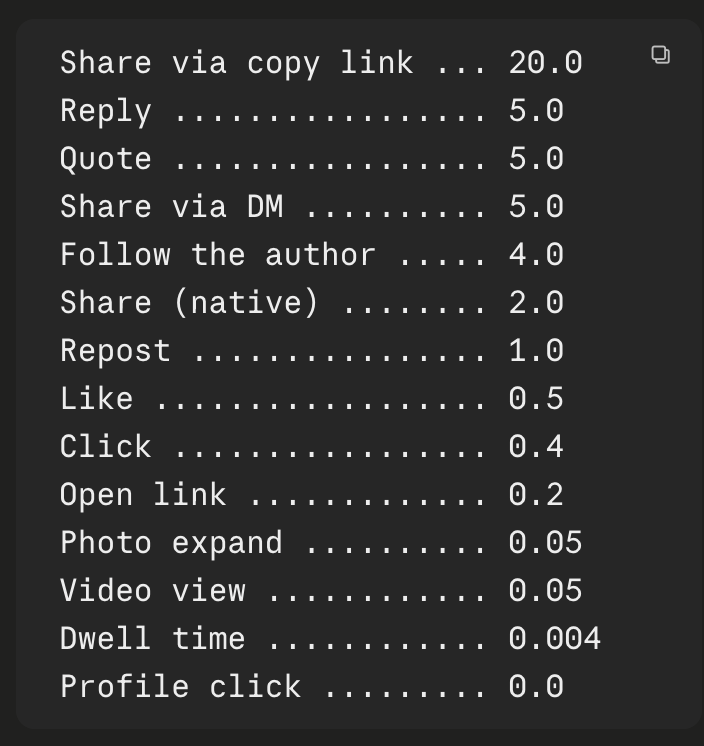
A reply or a quote is 10x a like. A DM share is 10x a like. Even someone hitting follow off the back of your post (4.0) is worth 8 likes.
And look at the bottom of the table. Profile clicks — the thing everyone celebrates in their analytics — are worth literally zero. Video views and photo expands are near-zero. The metrics that feel good and the metrics the algorithm pays for are almost completely different lists.
The takeaway is brutal and simple: stop writing likeable posts. Start writing sendable ones. The question before you hit post isn’t “will people tap the heart” — it’s “would someone copy this link and paste it into their group chat?”
What negative actions cost you
Now the other side of the ledger. This is where it gets scary:
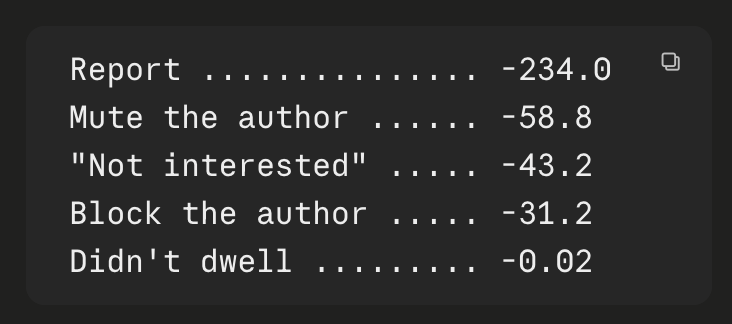
One report is -234. That single action wipes out the value of 468 likes. Eleven link-shares. Forty-six replies.
A mute costs you the equivalent of 117 likes. Even a casual “not interested” tap erases 86 likes’ worth of positive signal.
This is why rage bait is a losing strategy on the new algorithm. You might farm replies, but if even a small percentage of viewers report or mute you, the math annihilates you. The asymmetry is deliberate: the algorithm is engineered so that being annoying is catastrophically more expensive than being good is rewarding.
One quietly interesting line: “didn’t dwell” — someone scrolling straight past — costs almost nothing (-0.02). The algorithm doesn’t punish you for being ignored. It punishes you for being disliked. Boring is survivable. Obnoxious is not.
The decay penalty: why posting more means being seen less
The third table is the one most people will ignore, and it might matter most:
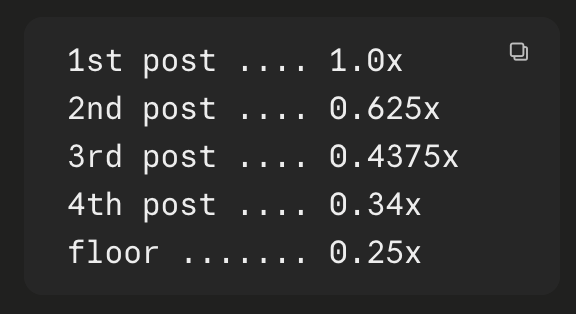
Every additional post of yours that appears on someone’s timeline in a day gets restricted.
So if you’re posting five, eight, ten times a day, most of your output is fighting with one hand tied behind its back before anyone even sees it. The “post volume” advice that worked on other platforms is actively penalised here.
Two great posts beat ten decent ones. The code says so explicitly.
What this means in practice
Put the three tables together and the playbook writes itself:
- Optimise for shares, not likes. Write posts with standalone value — the kind people forward. Frameworks, numbers, contrarian-but-true takes. If it’s not worth sending to someone, it’s worth 0.5 points.
- Write reply magnets. Ask real questions, leave deliberate gaps, take positions. Replies from mutual followers are weighted 4x higher again — 20.0 instead of 5.0.
- Never trigger the red table. No engagement farming, no bait, no spraying replies at strangers. One report costs more than most posts earn in total.
- Cut your posting volume. Concentrate your effort into fewer, denser posts. The decay curve turns your fourth post of the day into a whisper.
The bigger picture: this is the first time a major platform has shown us the actual scoreboard. Most creators are optimising for numbers that the code values at 0.5 — or literally 0.0 — while ignoring the actions worth 20.
Now you know the real scoring system. Post accordingly.