ViewsMax
Sign In Sign Up Free

Tag: creator economy

  • How to Earn Money from a YouTube Channel: Top 2026 Tips

    How to Earn Money from a YouTube Channel: Top 2026 Tips

    Most advice on how to earn money from a YouTube channel starts and ends with AdSense. That's a weak business plan. Platform advertising can provide a useful base, but a durable channel turns attention into several measurable outcomes, including sponsorship revenue, affiliate commissions, product sales, memberships, and qualified leads. The central question isn't “How many views did this video get?” It's “What did those views produce?”

    A profitable channel therefore needs two systems working together. You need YouTube's native monetization features, and you need an attribution process that connects specific videos to clicks, customers, and revenue. Views create opportunity, but tracking tells you where the opportunity exists.

    The First Gate: Qualifying for YouTube's Native Monetization

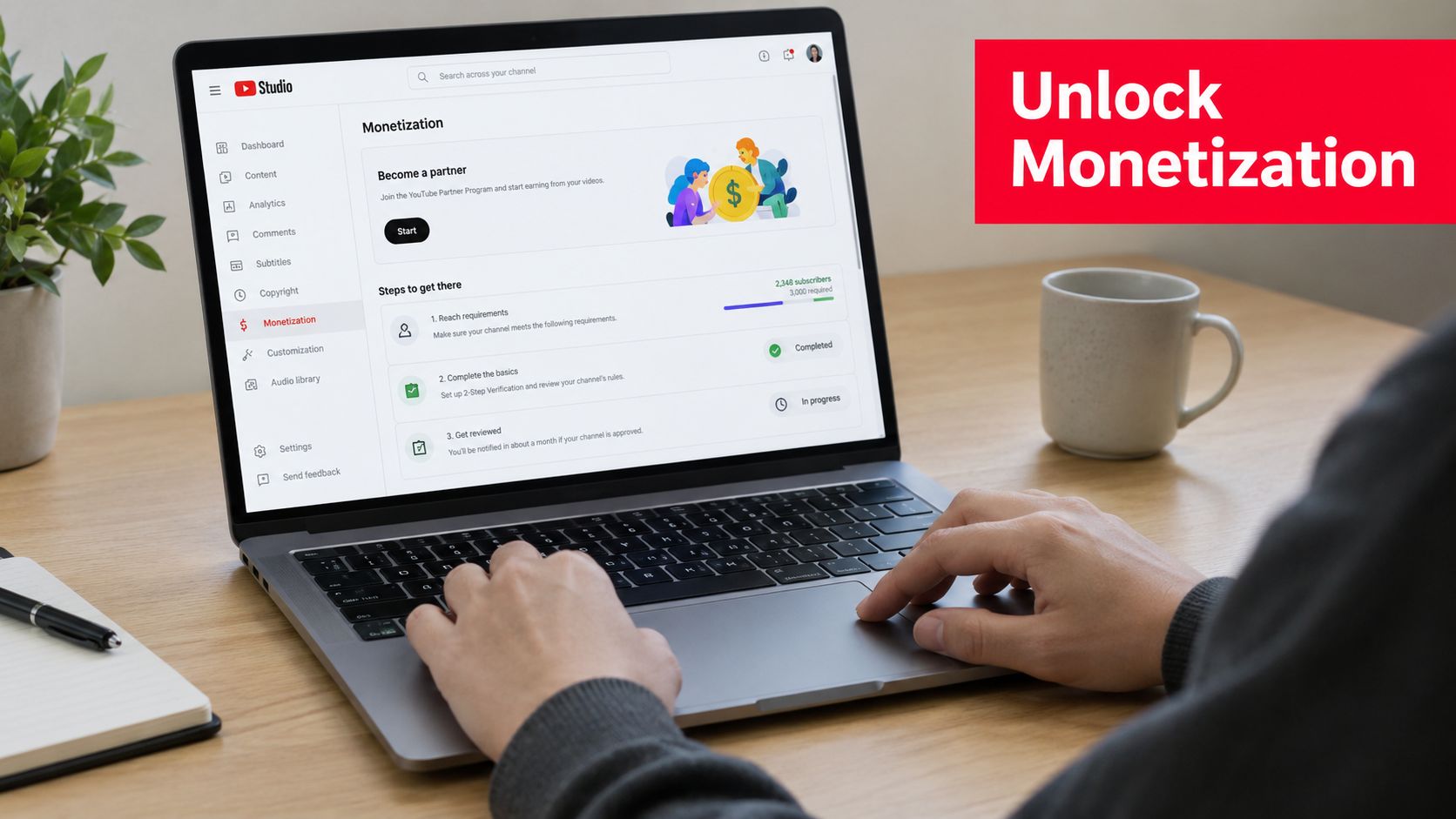
    YouTube Partner Program approval is a distribution advantage, not a business result. Before your channel can use YouTube's advertising and fan-funding features, it must qualify for the YouTube Partner Program, commonly called YPP. The standard route to direct ad and YouTube Premium revenue sharing requires 1,000 subscribers plus either 4,000 qualified public watch hours during the last 12 months or 10 million qualified Shorts views during the last 90 days, according to YouTube's current monetization guidance and the reported 2026 threshold update. Shorts views do not count toward the 4,000-hour long-form requirement. They are separate qualification paths.

    A person using a laptop to view the YouTube Studio monetization page with progress tracking subscriber requirements.

    YouTube also announced an updated path for new applicants in August 2026, requiring 1,000 subscribers plus 8,000 public watch hours or 20 million Shorts views for the latest partner-program expansion. Requirements can change, so check the Earn tab in YouTube Studio before using a specific threshold in your forecast. Treat the displayed eligibility criteria as the current operating requirement.

    Prepare the account before applying

    Eligibility is an operating checklist, not the point where revenue begins. Review the channel for reused material, copyright problems, misleading metadata, and content that may fail YouTube's monetization policies. A channel can reach the required audience milestones and still encounter review problems if its library lacks original, advertiser-suitable content.

    Set up an approved Google AdSense account when YouTube Studio requests it. Use accurate payment and tax information, then complete every verification step. Account delays can prevent a technically eligible channel from receiving payouts, so handle this work before meaningful revenue accumulates.

    For a practical setup walkthrough, follow this guide on how to enable YouTube monetization. Use it alongside the instructions shown in your own YouTube Studio account, since the platform's eligibility and setup screens determine what applies to your channel.

    Activate the features that fit your format

    After approval, open the monetization settings and review each feature separately.

    • Watch-page ads: Enable advertising on eligible long-form videos, then assess individual videos instead of applying every placement without considering viewer experience.
    • Shorts revenue sharing: Treat Shorts as a separate revenue model. Its pooled advertising system operates differently from watch-page advertising.
    • Channel Memberships: Offer recurring benefits that are simple to deliver, such as member-only posts, private discussions, or early access.
    • Super Chat and Super Stickers: Use these during live streams, where viewers can pay for participation, recognition, or direct attention.
    • Super Thanks: Give viewers a direct way to support published videos without waiting for a live broadcast.

    Standard long-form ad revenue is generally split 55% to the creator and 45% to YouTube, while Shorts creators receive 45% of the allocated advertising portion under the pooled Shorts model, as explained in YouTube's official revenue-sharing documentation. That difference should shape your publishing plan. Long-form videos can combine watch-page revenue with deeper audience trust, while Shorts can introduce new viewers who later convert through other offers.

    Practical rule: Apply for native monetization, then measure the revenue it produces. YPP gives you access to tools. Your broader business model determines their value.

    Building Your Income Portfolio Beyond AdSense

    AdSense is useful, but it shouldn't carry the entire business. A channel becomes more resilient when every major content theme has a logical next step, such as a relevant product recommendation, a sponsor integration, a paid resource, or a membership benefit.

    The right portfolio depends on your audience's intent. A product-review channel can often begin with affiliate links. A consultant or educator may earn more from a workshop, course, or service. A broad entertainment channel may have stronger options in sponsorships, memberships, merchandise, and live participation.

    Revenue Stream Typical Audience Size Income Potential Setup Effort
    Brand sponsorships An engaged niche audience High, especially through recurring partnerships Medium
    Affiliate marketing Viewers with purchase intent Performance-based and scalable Low to medium
    Merchandise A loyal community Moderate to high, depending on demand and margins Medium to high
    Digital products Viewers seeking a defined result High margin and closely tied to expertise High
    Memberships and live support A committed returning audience Recurring and community-driven Medium

    Sponsorships create larger individual transactions

    A one-off integration pays for a deliverable. A long-term partnership can give the brand a dependable place in your content calendar and give you more predictable income. Start by identifying companies that already serve the problem your audience is trying to solve. Relevance matters more than prestige because a mismatched sponsor can reduce trust and weaken future conversions.

    Your proposal should describe the audience, the content environment, the deliverable, the distribution plan, and the reporting you'll provide. Don't sell raw exposure alone. Sell a credible path to awareness, consideration, trial, or purchase.

    Affiliates turn recommendations into performance revenue

    Affiliate marketing works when the product fits the video so naturally that the recommendation improves the viewer's next step. Demonstrate the product, explain who should use it, disclose the relationship clearly, and send viewers to a trackable destination.

    Independent benchmarks suggest description-link click-through rates of about 0.5% to 3% of video views, while affiliate revenue can represent 10% to 30% of total brand-deal income for established mid-tier creators, according to benchmarks for YouTube influencer and affiliate activity. These figures are benchmarks, not guarantees. Your topic, audience intent, offer, placement, and landing page determine the result.

    Shorts can support this system by introducing a product or problem, but the conversion path must remain clear. For format-specific ideas, review how to make money on YouTube Shorts. If your channel has a strong recurring format, you can also repurpose episodes into audio. This guide to turning a YouTube channel into a podcast offers useful context for extending your content into another distribution channel.

    Products and merchandise deepen ownership

    Merchandise works best when it expresses an inside reference, identity, or practical need that already exists in the community. Don't begin with a warehouse of inventory. Test demand with a small, focused range, and calculate production, fulfillment, refunds, platform fees, and customer support before setting a price.

    Digital products offer a different trade-off. A course, template, ebook, or paid workshop can convert expertise into an owned asset, but it requires a clear promise and customer support. Build it from repeated questions in comments, livestreams, and emails. A product that solves one specific problem usually sells more clearly than a broad library of information.

    The Art of the Pitch Securing High-Value Brand Deals

    Brands rarely choose a creator because of subscriber count alone. They want a credible audience, a safe content environment, a clear audience fit, and evidence that the creator can deliver professionally. Your job is to make those factors easy to evaluate.

    Choose partners before writing the email

    Create a prospect list from products you already use, companies your viewers mention, and businesses serving the same problem as your channel. Study the brand's existing creator campaigns, landing pages, customer language, and content restrictions. Then identify the person responsible for influencer partnerships, content marketing, or creator relations instead of sending an unpersonalized message to a general inbox.

    Your media kit should answer practical questions quickly:

    • Audience profile: Explain who watches, what they care about, and what buying context surrounds your videos.
    • Content examples: Link to relevant videos that demonstrate your presentation style and audience response.
    • Available deliverables: List integrations, dedicated videos, live mentions, community posts, or cross-platform packages.
    • Measurement plan: Describe how you'll report publication, clicks, engagement, or other agreed outcomes.
    • Commercial terms: State that usage rights, exclusivity, revisions, and payment terms require separate agreement.

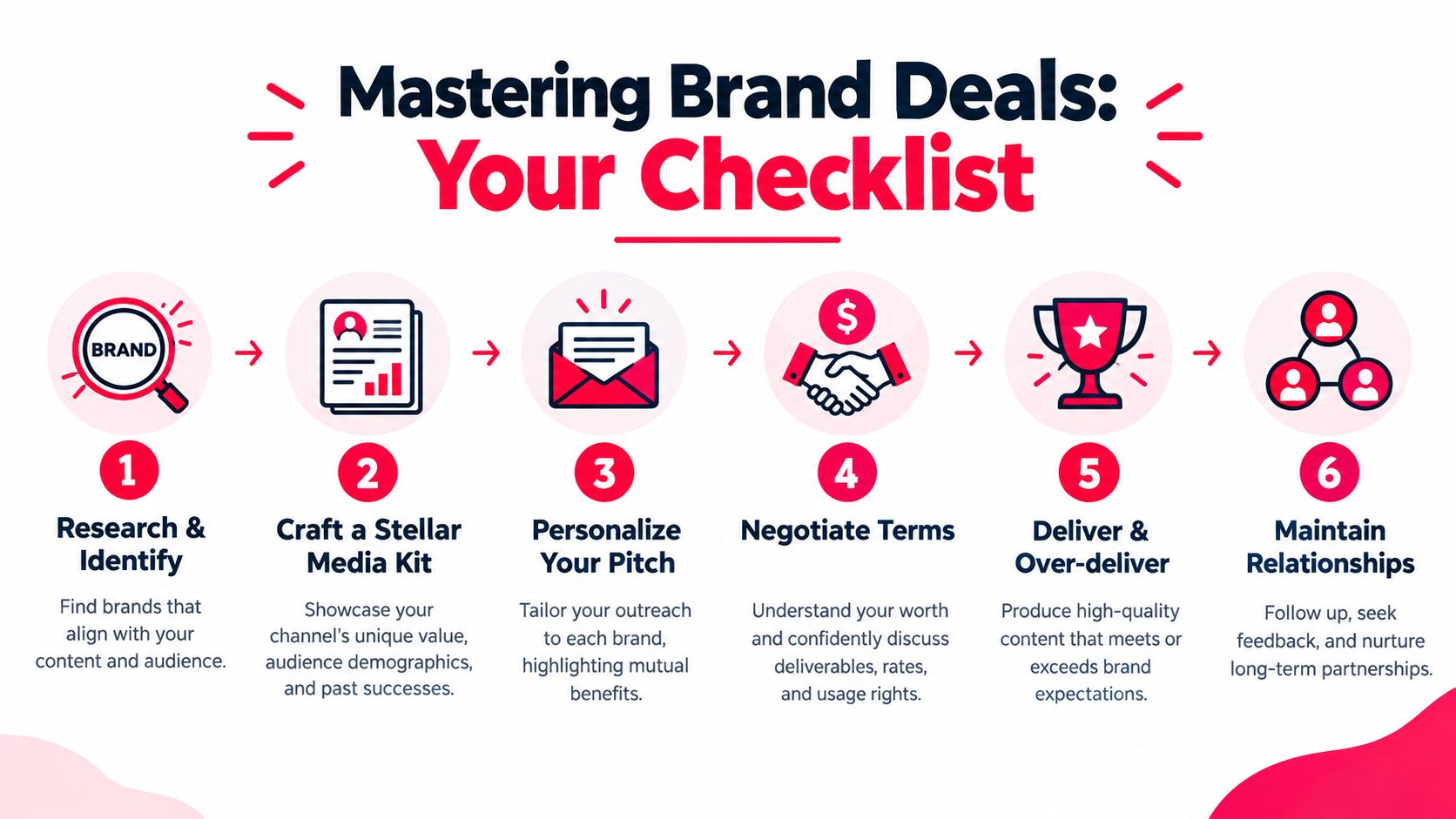
    A six-step checklist infographic illustrating the process of securing and managing successful brand deals as a creator.

    A 2025 creator-economy report found that 62% of creators said they earned more from brand partnerships than from ad revenue, compared with 41% in 2023, as reported by InfluenceFlow's creator monetization analysis. That shift makes proactive outreach worthwhile, particularly for channels with a well-defined niche and a professional sales process.

    Use a pitch that makes the next step easy

    Your email should be brief, specific, and built around mutual fit. Adapt this template rather than copying it without research:

    Subject: Partnership idea for [Brand] and [Channel]

    Hi [Name],

    I run [Channel], where I help [specific audience] with [specific topic or outcome]. I'm reaching out because [Brand] fits the way my viewers already think about [relevant problem or use case].

    A recent video about [topic] shows how I explain this subject and how viewers respond to practical recommendations. I'd like to propose [specific deliverable], with [brief description of integration and viewer benefit]. I can also provide [trackable link, campaign recap, or additional placement] so we can evaluate the response.

    Would you be open to a short conversation about the campaign objective, deliverables, timing, and usage terms? I've attached my media kit with audience information and relevant examples.

    Best,
    [Name]
    [Channel]
    [Contact details]

    Don't promise sales you can't control. Promise a well-matched audience, strong execution, transparent reporting, and a clear process. After the campaign, send the agreed report promptly, ask for feedback, and record what the brand valued. That record becomes evidence for the next pitch and a foundation for a renewal.

    Optimizing Your Channel for Maximum Revenue

    Revenue optimization starts with audience value, not video length by itself. CPM describes advertiser cost around ad impressions, while RPM is closer to what the creator earns per 1,000 views after the relevant revenue factors. Both vary with niche, geography, format, audience behavior, and the commercial intent surrounding the content.

    Industry benchmarks place long-form creator RPM at roughly $1.65 to $25 per 1,000 views, while Shorts are estimated at about $0.02 to $0.12 RPM, according to creator-economy RPM benchmarks. On that benchmark range, one million long-form views could generate $1,650 to $24,750, while one million Shorts views could generate $20 to $120. These aren't promises. They illustrate why a view count without format and revenue context can mislead you.

    Improve the economics of long-form content

    Choose topics where viewers have a meaningful reason to act. A tutorial for a professional tool, a detailed comparison, or a solution-led review can support advertising, affiliates, sponsorships, and products at the same time. The topic should serve the viewer first, but its commercial context should be clear before you spend time producing it.

    Watch time matters because a viewer who stays longer has more opportunity to understand the idea, trust the presenter, and encounter an appropriate monetization point. Build the video around a clear promise, show progress early, remove repeated explanations, and place the most useful proof before the conclusion. Longer videos only help when the additional minutes earn attention.

    Use YouTube Analytics to compare audience retention, returning viewers, traffic sources, RPM, clicks, and downstream actions. Publishing at a time your audience is available can help the initial distribution, and this guide to maximizing YouTube views for creators provides planning context. Timing won't rescue an unclear title or weak opening, so treat it as a supporting variable.

    Give Shorts a defined job

    Shorts can be valuable even when their direct payout is modest. Use them to test hooks, introduce a recurring problem, answer one narrow question, and point interested viewers toward a related long-form video or offer. The handoff must be explicit. A viewer who watches a Short should know what to do next.

    A useful content chain might begin with a Short showing a common mistake, continue with a long-form tutorial explaining the fix, and finish with a trackable resource or product recommendation. This approach treats Shorts as discovery and long-form as deeper engagement and revenue capture.

    For broader search and packaging improvements, use these YouTube SEO optimization tips. Focus on the promise in the title and thumbnail, the answer delivered in the video, and the next action connected to the viewer's intent. Don't optimize keywords in isolation from the buying or learning journey.

    Audience-depth test: If a video attracts attention but gives viewers no relevant next step, it may be growing the channel without building the business.

    From Views to Sales: Measuring What Works

    Views measure exposure. Sales measure business results. The gap between them is an observable sequence: a viewer notices a recommendation, clicks a link, reaches the offer, and completes an action. Tracking that sequence shows whether a video merits another production cycle or delivered reach without commercial value.

    Give each important content asset its own trackable destination. Use separate links for a tutorial, review, livestream, and Short, even when they promote the same offer. Record the video title, publication date, topic, placement, offer, clicks, leads, sales, commissions, refunds, and net revenue. This record lets you compare content by attributable return rather than audience size alone.

    Description-link performance varies by channel, so treat any outside benchmark as a diagnostic prompt rather than a target. Your own conversion data matters more. Separate formats in revenue analysis because long-form watch-page advertising and Shorts revenue use different sharing structures, as noted earlier.

    Build a repeatable attribution workflow

    Put the call to action where viewers have enough context to care. An offer at the end may suit a warm audience, while a tutorial may perform better when its relevant resource appears immediately after the problem is demonstrated. Keep one primary action per video where possible, and state exactly what the viewer receives after clicking.

    ViewsMax can create trackable links, connect clicks, leads, and sales to the content that generated them, and organize publishing and performance data in one dashboard. Use it with your affiliate platform, store, course checkout, or customer relationship system. It should support those systems, not replace their transaction records.

    The video below offers another practical way to connect published content with measurable performance.

    Review revenue per video, revenue per click, lead quality, conversion rate, and production effort. A video with fewer views may deserve more investment if it generates qualified customers. A viral upload may need a clearer path to the offer before it produces meaningful revenue.

    Attribution also improves editorial decisions. Compare related videos by the action they generate, then preserve the topics, formats, and offers that produce profitable customers. If clicks are strong but sales are weak, inspect the landing page or offer. If views are high but clicks are scarce, revise the placement, promise, or call to action. Each result points to a different fix.

    Common Monetization Pitfalls and How to Avoid Them

    A creator can publish consistently, reach the YPP threshold, and still build a fragile business. The problems usually appear in the gap between audience growth and commercial design.

    Depending on one platform payout

    A channel owner watches monthly ad revenue fluctuate and responds by publishing more of the same content. That may increase workload without improving business stability. Advertising remains one income stream, but sponsorships, affiliates, products, memberships, and services can give the audience more ways to support the channel.

    Build the second stream before the first one becomes essential. Choose the option that matches existing viewer intent, then use relevant videos to test it. A finance educator might begin with a paid template, while a gear reviewer might begin with carefully selected affiliate recommendations.

    Mentioning an offer without giving viewers a reason to click

    “Check the link below” is not a persuasive call to action. It doesn't tell viewers what they'll receive, who it's for, or why they should act now.

    Replace it with a concrete instruction: explain the resource, connect it to the problem in the video, and make the destination easy to identify. Keep the link near the top of the description when it's the primary next step, and use a distinct tracking link so you can evaluate the result.

    Chasing unrelated viral topics

    A creator sees a trend outside the channel's subject, publishes a rushed response, and attracts viewers who never return for the core content. The view count looks positive, but the audience fit weakens and the commercial path becomes harder to define.

    Use trends only when they reveal something useful to your existing audience. Adapt the topic to your established promise, or treat it as an experiment with a clear success criterion beyond reach.

    Underpricing sponsorships

    A creator accepts the first offer without discussing usage rights, exclusivity, revisions, placement, or reporting. The sponsor gains broader access than expected, while the creator absorbs extra work without matching compensation.

    Separate the creative deliverable from the rights attached to it. Ask what the brand can reuse, where it can run the content, how long the agreement lasts, and whether competitors are restricted. Put every agreed term in writing before production begins.

    Commercial discipline: Never evaluate a sponsorship only by the fee. Evaluate the work required, the rights granted, the audience fit, and the opportunity cost of occupying that publishing slot.

    Publishing without learning from the result

    Some creators review views and likes, then immediately plan the next upload. That routine misses the information that makes growth more efficient. Compare the topic, format, audience retention, calls to action, clicks, leads, sales, and net revenue across videos.

    The goal isn't to turn every upload into a sales pitch. It's to understand which videos attract the right viewers, which ones build trust, and which ones produce measurable business outcomes. Once you know that pattern, you can create more deliberately and stop rewarding empty reach.


    ViewsMax helps creators plan content, publish across channels, and track clicks, leads, and sales back to the specific content that generated them. Visit ViewsMax to connect your YouTube publishing decisions with attributable revenue and identify which videos are selling.

  • Your Guide To YouTube Video Monetization In 2026

    Your Guide To YouTube Video Monetization In 2026

    At its core, YouTube video monetization is simply the act of earning money from the videos you publish on the platform. It's a partnership: you create great content that keeps people watching, and YouTube places ads around it, giving you a slice of the pie. Typically, you'll see around 55% of that ad revenue land in your pocket.

    What YouTube Monetization Really Means In 2026

    Forget thinking of monetization as just flipping a switch. In 2026, it's the engine that transforms your channel from a creative outlet into a legitimate business. This is the turning point where a passion project can realistically become a full-time career. It's less about a single paycheck and more about building a diverse portfolio of income streams right within the YouTube ecosystem.

    This shift in mindset is crucial—you're no longer just a creator, you're an entrepreneur. Success means truly understanding what your audience finds valuable and then matching that with the right monetization tools. For a deeper dive into the general concept, it's helpful to understand the principles of What Is Content Monetization across all platforms.

    Your Monetization Roadmap

    Earning on YouTube isn't an all-or-nothing game. It's a layered process. Most creators start with the basics, like ad revenue, and as their community grows and becomes more engaged, they unlock more direct, fan-focused features.

    Think of it like building with LEGOs. You start with a base of ad income and then add new bricks like memberships or Super Chats. This visual breaks it down perfectly, showing how income flows from two main sources: automated ad systems and direct contributions from your biggest fans.

    A flowchart illustrating the YouTube monetization hierarchy, showing income streams from ads and fans.

    As you can see, your earning power comes from both the brands that advertise on your videos and the loyal viewers who want to support you directly.

    An Overview of Earning Potential

    Not all monetization tools are created equal, and what works for one channel might not work for another. For instance, a small channel with a super-dedicated audience could make a killing with channel memberships, while a massive channel with more passive viewers might lean heavily on ad revenue.

    To get a handle on the various options, our complete guide explains what is monetization on YouTube in detail.

    The smartest creators never put all their eggs in one basket. They build a diversified business where fans can show support in multiple ways—through memberships, live stream tips, buying merch, and more. This creates a much more stable and predictable income stream.

    To give you a clearer snapshot of what to expect, here’s a quick breakdown of the primary ways to earn on YouTube.

    Primary YouTube Monetization Channels At A Glance

    This table gives you a high-level view of the most common revenue streams, their typical earning potential, and which stage of the creator journey they're best suited for.

    Revenue Stream Typical Earning Potential (per 1000 views/month) Best For (Creator Stage)
    Ad Revenue $3 – $15+ (varies widely by niche) Beginner to Advanced
    Channel Memberships Highly variable, depends on perks and member count Intermediate to Advanced
    Super Chat & Super Thanks $1 – $500+ per live stream or video Intermediate to Advanced
    YouTube Shopping Dependent on product sales and audience trust Established Channels

    As you grow, you'll naturally progress from relying solely on ads to incorporating these more interactive and community-driven income sources.

    Qualifying For The YouTube Partner Program

    Getting into the YouTube Partner Program (YPP) is the official starting line for making money on your channel. It’s not just a switch you flip; think of it more like entering into a business partnership. You bring the creative content and the audience, and in return, YouTube provides the platform and the tools to generate revenue from your hard work.

    This partnership is all about trust. YouTube has a responsibility to its advertisers to ensure their brands appear alongside quality, safe content. That's why they have specific requirements for entry. These rules aren’t there to be a barrier; they’re designed to filter for channels that have built a real, engaged community and are in it for the long haul.

    Man with glasses working on a laptop, checking YPP eligibility for YouTube Partner Program.

    Core Eligibility Milestones For 2026

    Before you can even apply for the YPP, your channel needs to hit some key milestones. These numbers are YouTube's way of verifying that you've built an authentic audience that genuinely tunes in.

    Here are the main thresholds you'll need to cross:

    • 1,000 Subscribers: This is the first big one. It proves you've found a core audience that likes your content enough to want more.
    • 4,000 Valid Public Watch Hours: This has to be on your regular, long-form videos within the last 12 months. It's a critical metric because it shows people aren't just clicking on your videos—they're sticking around to watch them.
    • 10 Million Valid Public Shorts Views: This is the alternative path for Shorts creators. If you can rack up 10 million views in the last 90 days, this will also get you in the door.

    Just to be clear, you don’t need both the watch hours and the Shorts views. You need to hit 1,000 subscribers plus either the 4,000 watch hours or the 10 million Shorts views.

    Beyond The Numbers: Policies and Guidelines

    Hitting those numbers is only half the job. Your channel also has to play by the rules, and YouTube's monetization policies are non-negotiable.

    Think of compliance as an ongoing commitment, not a one-time check. YouTube is always reviewing channels to make sure they're upholding the guidelines that protect creators, viewers, and the advertisers who make monetization possible.

    This means keeping your channel in good standing with:

    1. Community Guidelines: The basic rules of the road—no spam, scams, dangerous content, or hate speech.
    2. AdSense Program Policies: These are Google's own rules for its advertising network, which you must follow.
    3. Copyright Rules: You absolutely must own the rights to the content you upload. Getting copyright strikes can jeopardize your entire channel.

    Breaking any of these rules can get you demonetized or, in serious cases, get your channel terminated. It’s crucial to know these policies inside and out. Once you're confident you meet all the criteria, you can finally apply. If you need a step-by-step guide on the application itself, check out our post on how to enable YouTube monetization.

    The Application And Review Process

    Once you've met the requirements, you'll see an "Apply" button light up in the "Earn" section of your YouTube Studio. The application process is pretty straightforward: you’ll agree to the YPP terms and link an active Google AdSense account.

    After you hit submit, your channel goes into a queue for review. This isn't an automated scan; a real person at YouTube will look over your channel's theme, your most popular videos, your newest content, and your overall vibe to make sure you're a good fit. This process usually takes about a month.

    If you're approved, congratulations! You can start turning on monetization features right away. If you're rejected, don't panic. YouTube will give you a general reason why, and you can re-apply after 30 days. That gives you a month to fix whatever issues they flagged and try again.

    Building Your Revenue With YouTube's Monetization Tools

    Once you're in the YouTube Partner Program, you unlock a whole toolbox of ways to make money. A common mistake is thinking it's all about ad revenue. The truth is, the most successful creators treat youtube video monetization like an investment portfolio—they layer multiple income streams to build a business that's both stable and ready to grow.

    This strategy does more than just make you money. It insulates you from the normal ups and downs of ad spending and helps you forge a much deeper connection with your audience. When you give viewers different ways to support you, you empower your biggest fans to become a direct part of your channel's success. It’s about building a real community, not just racking up views.

    Man presenting income diversification strategies in a video, surrounded by icons representing various income sources.

    Unpacking YouTube Ad Revenue

    For most creators, ad revenue is the bedrock of their monetization journey. After you flip the switch, YouTube’s system starts placing ads in your videos, and you get a cut of what advertisers pay. But not all ads are created equal, and knowing the different formats is key to getting the most out of them.

    Here are the main types of ads you'll see:

    • Skippable in-stream ads: The classic ads that play before, during, or after a video. Viewers can hit "skip" after five seconds.
    • Non-skippable in-stream ads: These are shorter, usually 15-20 seconds, and viewers have to watch the whole thing.
    • Bumper ads: Quick, punchy 6-second ads that can't be skipped.
    • In-feed video ads: These pop up in YouTube search results and on the homepage, acting like a promotion for a video.

    You get some say in which ad formats show up. And for any video over eight minutes long, you can manually place mid-roll ads. Dropping these at natural breaks in your content—like after a big reveal or before a new segment—can seriously boost your earnings without annoying your audience. To really dig into how this works, check out our deep dive on CPM meaning on YouTube in our detailed guide.

    Cultivating Community With Channel Memberships

    Channel Memberships are your own private fan club, built right into YouTube. Viewers can pay a monthly fee to "join" your channel and get access to exclusive perks. It’s a fantastic way to create a predictable, recurring income stream that isn't tied to the rollercoaster of video views.

    The trick is making the perks genuinely valuable.

    • Custom emojis and badges: Let your members stand out in the comments and live chats.
    • Members-only content: Give them exclusive videos, raw behind-the-scenes clips, or a sneak peek at your next big upload.
    • Direct access: Try hosting members-only live streams, Q&As, or even starting a private Discord server just for them.

    Start simple. You don't need a dozen tiers on day one. Offer one solid level of perks and pay attention to what your community loves—then you can expand from there.

    Engaging Fans With Super Chat and Super Thanks

    Think of Super Chat, Super Stickers, and Super Thanks as your digital tip jar. These tools let viewers show their appreciation with a one-time payment, turning someone who just watches into an active supporter.

    These features create a powerful feedback loop. When a fan uses Super Chat during a live stream, their message is highlighted, grabbing your attention. This public acknowledgment encourages more viewers to participate, fostering a dynamic and interactive community experience.

    Here’s a quick rundown of how they work:

    1. Super Chat: During live streams and Premieres, fans can pay to have their comment highlighted and pinned at the top of the chat. The more they contribute, the longer it stays there.
    2. Super Stickers: Similar idea, but instead of a message, viewers can buy and send fun, animated stickers in the live chat.
    3. Super Thanks: For your regular videos, this lets viewers leave a tip to say "thanks!" for great content. Their comment gets a special highlighted look in the comments section.

    To get the most out of these, you have to engage back. When someone sends a Super Chat, give them a shout-out. Thank people who use Super Thanks. That small act of recognition makes your supporters feel seen and appreciated, which goes a long way.

    Driving Sales With YouTube Shopping

    YouTube Shopping lets you turn your channel into a storefront by linking your own merchandise or products from other brands right in your videos. You can tag products, and they'll show up on a "product shelf" below your video and in a dedicated "Shopping" tab on your channel page.

    This is a game-changer for turning views into sales. A tech reviewer can link to the exact phone they're unboxing. A DIY channel can sell their own custom-made craft kits. By connecting your content directly to commerce, you make it incredibly easy for an inspired viewer to click "buy," adding another solid pillar to your youtube video monetization strategy.

    Monetizing Beyond The YouTube Partner Program

    Thinking that the YouTube Partner Program (YPP) is the only way to make money on YouTube is a huge mistake. Relying solely on AdSense is like a coffee shop only selling black coffee—you're leaving a ton of money on the table. The real game-changer is when you start building income streams outside of YouTube's system.

    This is the leap from being a "YouTuber" to a genuine business owner. The most successful creators I know see AdSense as just the starting point, the foundation. They actively build their own revenue sources that don't depend on YouTube’s ever-changing algorithms or unpredictable ad payouts.

    We're talking about brand sponsorships, affiliate marketing, and even licensing your content. This is where the truly significant earnings are made, and it gives you control over your financial future.

    Securing Brand Sponsorships And Integrations

    Brand deals, or sponsorships, are the most straightforward way to earn serious money from your influence. Instead of YouTube playing matchmaker between you and advertisers, you work directly with a company to feature their product or service. It's a simple, classic business deal: they pay you for access to the audience you've worked so hard to build.

    Finding the right brand to partner with is everything. The best sponsorships feel like they belong in your videos, not like a jarring commercial break. Think of a tech reviewer who partners with a new software company or a fitness creator who promotes a healthy snack brand—it just makes sense.

    So, how do you land these deals?

    • Let Them Come To You: As your channel grows, brands will start knocking on your door. Make sure you have a professional business email clearly listed on your channel's "About" page.
    • Go Out and Get Them: Don't just sit back and wait. Proactively pitch companies that you genuinely like and that would be a great fit for your audience. Create a short, sharp pitch explaining why a partnership would be a win-win.
    • Use a Matchmaker: Platforms and agencies exist to connect creators with brands. They can take a lot of the guesswork out of finding potential partners.

    Talking about money can feel awkward at first, but your rates should be based on real numbers: your average views, audience demographics, and engagement. As a ballpark, a channel getting 10,000-25,000 views per video can often charge $300-$1,000 for an integration. Once you hit 100,000-500,000 views, that number can jump to $5,000-$15,000 per video.

    These figures show just how powerful sponsorships are. When you hear about creators like MrBeast earning an estimated $82 million, it's not from AdSense alone; it's from a sophisticated business built on major brand partnerships.

    "The moment you close your first brand deal, you fundamentally change your business. You’re no longer just earning from views; you’re earning from the trust and influence you've built with your community."

    Estimated Sponsorship Rates By Channel Size (2026)

    To give you a clearer picture, here’s a guide to what you might expect to charge for brand partnerships based on your channel's performance. These are just estimates, of course, but they provide a solid starting point for your negotiations.

    Average Views Per Video Typical Sponsorship Rate Per Video Notes
    5,000 – 15,000 $200 – $750 Good for smaller brands or startups. Focus on high engagement.
    15,001 – 50,000 $750 – $2,500 Your audience is established. Brands pay for reliable reach.
    50,001 – 150,000 $2,500 – $7,000 You're a serious player. Multi-video deals become common.
    150,001 – 500,000 $7,000 – $20,000 Brands see you as an authority. Rates are highly negotiable.
    500,000+ $20,000+ Elite tier. Often involves custom packages and long-term partnerships.

    Remember, factors like your niche, audience demographics, and engagement rate can push these numbers up or down. A smaller channel in a lucrative niche (like finance or high-end tech) might command higher rates than a larger channel in a more saturated space.

    Harnessing The Power Of Affiliate Marketing

    Affiliate marketing is another fantastic way to generate income independently. Think of it as earning a commission for recommending products you already use and love. You share a special tracking link in your video description, and when someone clicks it and buys something, you get a cut of the sale. It’s that simple.

    The whole system runs on trust. Your audience watches you because they value your opinion, so only promote products you can genuinely stand behind. The Amazon Associates program is a popular starting point because they sell just about everything, but thousands of individual companies have their own affiliate programs, often with better commission rates.

    The key is to make your recommendations feel natural. Instead of a hard sell, weave the product into your content. If you have a cooking channel, you’d link to the exact blender you used in your smoothie recipe. And always, always disclose that you're using affiliate links. Being transparent is crucial for maintaining your audience's trust.

    Many creators also take this a step further by moving their audience off-platform. If you can build an email list, you have a direct line to your biggest fans, allowing you to share affiliate offers without being entirely dependent on the YouTube algorithm.

    Optimizing Your Content to Maximize Earnings

    A lot of creators get stuck on one metric: views. It's an easy trap to fall into, thinking more views automatically means more money. But the real secret to boosting your YouTube video monetization isn't just about getting more eyeballs; it's about attracting the right eyeballs and creating an experience advertisers will pay top dollar for.

    This means you need to think strategically. It’s less about pumping out content and more about making smart choices—from the topics you pick to how long your videos are—all designed to grow your income. It's about working smarter, not just harder.

    A computer display showing a video conference and financial charts with a 'MAXIMIZE EARNINGS' banner.

    Target Advertiser-Friendly Niches

    From an advertiser's perspective, not all content is created equal. Some topics are just plain more profitable because they attract higher-paying ads. To understand why, you have to get familiar with two key terms: CPM and RPM.

    • CPM (Cost Per Mille): This is what an advertiser pays for 1,000 ad impressions on your video. Think of it as the raw price tag for the ad space.
    • RPM (Revenue Per Mille): This is what you actually pocket for every 1,000 video views, after YouTube takes its cut. This is the number that matters most for your wallet.

    Your main goal should be to get that RPM number as high as possible, and that starts with a high CPM. Niches like personal finance, technology, real estate, and business naturally command higher CPMs. Why? Because the products being advertised are high-value. A video on stock trading is far more likely to attract a premium ad from a brokerage firm than a general gaming channel will attract from a mobile game developer.

    The Magic 8-Minute Mark

    Looking for a straightforward way to increase your ad revenue? Start making your videos longer than eight minutes. This is the golden number that unlocks mid-roll ads, which are ads that can play during your video, not just before or after.

    It’s simple math: more ad slots equal more chances to earn. But a word of caution—don't just add fluff to hit that eight-minute goal. Your content still has to be engaging enough to keep people watching through those ad breaks. A popular tactic is to build your video around a strong hook, deliver great content, and then place a mid-roll just before you reveal a key piece of information or the big payoff.

    Master Watch Time and Audience Retention

    High watch time is one of the strongest signals you can send to the YouTube algorithm. When people stick around to watch your videos, it tells YouTube that your content is high-quality and valuable. This has a powerful two-for-one effect on your earnings.

    First, the longer people watch, the more likely they are to see multiple ads, especially those valuable mid-rolls. Second, the algorithm rewards high-retention videos by pushing them out to a wider audience, which means more views and, in turn, more revenue.

    "A viewer who watches 80% of a 10-minute video is infinitely more valuable than ten viewers who watch the first 30 seconds. YouTube’s algorithm is built to find and reward the channels that can hold attention, because that’s where the real value lies for advertisers."

    Here are a few ways to keep viewers hooked:

    1. Nail the first 30 seconds. Your intro needs to be a strong hook that grabs attention immediately.
    2. Use pattern interrupts. Keep things fresh by changing camera angles, cutting to B-roll, or using on-screen graphics and text.
    3. Structure your story. Make sure your video has a logical flow that guides the viewer along and keeps them wanting to see what's next.

    Quality Over Quantity Is the New Rule

    The old-school YouTube strategy of uploading a video every single day just to stay relevant is fading fast. The platform is maturing, and viewers are craving quality. The proof is in the numbers: a recent 76% surge in YouTube views between 2024 and 2025 happened with only a 4% increase in posting frequency.

    This tells us everything we need to know. Success is now about creating truly excellent, well-optimized videos, not just flooding the platform. For creators, this shift is a massive opportunity—higher RPMs on a growing number of views means more money in your pocket. You can dive deeper into these YouTube statistics and trends on Metricool.com.

    Got Questions? We've Got Answers

    Stepping into the world of YouTube monetization can feel like learning a new language. You’re bound to have questions along the way. To make things a bit clearer, I've put together answers to some of the most common questions I hear from creators.

    So, How Long Does It Really Take to Start Making Money?

    Let's be real: this isn't an overnight thing. For most people, hitting those initial YouTube Partner Program (YPP) goals of 1,000 subscribers and 4,000 watch hours takes anywhere from one to two years of consistent work. A lot depends on your niche, how often you upload, and the quality of your content.

    Once you’re in the program, don't expect the floodgates to open immediately. Getting to a more significant income, say $1,000 per month, usually takes another six to twelve months of grinding, learning, and optimizing. It’s a marathon, not a sprint.

    Can YouTube Take My Monetization Away?

    They sure can. Getting approved for the YPP isn't a lifetime pass. YouTube can—and will—pull the plug on your channel's monetization if you break the rules. It’s crucial to remember that your partnership is based on you staying on the right side of their policies.

    Here are a few things that can get you demonetized fast:

    • Stacking up too many copyright strikes.
    • Breaking the Community Guidelines (think hateful, harmful, or spammy content).
    • Violating Google AdSense rules, like clicking your own ads.

    Think of your channel as a business. Staying up-to-date on YouTube's rules is just as important as creating great content. Protecting your income stream is part of the job.

    Do I Have to Pay Taxes on What I Earn?

    Absolutely. Any money you make from YouTube is considered taxable income. When you earn through the platform, you're essentially an independent contractor, meaning you're on the hook for handling your own taxes.

    You’ll need to submit your tax info through your AdSense account. Depending on where you live, YouTube might also withhold taxes from your payments. My best advice? Talk to a tax professional. It’s worth it to make sure you’re doing everything by the book.

    What Happens to My Watch Time if I Delete a Video?

    This is a classic trap for new creators. If you delete a public video, every single watch hour it ever earned vanishes from your channel’s total count. Poof, gone forever.

    If that video's hours were helping you stay above the 4,000-hour mark, deleting it could drop you below the threshold and put your monetization at risk. If you absolutely have to take a video down, set it to "Private" or "Unlisted" instead. That way, it’s hidden from the public, but you get to keep the watch time.


    Ready to stop guessing and start growing? ViewsMax gives you the AI-powered tools and actionable insights you need to increase your discoverability, boost your watch time, and accelerate your monetization journey. Start making smarter content decisions and turn your creative passion into a thriving channel by visiting us at https://blog.viewsmax.com.

  • A Creator’s Guide to the Latest Changes in YouTube

    A Creator’s Guide to the Latest Changes in YouTube

    The biggest shift on YouTube lately isn't just one thing—it's the platform's full-blown transformation from a simple video-sharing site into a true multi-format playground. If you're not using Shorts, Live streams, and Community posts, you're missing huge opportunities, because YouTube's algorithm is now actively rewarding creators who connect with their audience in all these different ways.

    Understanding the New YouTube Playbook

    Running a YouTube channel today feels a lot less like uploading to a video archive and more like running your own TV network. The platform's entire identity has changed. What used to be the go-to place for long-form videos is now a bustling ecosystem where different types of content are designed to do different jobs. This isn't just a minor update; it's a complete rethink of how YouTube finds content, shows it to viewers, and helps you make money.

    If you’re still putting all your energy into traditional long-form videos, you risk falling behind. Winning on YouTube now requires a strategy that understands how each format works together.

    The Multi-Format Mandate

    Think of your YouTube channel as a central hub with several doors. Each content format—long-form, Shorts, Live, and even Community posts—is a different way for people to walk in and discover you.

    • Long-Form Videos: These are still the heart and soul of your channel. They're where you build deep trust, show off your expertise, and rack up that all-important watch time.
    • YouTube Shorts: Shorts are your billboard. They’re a powerful, fast-paced tool for getting in front of massive new audiences who would have never stumbled upon your longer videos.
    • Live Streams: This is where you build your tribe. Going live lets you connect with your audience in real-time, answer their questions on the fly, and create a truly loyal community.
    • Community Posts: Think of this as your channel’s own social media feed. It’s perfect for running polls, sharing quick updates, and keeping the conversation going between uploads.

    This multi-format strategy isn't just a "nice to have" anymore. YouTube has come a long way from its humble beginnings in 2005. As of early 2024, it reached an incredible 2.53 billion users—that's nearly a third of everyone on the planet. You can dig into the numbers behind YouTube's massive user growth on datareportal.com. To connect with such a massive and varied audience, you need to be speaking their language, whatever format that may be.

    The new playbook is simple: a successful channel is one that speaks multiple content languages. Ignoring any single format means you're leaving a huge chunk of your potential audience on the table.

    To keep up with these changes on YouTube, you have to stop thinking of your channel as just a collection of videos and start seeing it as a complete content ecosystem. The creators who really get this are the ones who are going to win in the long run.


    Before we dive deeper, let's take a quick look at the major shifts we're seeing across the platform. This table breaks down the most important updates and what they actually mean for you as a creator.

    Quick Guide to Recent YouTube Changes and Creator Impact

    A summary of the most significant recent updates on YouTube and what they mean for your content strategy.

    Area of Change Description of the Change Immediate Impact on Creators
    Algorithm & Discovery The algorithm now heavily promotes a multi-format approach, blending Shorts, long-form, and Live streams in viewer feeds. Channels that only produce one type of content may see slower growth. A mix of formats is now key for discoverability.
    Monetization The YouTube Partner Program (YPP) has new, lower eligibility tiers for fan funding features and has expanded Shorts ad revenue sharing. It's now easier for smaller creators to start earning, and there's a direct financial incentive to create successful Shorts.
    YouTube Shorts Shorts have become a primary discovery tool, with a dedicated feed and new creative tools like Collab and green screen effects. Shorts are no longer optional for growth. They are the best way to reach new, broad audiences quickly.
    Community & Engagement Features like Community tab posts (polls, images, text) and channel memberships are being pushed to foster deeper audience connection. Creators need to actively engage their community between video uploads to maintain momentum and build loyalty.
    AI & Creator Tools Introduction of AI-powered tools like YouTube Create, Dream Screen for AI backgrounds, and AI-powered comment summaries. These tools can help streamline content creation, but creators must learn how to integrate them effectively into their workflow.

    This table is just a snapshot, of course. Each of these changes has ripple effects that we'll explore in more detail throughout this guide, starting with how the algorithm itself has fundamentally changed.

    How the New YouTube Algorithm Really Works

    Let's get one thing straight: the idea of a single, all-powerful YouTube algorithm is a myth. If you're still thinking that way, you're playing by rules that no longer exist. The reality today is much more nuanced. YouTube now runs on a team of specialized AIs, each with a different job to do. Grasping this is probably the most important part of understanding the recent changes in YouTube.

    Think of it like this: the algorithm suggesting a 15-minute documentary has a totally different brain than the one serving up a 30-second Short. They’re looking for different signals and have completely different goals. This means a one-size-fits-all strategy for your content is doomed to fail.

    The old game of just chasing "watch time" is officially over. While it definitely still matters, the new system is built around a much more human concept: viewer satisfaction.

    From Watch Time to Viewer Satisfaction

    For years, the gospel was simple: longer watch times meant a better video. That's still a key factor for your standard, long-form videos, but YouTube's AI now digs a lot deeper. It’s essentially asking, "Did the viewer actually enjoy that?"

    So, how does it measure something so subjective? It looks at a whole cluster of signals:

    • Direct Engagement: The classics still count. Likes, comments, and shares are clear signs that people found value in what you made.
    • Post-Watch Surveys: You've probably seen them. Those little pop-ups asking if a video was "satisfying" or "worth your time." This is direct feedback, and you can bet the algorithm pays close attention to it.
    • Repeat Viewership: This is the big one. When someone watches one of your videos and then comes back to your channel for more, it sends a massive signal that you're delivering quality.

    This evolution is why a modern channel has to be more than just a collection of videos. It’s an ecosystem.

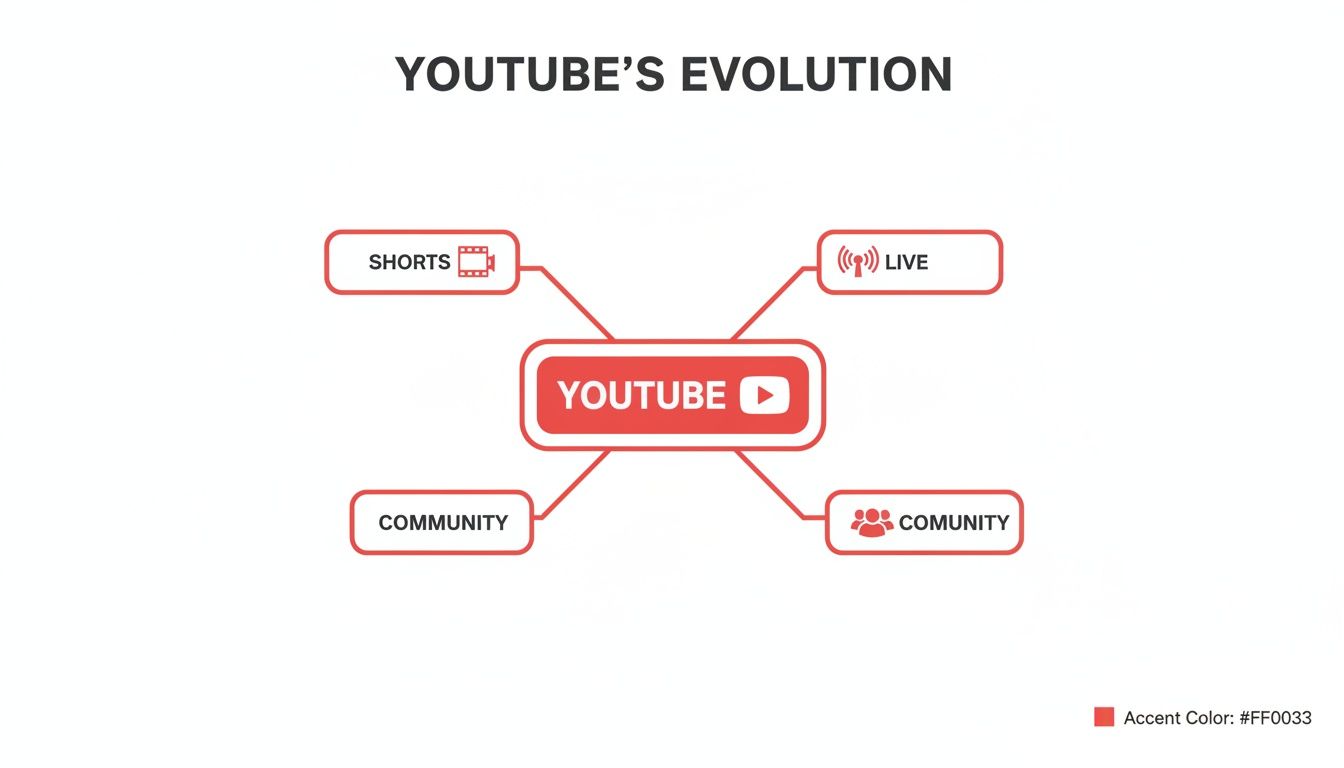
    A diagram illustrates YouTube's evolution with branches showcasing features like Shorts, Live, and Community.

    As you can see, a healthy channel now depends on a smart strategy that weaves together long-form content, Shorts, Live streams, and direct community engagement.

    The Two Main Algorithmic Personalities

    To make this easier to wrap your head around, let's break the system down into two main "personalities." Think of one as a thoughtful curator and the other as a lightning-fast matchmaker.

    1. The Long-Form Algorithm (The Curator): This AI is all about creating a great viewing session. It wants to keep people on the platform by recommending high-quality, relevant videos that perfectly match their interests. It obsesses over session duration, audience retention, and all those satisfaction signals we just talked about.

    2. The Shorts Algorithm (The Matchmaker): The Shorts AI, on the other hand, is built for speed and discovery. Its entire job is to introduce your channel to a massive new audience as quickly as possible. It looks for instant reactions—did they watch the whole thing, swipe away immediately, or watch it on a loop? It’s all about reach and first impressions.

    Understanding this split is critical. Your long-form videos are for nurturing your dedicated audience, while your Shorts are your scouting party, out finding new people to bring into your world.

    Building Topic Authority and Repeat Viewership

    Knowing all this, two strategies become non-negotiable. First up is building topic authority. The algorithm needs to know, without a doubt, what your channel is about. When you consistently publish great videos on a specific subject, you're effectively teaching the AI to see you as an expert in that niche. This makes it far more likely to recommend your content to anyone interested in that topic.

    The algorithm wants to find the best video for every viewer. When you establish clear topic authority, you're making it easy for the AI to choose your content.

    This is where fundamentals like keywords and tags are still incredibly important. They’re the signposts that help the algorithm categorize your video right out of the gate. For a full breakdown, check out our guide on finding the best tags for YouTube.

    Second, you have to be obsessed with repeat viewership. YouTube is now actively rewarding channels that can turn a first-time viewer into a returning fan. It's the ultimate signal of satisfaction. A healthy channel isn't just one that gets a viral hit; it's one that builds a loyal community that keeps coming back. It’s time to double down on encouraging subscriptions, using end screens strategically, and creating content that makes people excited for what's next.

    Integrating Shorts Into Your Content Strategy

    Let's be blunt: YouTube Shorts are no longer a side project or a fun experiment. They're a core part of the platform's DNA now. For creators, ignoring short-form video is like trying to fish without bait—you’re missing your biggest opportunity to get a bite. YouTube has retooled its entire discovery engine around Shorts, and you absolutely need a plan to make them work for you.

    Think of Shorts as your channel's front door and your long-form videos as the main event inside. The Shorts algorithm is built for one thing above all else: massive, top-of-the-funnel reach. Its job is to put your content in front of a huge pool of people who have never seen your channel before. It’s a powerful first handshake.

    Because of this unique role, Shorts play by a different set of rules. Your traditional videos are judged on things like viewer satisfaction and how long someone stays on YouTube after watching. Shorts, on the other hand, live and die by rapid-fire engagement. Did the viewer watch it again? Did they immediately swipe away? This fast-paced world is your ticket to finding a ton of new viewers.

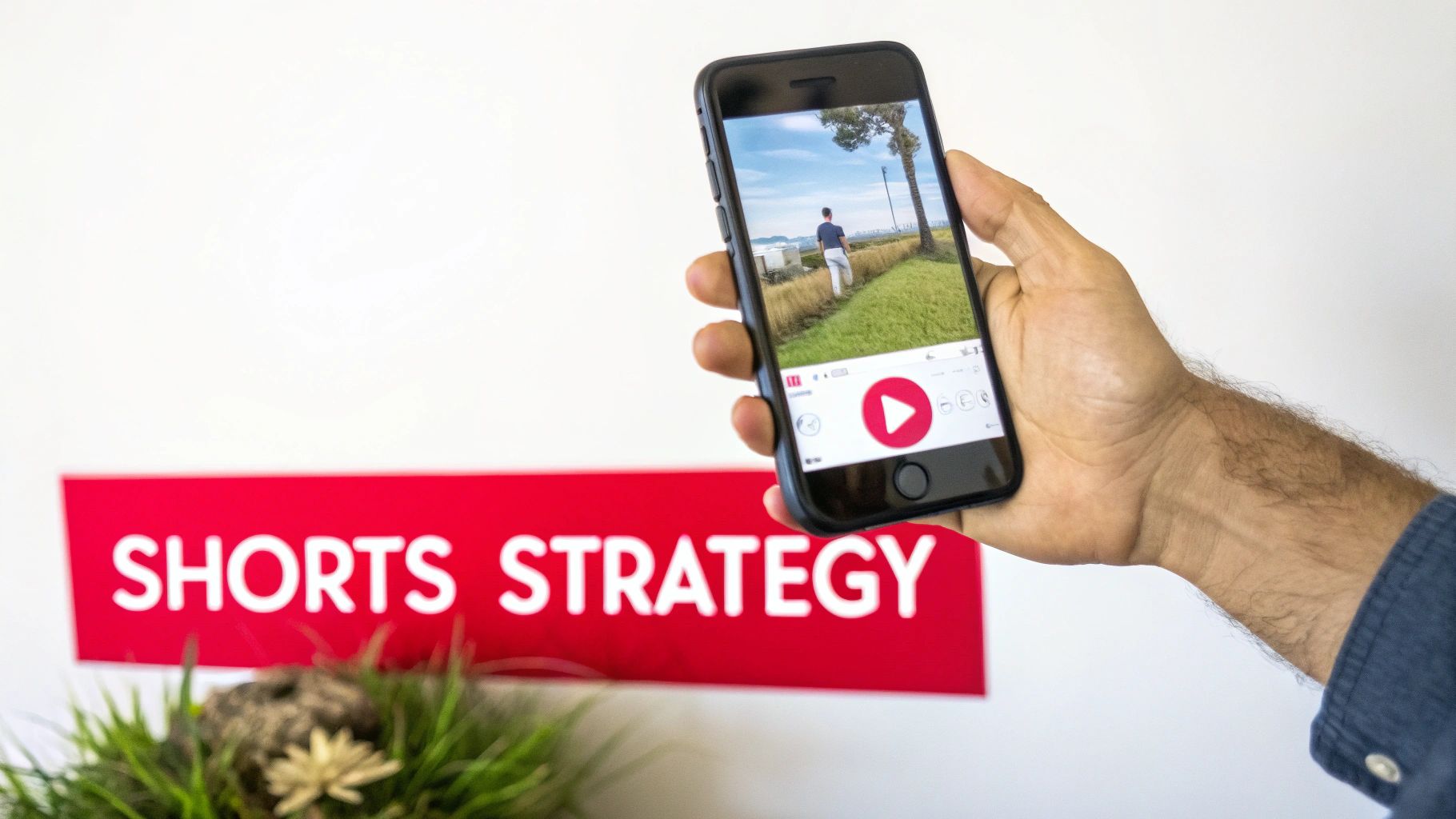
    A hand holds a smartphone displaying a vertical video with a person walking on grass, and a 'SHORTS STRATEGY' sign is below.

    Bridging The Gap From Short To Subscriber

    I hear this all the time: creators are terrified that Shorts will "cannibalize" their main channel, training their audience to only want 30-second clips. It’s a fair point, but that only really happens when there’s no strategy connecting the two. The real skill is building a bridge that guides people from a quick, catchy Short to your deeper, long-form content.

    Your mission is to create a seamless journey. Someone stumbles upon your viral Short, gets hooked, taps on your channel name, and lands on a library of amazing long-form videos just waiting for them.

    Here are a few practical ways to build that bridge:

    • Create Teaser Shorts: Pull the most exciting or mysterious clip from an upcoming long video and post it as a Short. End with a simple call-to-action like, "The full breakdown drops tomorrow!"
    • Repurpose "Best Of" Moments: Dig into your analytics and find your best-performing long-form videos. Pull out the funniest, most valuable, or most shocking moments. Each one can be a killer Short that basically acts as a free ad for your best stuff.
    • Answer a Single Question: Use a Short to give a quick, satisfying answer to one specific question in your niche. Then, point viewers to your latest long video for the full, detailed explanation.

    When you design Shorts to complement your main videos, they stop being a distraction and become a powerful lead-generation machine for your channel. For a deeper dive on this, check out our complete guide on how to get more views on YouTube Shorts.

    Your Shorts are the hook; your long-form videos are the reason they stay. One introduces them to your brand, the other turns them into a loyal fan.

    Navigating Shorts Monetization And Content Creation

    Monetization for Shorts is a different beast, too. You won't see pre-roll ads like on your longer videos. Instead, revenue comes from a "creator pool" funded by the ads that run between Shorts in the feed. Your cut is based on your share of the total Shorts views across the entire platform. While the payout per view is definitely smaller than long-form, the potential for massive volume means it can still add up to a serious income stream.

    The way you create the content also requires a shift in thinking. You’re competing in a feed where the next video is just a flick of the thumb away. You have to get to the point—fast.

    • Hook Within 3 Seconds: The first few seconds are everything. Don't waste them. Start with action, a bold claim, or a question that demands an answer.
    • Focus on a Single Idea: Don't try to cram a 10-minute video's worth of information into 45 seconds. A Short should have one clear, simple takeaway.
    • Optimize for Loops: Smart creators make content that’s satisfying to watch over and over. A seamless loop or a surprise ending can trick people into re-watching, which juices your watch time.

    Figuring out the optimal lengths for YouTube Shorts is also a huge piece of the puzzle for keeping viewers engaged. A perfectly timed clip is far more likely to be watched all the way through, which is a massive signal to the Shorts algorithm. This focus on vertical, fast-paced content is make-or-break, especially when you consider the scale you're up against. Every single minute, over 500 hours of video are uploaded, and users watch more than 1 billion hours of content daily. In an environment that crowded, every second counts. Your Shorts strategy is your best weapon for getting noticed.

    Unlocking New Monetization and Revenue Streams

    Workspace with laptop displaying business dashboard, red smartphone, and notebooks, emphasizing revenue diversification.

    Relying only on AdSense is a risky game. It's like trying to build a business on a foundation with just one support beam—it might hold for a while, but it’s far from stable. YouTube gets this, and recent changes are a massive signal that they want creators to build stronger, more diverse income models. Thankfully, they're giving us the tools to do it.

    For years, the path to earning money was a serious grind. The classic goal was hitting 1,000 subscribers and 4,000 watch hours before you could even think about seeing a dime. That's not the reality anymore. YouTube has lowered the barrier to entry for its Partner Program (YPP), creating a new on-ramp for smaller channels to start generating income way sooner.

    This new structure is a huge deal. It means you can start building a direct financial connection with your biggest fans long before ad revenue becomes a major factor. It’s all about creating a portfolio of income streams.

    Tapping Into Fan Funding Sooner

    The biggest change is getting early access to fan funding features. Once you hit a much lower threshold—think 500 subscribers and 3,000 watch hours—a whole suite of direct-support tools opens up.

    • Channel Memberships: This is your own subscription service. Viewers can pay a monthly fee for exclusive perks like custom badges, emojis, or members-only videos, giving you a predictable, recurring revenue stream.
    • Super Chat & Super Stickers: During live streams, these let viewers pay to have their messages or animated stickers stand out. It’s a fantastic way to generate income while boosting real-time engagement.
    • Super Thanks: Think of this as a digital tip jar. Viewers can buy a cool one-time animation on your videos or Shorts to show a little extra appreciation for your work.

    These tools completely change the dynamic. They let you monetize the loyalty of your core community long before you have the massive viewership needed for significant ad money.

    The new YPP tiers are basically YouTube saying, "Your community's direct support is a legitimate business model." You no longer have to wait for huge view counts to start building something sustainable.

    This thinking also applies to Shorts, which have their own monetization model. To really get a handle on it, understanding how to make money on YouTube Shorts is a must, as it’s a different beast with massive potential.

    Integrating E-Commerce with YouTube Shopping

    Beyond getting tips from fans, YouTube is leaning hard into e-commerce. The platform is quickly evolving from just a video site into a full-blown storefront where you can sell products directly to your audience.

    With YouTube Shopping, you can link your own store (from platforms like Shopify) and tag products right in your videos and Shorts. When someone's watching and sees something they like, they can click to browse and buy without ever leaving the YouTube app.

    It creates a buttery-smooth journey from discovery to checkout. Picture a DIY channel tagging the exact power drill used in a project, a beauty creator linking to their lipstick, or a gamer selling their own line of merch. The opportunities are endless.

    These features transform your content from a passive viewing experience into an interactive, shoppable one. By weaving together ad revenue, fan funding, and e-commerce, you're building a much more resilient and scalable creator business—one that can easily adapt to whatever changes come next. This is the new formula for success on YouTube.

    Keeping Up with YouTube's Ever-Changing Rulebook

    Let's be honest: YouTube isn't just a platform for creativity; it's a governed digital nation with its own set of laws. Keeping up with its policies isn't just about dodging trouble—it's about building a channel that advertisers trust and that can thrive for years to come. These rules are constantly evolving to keep pace with new tech and societal norms, and pleading ignorance won't save you from a channel strike.

    Think of the YouTube Community Guidelines as the living, breathing terms and conditions for your business. A small, even accidental, slip-up can get a video demonetized or taken down entirely. The latest changes in YouTube policy have zeroed in on transparency and safety, which means creators have to be more careful than ever.

    The New Rules for AI-Generated Content

    One of the biggest recent shifts is how YouTube handles content made with artificial intelligence. If you're using AI to create realistic content that could fool someone—like making it look like a person said or did something they didn't—you now have to officially label it. This is all about maintaining trust with the audience.

    YouTube has rolled out a new disclosure tool right in Creator Studio to make this easy. When you upload, you can flag content that uses altered or synthetic media. Skipping this step can lead to real consequences, from having the content removed to getting kicked out of the YouTube Partner Program. This isn't an attack on creativity; it's a defense against the potential for believable deepfakes and misinformation.

    The rule of thumb is pretty straightforward: if a viewer could reasonably get confused about whether what they're seeing is real, you need to disclose it. Transparency is your best policy here.

    Stronger Protections for Younger Viewers

    Protecting teens and children is a massive priority for YouTube, and their methods for doing so are getting smarter. In the US, the platform is now using machine learning to better guess a user's age based on their watch history and searches, not just the birthday they plugged in when they signed up.

    This directly affects how your content is delivered. If the algorithm flags a viewer as a teen, it automatically tightens the guardrails:

    • Personalized ads get shut off for that user on your video, which can impact revenue.
    • Wellbeing features like "take a break" reminders are automatically enabled.
    • Recommendations are limited to avoid sending them down rabbit holes of potentially harmful content, like videos fixated on body image or social aggression.

    What does this mean for you? Some of your videos might be shown under these stricter conditions, even if you didn't mark them as "made for kids." The smartest strategy is to always create with a brand-safe filter in mind. Make sure your content is genuinely appropriate for your target audience and doesn't push the boundaries on sensitive subjects.

    Your Quick Compliance Checklist

    Staying on top of these rules has to be an active part of your workflow. A little bit of self-auditing now can prevent a massive headache later. Here's a simple checklist to run through:

    1. Check Your AI Footprint: Look at your recent uploads. Did you use AI to create a realistic scene, clone a voice, or alter someone's likeness? If so, does it need that new disclosure label?
    2. Audit Your Packaging: Are your titles and thumbnails an honest reflection of what's in the video? Or could they be interpreted as misleading clickbait? YouTube's getting stricter on this.
    3. Scan for Sensitive Content: Re-watch any videos that discuss topics like health, finance, or major news events. You have to be incredibly careful not to make claims that could be flagged as harmful or unsubstantiated.

    And if you do get a warning or a strike, take a breath. The appeals process exists for a reason. When you file an appeal, be professional and specific. Clearly explain why you believe your content follows the guidelines, pointing to the exact rules. A calm, evidence-based appeal will always get you further than an emotional rant. Building compliance into your routine isn't just about following rules—it's about protecting your channel's future.

    Your Action Plan for Success on the New YouTube

    Knowing the why behind all these YouTube changes is one thing, but actually putting that knowledge to work is what separates the channels that stall from the ones that grow. This is where we get practical.

    Instead of trying to do everything at once and feeling overwhelmed, we're going to build a clear roadmap. Think of it as a step-by-step guide to fine-tune your channel so it's perfectly aligned with where YouTube is headed.

    The idea is to stop reacting to every little platform shift and start building a proactive strategy. We'll begin by looking at what you've already done, then create a sustainable content schedule that plays to the strengths of different formats. Let's dive in.

    Step 1: Conduct a Content Audit

    Before you can plan your next move, you have to understand your starting position. A content audit is your way of looking back at your own work to see what’s resonating with viewers and where the algorithm is already giving you clues.

    This isn't about being critical of your old videos. It's about finding the gold that's already sitting in your analytics.

    Here’s what to do this week:

    • Find Your Heavy Hitters: Jump into YouTube Studio and pull up your top 5-10 videos based on views, watch time, and subscribers gained. What was it about them? The topic? The title? The format? These are your proven concepts.
    • Look for Repurposing Gold: Scan those top-performing videos again. Every single one is a potential goldmine for Shorts. Your mission is to find at least three killer moments from just one of those videos that you can clip out and turn into a standalone Short.
    • Check Your Topic Focus: Take an honest look at your last 20 videos. Do they tell a clear story about what your channel is? Or are they a bit scattered? The algorithm loves consistency, so you want your recent uploads to scream, "This is what I'm an expert in."

    Step 2: Develop a Multi-Format Schedule

    With your audit done, it's time to build a content calendar that works in this new multi-format world. A smart schedule doesn't just mean posting more; it means posting smarter across different formats to keep your loyal fans happy while constantly reaching new people.

    Here’s a simple framework to start with:

    1. Set Your Anchor: Plan one high-quality, long-form video per week or maybe every two weeks. This is your flagship content, the stuff that builds deep connections. Give it the time and planning it deserves. A solid plan is everything; our guide on writing a great script for YouTube videos can really help here.
    2. Surround It with Shorts: For every big video you post, aim to release 3-5 related Shorts. These can be teasers before it drops, highlight clips after it's live, or even quick tips that dive deeper into a small point you made.
    3. Keep the Conversation Going: Schedule at least one Community tab post between your bigger video uploads. A simple poll or a behind-the-scenes photo keeps your channel active in the algorithm's eyes and makes your subscribers feel connected.

    A winning YouTube strategy isn't just about chasing one viral hit. It's about creating a steady, predictable rhythm with different types of content that all work together to serve your audience and the platform.

    This kind of system takes the guesswork out of content creation. Each piece you make supports the others, creating a growth loop that's sustainable. By taking these concrete steps, you’re setting your channel up to do more than just survive YouTube's changes—you're preparing it to thrive.

    Your Top YouTube Questions, Answered

    Keeping up with YouTube can feel like a full-time job. You're not alone in wondering what all these updates actually mean for your channel. Here are the straight-up answers to the questions we get asked most often.

    So, Do I Really Have to Make Shorts to Grow?

    Look, nobody's going to force you. But if you're not making Shorts, you're basically turning down free promotion on YouTube's biggest discovery engine. It's the most powerful way to get in front of fresh eyes right now.

    The smartest play is to use Shorts as a hook—a gateway drug, if you will—that leads new viewers back to your long-form videos. You don't have to abandon your main content, but ignoring Shorts completely means leaving a ton of potential growth on the table.

    Is Watch Time Still the King of All Metrics?

    Watch time is still incredibly important, but it's not the absolute monarch it once was. The algorithm is now much more focused on a broader concept: viewer satisfaction. This is less about one number and more about a collection of signals that tell YouTube someone genuinely loved your video.

    We're talking about things like strong audience retention, likes, shares, and a big one—repeat viewers. Are people coming back for more? That's a massive green flag for the algorithm. A video that keeps people happy and coming back can easily beat a longer video that people click away from. The name of the game is earning loyalty, and good watch time will naturally come with it.

    How Do the New YPP Tiers Actually Help Small Channels?

    For anyone just starting out, the new, lower-entry tiers for the YouTube Partner Program are a game-changer. Hitting a milestone like 500 subscribers used to just be a number on your dashboard. Now, it unlocks real monetization tools way sooner.

    This gives you early access to fan funding features, including:

    • Super Thanks: A simple way for viewers to tip you on your videos.
    • Super Chat: Lets fans pay to have their messages highlighted during your live streams.
    • Channel Memberships: Allows your most loyal fans to support you with a monthly subscription.

    This is huge. It means you can start building a real, sustainable income directly from your core community long before you're eligible for ad revenue. It shifts the focus from chasing massive view counts to building a dedicated audience that wants to support you directly.


    Trying to figure all this out on your own can be a real headache. ViewsMax gives you the AI-powered tools and clear, data-backed insights to stop guessing and start growing. You can see what's working, adapt your strategy, and optimize every video with confidence. Explore our features and see how we can help you thrive.